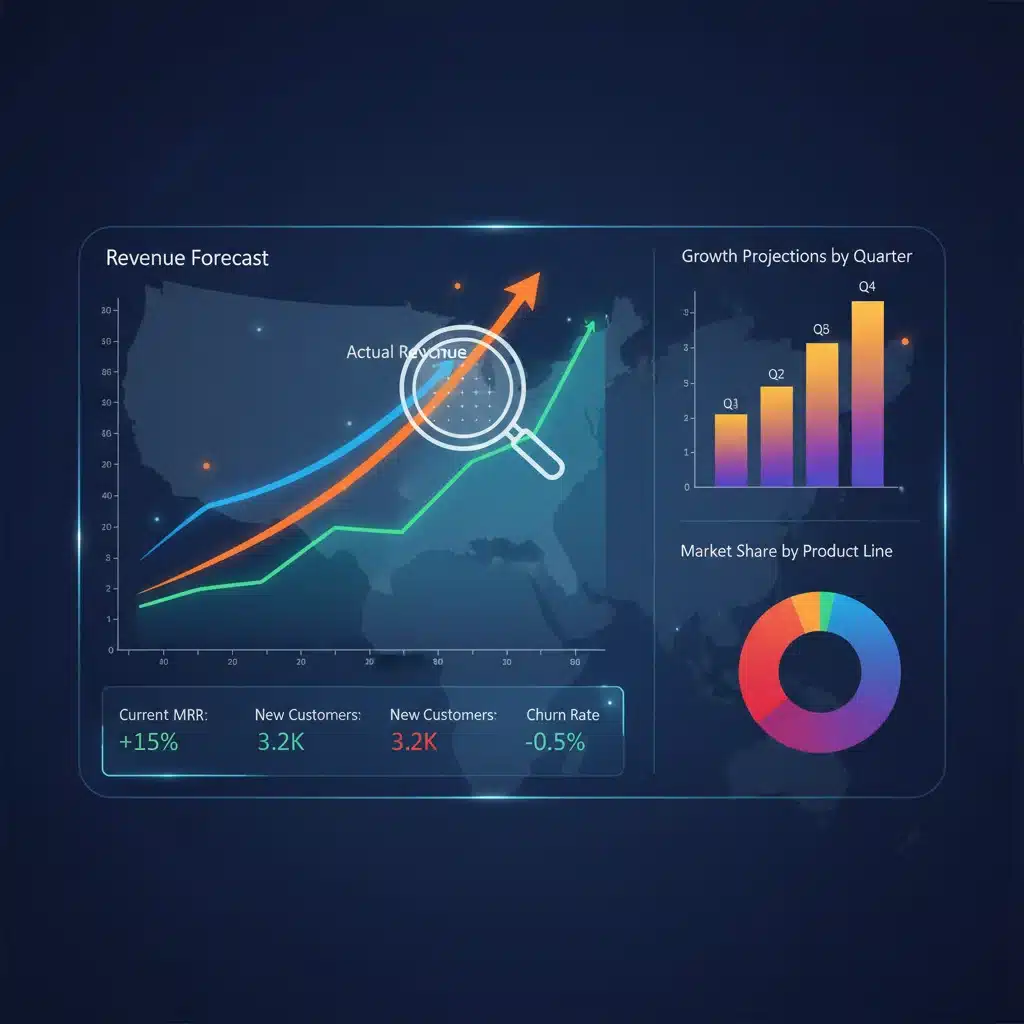
Unlocking Exponential Growth: How Predictive Analytics Can Boost Your Business Revenue by 10% by Q4 2026
In today’s hyper-competitive business landscape, simply reacting to market changes is no longer enough. Forward-thinking organizations are leveraging the power of Predictive Analytics Growth to anticipate future trends, optimize operations, and drive substantial revenue increases. For businesses in the U.S., the goal of achieving a 10% revenue increase by Q4 2026 is not just ambitious; it’s entirely attainable with a well-executed predictive analytics strategy. This comprehensive guide will delve into how predictive analytics can transform your business, offering actionable insights and a clear roadmap to achieving this significant growth target.
The digital age has ushered in an unprecedented era of data availability. Every click, every transaction, every customer interaction generates valuable data points. The challenge, however, lies not in collecting this data, but in transforming it into actionable intelligence. This is where Predictive Analytics Growth comes into play. By employing sophisticated statistical algorithms and machine learning techniques, predictive analytics can identify patterns and forecast future outcomes with remarkable accuracy. Imagine knowing which products will be in high demand next quarter, which customers are likely to churn, or which marketing campaigns will yield the highest ROI. This foresight is the competitive edge that can propel your business to new heights.
The U.S. market, with its dynamic consumer behavior and rapid technological advancements, presents both opportunities and challenges. Businesses that can effectively harness predictive analytics will be better positioned to navigate these complexities, capitalize on emerging trends, and mitigate potential risks. Our focus is on providing a practical framework that U.S. businesses can adopt to not only understand predictive analytics but to implement it strategically for tangible financial gains, specifically targeting a 10% revenue uplift within the next few years.
What is Predictive Analytics and Why Does it Matter for Revenue Growth?
At its core, predictive analytics is the use of data, statistical algorithms, and machine learning techniques to identify the likelihood of future outcomes based on historical data. It’s not just about knowing what happened, but about understanding what will happen. This distinction is crucial for revenue growth. Instead of relying on intuition or lagging indicators, businesses can make data-driven decisions that are proactive and strategic. For example, by analyzing past sales data, customer demographics, and external factors like economic indicators, a retail business can predict seasonal demand more accurately, optimizing inventory and preventing stockouts or overstocking – both of which directly impact the bottom line.
The importance of Predictive Analytics Growth extends across various facets of business operations. In sales, it can identify high-potential leads, forecast sales volumes, and optimize pricing strategies. In marketing, it can personalize customer experiences, predict campaign effectiveness, and optimize ad spend. In operations, it can forecast equipment failures, optimize supply chains, and improve resource allocation. Each of these applications, when effectively implemented, contributes directly or indirectly to revenue enhancement and cost reduction, paving the way for sustainable growth.
Consider the competitive landscape in the. Consumers have more choices than ever before, and their expectations for personalized experiences are constantly rising. Businesses that can anticipate these needs and deliver tailored solutions will undoubtedly outperform those that cannot. Predictive analytics provides the tools to achieve this level of customer understanding and responsiveness, fostering loyalty and driving repeat business, which are fundamental pillars of revenue growth.
Key Areas Where Predictive Analytics Drives Revenue
To achieve a 10% revenue increase, U.S. businesses need to strategically apply predictive analytics in several key areas:
1. Customer Churn Prediction and Retention
Acquiring new customers is often more expensive than retaining existing ones. Predictive analytics can identify customers who are at a high risk of churning before they actually leave. By analyzing behavioral data, purchase history, and engagement metrics, models can flag at-risk customers, allowing businesses to intervene with targeted retention strategies, such as personalized offers, improved customer service, or proactive outreach. This directly impacts revenue by preserving existing customer lifetime value.
2. Sales Forecasting and Optimization
Accurate sales forecasts are the bedrock of effective business planning. Predictive Analytics Growth models can forecast sales with greater precision by incorporating a multitude of variables, including historical sales data, economic indicators, marketing spend, competitor actions, and even weather patterns. This allows businesses to optimize inventory levels, production schedules, and staffing, preventing lost sales due to stockouts or wasted resources due to overproduction. Optimized pricing strategies, informed by predictive models, can also maximize revenue by finding the sweet spot between volume and profit margins.
3. Personalized Marketing and Customer Acquisition
Gone are the days of one-size-fits-all marketing. Predictive analytics enables hyper-personalization by understanding individual customer preferences and predicting their future needs. This leads to more effective marketing campaigns, higher conversion rates, and a lower cost per acquisition. By identifying the most promising customer segments and tailoring messages to their specific interests, businesses can significantly improve marketing ROI and attract higher-value customers, directly contributing to the 10% revenue growth target.

4. Fraud Detection and Risk Management
While not directly a revenue generator, preventing fraud and mitigating risks saves significant amounts of money, which indirectly boosts the bottom line. Predictive analytics models can detect anomalous patterns in transactions, identifying potential fraudulent activities in real-time. This protects revenue from losses due to fraud and enhances customer trust, which can lead to increased sales over time. For financial institutions and e-commerce platforms in the U.S., robust fraud detection is paramount.
5. Operational Efficiency and Supply Chain Optimization
Optimized operations lead to reduced costs, which in turn can be reinvested or contribute to higher profit margins. Predictive analytics can forecast equipment maintenance needs, optimize delivery routes, manage inventory levels across complex supply chains, and even predict staffing requirements. By minimizing waste, reducing downtime, and improving resource utilization, businesses can free up capital and operational capacity, indirectly supporting the revenue growth objective.
Building a Predictive Analytics Strategy for U.S. Businesses
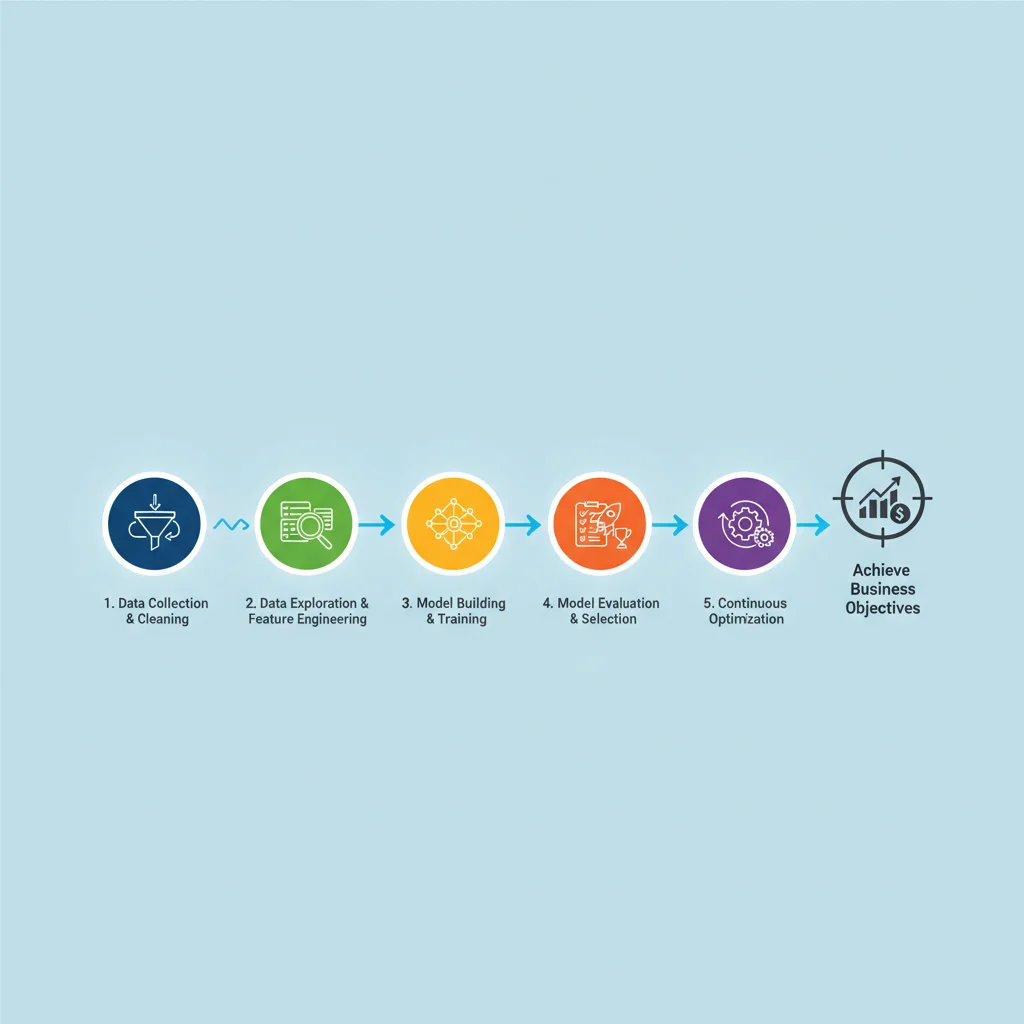
Achieving a 10% revenue increase by Q4 2026 requires a structured approach to implementing Predictive Analytics Growth. Here’s a step-by-step guide for U.S. businesses:
Step 1: Define Clear Business Objectives and KPIs
Before diving into data, clearly articulate what you want to achieve. For our goal, it’s a 10% revenue increase. Break this down into specific Key Performance Indicators (KPIs) that predictive analytics can influence, such as customer retention rate, average transaction value, conversion rate, or lead-to-opportunity ratio. Specific objectives will guide your data collection and model development.
Step 2: Data Collection, Integration, and Cleaning
The quality of your predictions is directly proportional to the quality of your data. Identify all relevant internal and external data sources. Internal data might include CRM records, sales transactions, website analytics, and customer service interactions. External data could involve economic indicators, social media trends, competitor data, and demographic information. Integrate these disparate data sources into a unified platform. Crucially, invest significant time in data cleaning – removing duplicates, correcting errors, and handling missing values. “Garbage in, garbage out” is particularly true for predictive models.
Step 3: Choose the Right Tools and Technologies
The market offers a wide array of predictive analytics tools, from open-source libraries (like Python’s scikit-learn or R) to commercial platforms (like SAS, IBM Watson, Google Cloud AI Platform, or AWS SageMaker). The choice depends on your budget, existing infrastructure, and the expertise of your team. Consider cloud-based solutions for scalability and flexibility, especially for businesses looking to grow rapidly. Data warehousing and data lake solutions are also essential for storing and managing large datasets.
Step 4: Develop and Train Predictive Models
This is the core of predictive analytics. Data scientists and analysts will select appropriate algorithms (e.g., regression, classification, time series forecasting, clustering) based on your objectives. They will then train these models using historical data, ensuring the models learn patterns and relationships. This phase involves splitting data into training and testing sets to validate model accuracy and prevent overfitting. Iterative refinement is key to building robust models.
Step 5: Model Deployment and Integration
A predictive model is only valuable if its insights are actionable. Deploy the models into your operational systems. This might mean integrating them with your CRM, ERP, marketing automation platform, or business intelligence dashboards. Ensure that the insights generated by the models are easily accessible to decision-makers across relevant departments – sales, marketing, operations, and finance.
Step 6: Monitor, Evaluate, and Refine
Predictive models are not static; they need continuous monitoring and refinement. Market conditions change, customer behaviors evolve, and new data becomes available. Regularly evaluate the performance of your models against actual outcomes. Track the KPIs you defined in Step 1. If a model’s accuracy degrades, retrain it with fresh data or adjust the algorithms. This iterative process ensures that your Predictive Analytics Growth strategy remains effective and continues to drive revenue.
Challenges and Considerations for U.S. Businesses
While the benefits of predictive analytics are clear, U.S. businesses must be aware of potential challenges:
Data Privacy and Compliance
With increasing regulations like CCPA and various state-level data privacy laws, businesses must ensure their data collection and usage practices are compliant. Transparency with customers about data usage and robust data security measures are non-negotiable. Ethical considerations around AI bias in predictive models also need careful attention.
Talent Gap
There’s a significant demand for skilled data scientists, machine learning engineers, and data analysts. U.S. businesses may face challenges in recruiting and retaining this talent. Solutions include upskilling existing employees, partnering with external consulting firms, or leveraging managed analytics services.
Investment in Infrastructure
Implementing a comprehensive predictive analytics solution requires significant investment in technology infrastructure, including data storage, processing power, and specialized software. Cloud computing can mitigate some of these upfront costs by offering scalable, pay-as-you-go models.
Organizational Buy-in and Culture Change
Successful adoption of predictive analytics requires buy-in from leadership and a cultural shift towards data-driven decision-making across the organization. Resistance to change can hinder even the most technically sound implementations. Education, training, and demonstrating early successes are crucial for fostering adoption.
Real-World Examples of Predictive Analytics Driving Revenue
Across the U.S. economy, numerous sectors are already demonstrating the power of Predictive Analytics Growth:
- Retail: E-commerce giants use predictive analytics to recommend products, personalize shopping experiences, and optimize inventory in real-time. This leads to higher average order values and increased customer loyalty.
- Healthcare: Hospitals use predictive models to forecast patient admissions, optimize staffing, and identify patients at risk of readmission, improving patient outcomes and operational efficiency, indirectly boosting revenue by optimizing resource allocation.
- Financial Services: Banks employ predictive analytics for credit scoring, fraud detection, and identifying customers likely to respond to new financial product offers, leading to better risk management and targeted sales.
- Manufacturing: Predictive maintenance models forecast when machinery will need servicing, preventing costly breakdowns and minimizing production downtime, thereby protecting and enhancing revenue streams.
- Telecommunications: Telcos use predictive analytics to identify customers likely to churn, allowing them to proactively offer retention incentives and improve service quality, maintaining subscriber revenue.
These examples highlight the versatility and profound impact that predictive analytics can have on revenue generation and operational efficiency across diverse industries in the U.S.
Measuring Success: Tracking Your 10% Revenue Increase
To confirm that your Predictive Analytics Growth initiatives are indeed contributing to the 10% revenue increase by Q4 2026, robust measurement is essential. Establish a clear baseline of your current revenue and key metrics before implementing predictive analytics. Continuously monitor your KPIs, comparing actual results against predicted outcomes and your growth targets. Utilize A/B testing for marketing campaigns informed by predictive models to quantify their incremental impact. Regular reporting and analysis will allow you to attribute revenue gains directly to your predictive analytics efforts, providing valuable insights for further optimization and investment.
It’s also important to consider the long-term impact. A 10% revenue increase is a significant milestone, but predictive analytics offers ongoing benefits. As your models become more sophisticated and integrate more data, their accuracy and impact will continue to grow, fostering a culture of continuous improvement and innovation within your organization. This journey is not a one-time project but an ongoing commitment to data-driven excellence.
The Future is Predictive: Position Your Business for Sustained Growth
The trajectory for U.S. businesses is clear: those that embrace Predictive Analytics Growth will be the ones that thrive in the coming years. The ability to anticipate, adapt, and act proactively based on data-driven insights is no longer a luxury but a necessity. By investing in the right tools, talent, and strategies, your business can confidently aim for, and achieve, a 10% revenue increase by Q4 2026. This isn’t just about adopting a new technology; it’s about fundamentally transforming how you understand your market, serve your customers, and make strategic decisions.
Start your journey today by assessing your data readiness, identifying key revenue drivers, and building a roadmap for predictive analytics implementation. The future of business growth is predictive, and the time to act is now.