
Data Analytics for Business Growth: Unlocking 22% Revenue Potential for US SMEs by 2026
In today’s fiercely competitive business landscape, data is no longer just information; it’s the new currency of success. For Small and Medium-sized Enterprises (SMEs) in the US, leveraging data analytics is not merely an option but a strategic imperative for sustainable growth. The promise is significant: a potential 22% revenue increase by 2026 for those who effectively harness the power of data. This article delves into how SME Data Analytics Growth can transform your business, offering practical strategies, accessible tools, and real-world insights to help you unlock this remarkable potential.
The digital revolution has democratized access to powerful analytical tools, making sophisticated data analysis no longer the exclusive domain of large corporations. US SMEs now have an unprecedented opportunity to make data-driven decisions that optimize operations, enhance customer experiences, and identify new market opportunities. This comprehensive guide will walk you through the journey of integrating data analytics into your business model, ensuring your enterprise is well-positioned to achieve significant revenue milestones.
The Urgency of Data Analytics for US SMEs
The global economy is in constant flux, and market dynamics can shift rapidly. SMEs, often operating with tighter margins and fewer resources than their larger counterparts, must be agile and responsive. This is where data analytics becomes a game-changer. By analyzing historical and real-time data, SMEs can gain predictive insights into market trends, consumer behavior, and operational efficiencies, enabling them to adapt swiftly and strategically.
Why 22% Revenue Growth is Achievable with SME Data Analytics Growth
The projected 22% revenue growth isn’t an arbitrary figure; it’s an estimate based on the proven impact of data-driven strategies across various industries. Businesses that prioritize data analytics typically see improvements in several key areas:
- Optimized Marketing Campaigns: Understanding customer preferences and behaviors allows for highly targeted marketing, reducing wasted ad spend and increasing conversion rates.
- Enhanced Operational Efficiency: Identifying bottlenecks, streamlining processes, and optimizing resource allocation directly contribute to cost savings and improved productivity.
- Superior Customer Experience: Personalizing interactions, predicting needs, and proactively addressing issues lead to higher customer satisfaction and loyalty.
- New Product/Service Development: Data can reveal unmet market needs or emerging trends, guiding the creation of innovative offerings that resonate with target audiences.
- Risk Mitigation: Analyzing financial and operational data helps identify potential risks early, allowing for proactive measures to minimize negative impacts.
Each of these improvements, when compounded, contributes significantly to the bottom line, making the 22% growth target a realistic and attainable goal for proactive US SMEs.
Building Your Data Analytics Foundation: The First Steps
Embarking on the data analytics journey might seem daunting, but it starts with foundational steps. For SME Data Analytics Growth, it’s crucial to begin with a clear understanding of your current data landscape and your business objectives.
1. Define Your Business Goals and Key Questions
Before diving into data, ask yourself: What business problems are you trying to solve? What specific questions do you need answers to? Examples include:
- How can we reduce customer churn by 10%?
- Which marketing channels deliver the highest ROI?
- What are the peak sales periods for our products?
- Where are the inefficiencies in our supply chain?
Clearly defined goals will guide your data collection and analysis efforts, preventing analysis paralysis and ensuring you focus on what truly matters for SME Data Analytics Growth.
2. Identify Your Data Sources
SMEs often sit on a goldmine of untapped data. Common data sources include:
- CRM Systems: Customer contact information, purchase history, interaction logs.
- ERP Systems: Sales, inventory, financial, and operational data.
- Website Analytics (e.g., Google Analytics): User behavior, traffic sources, conversion paths.
- Social Media Analytics: Engagement metrics, audience demographics, sentiment.
- Point-of-Sale (POS) Systems: Transaction data, product performance.
- Email Marketing Platforms: Open rates, click-through rates, subscriber engagement.
Consolidating and understanding these sources is a critical step. You might not need all of them at once, but knowing what’s available is key.
3. Ensure Data Quality and Cleanliness
Garbage in, garbage out. The accuracy of your insights depends entirely on the quality of your data. This involves:
- Data Cleaning: Removing duplicates, correcting errors, filling in missing values.
- Data Standardization: Ensuring consistency in formats and definitions across different sources.
- Data Validation: Verifying the accuracy and reliability of your data.
Investing time in data quality at the outset will save significant headaches down the line and ensure your SME Data Analytics Growth efforts yield reliable results.
Key Strategies for SME Data Analytics Growth
Once your foundation is set, you can implement specific strategies to drive growth. These strategies are designed to be actionable and scalable for SMEs.
Strategy 1: Customer Segmentation and Personalization
Understanding your customers deeply is paramount. Data analytics allows you to segment your customer base into distinct groups based on demographics, purchase behavior, engagement levels, and more. This enables:
- Targeted Marketing: Crafting messages and offers that resonate with specific segments, leading to higher conversion rates.
- Personalized Experiences: Tailoring product recommendations, website content, and customer service interactions to individual preferences.
- Improved Customer Retention: Identifying at-risk customers and implementing proactive retention strategies.
By personalizing the customer journey, you build stronger relationships and foster loyalty, directly contributing to SME Data Analytics Growth.
Strategy 2: Optimizing Marketing and Sales Funnels
Every business has a sales funnel, and data analytics can illuminate its strengths and weaknesses. By tracking customer journeys from initial awareness to post-purchase, you can:
- Identify Drop-off Points: Pinpoint where potential customers abandon the funnel and understand why.
- Optimize Conversion Rates: Experiment with different calls to action, landing pages, or offers to improve conversions at each stage.
- Allocate Marketing Budget Effectively: Understand which channels and campaigns deliver the best ROI, allowing you to reallocate resources for maximum impact.
This data-driven approach to marketing and sales optimization ensures that every dollar spent is working harder for your SME Data Analytics Growth.
Strategy 3: Enhancing Operational Efficiency and Cost Reduction
Data analytics isn’t just about revenue; it’s also about profitability. By analyzing operational data, SMEs can uncover inefficiencies and opportunities for cost savings:
- Supply Chain Optimization: Predicting demand, optimizing inventory levels, and identifying bottlenecks in logistics.
- Workforce Management: Analyzing employee performance, scheduling, and resource allocation to maximize productivity.
- Process Improvement: Identifying areas where automation or process redesign can reduce manual effort and errors.
Even small improvements in efficiency can lead to significant cost reductions, freeing up capital for further investment in SME Data Analytics Growth initiatives.
Strategy 4: Predictive Analytics for Future Planning
Moving beyond historical analysis, predictive analytics uses statistical algorithms and machine learning techniques to forecast future outcomes. For SMEs, this can mean:
- Demand Forecasting: Anticipating future product or service demand to optimize inventory, staffing, and production.
- Sales Forecasting: Predicting future sales performance to set realistic targets and allocate resources.
- Customer Churn Prediction: Identifying customers likely to leave, allowing for proactive retention efforts.
- Market Trend Prediction: Spotting emerging trends to capitalize on new opportunities or mitigate potential threats.
Predictive capabilities equip SMEs with the foresight needed to make proactive, strategic decisions, driving significant SME Data Analytics Growth.
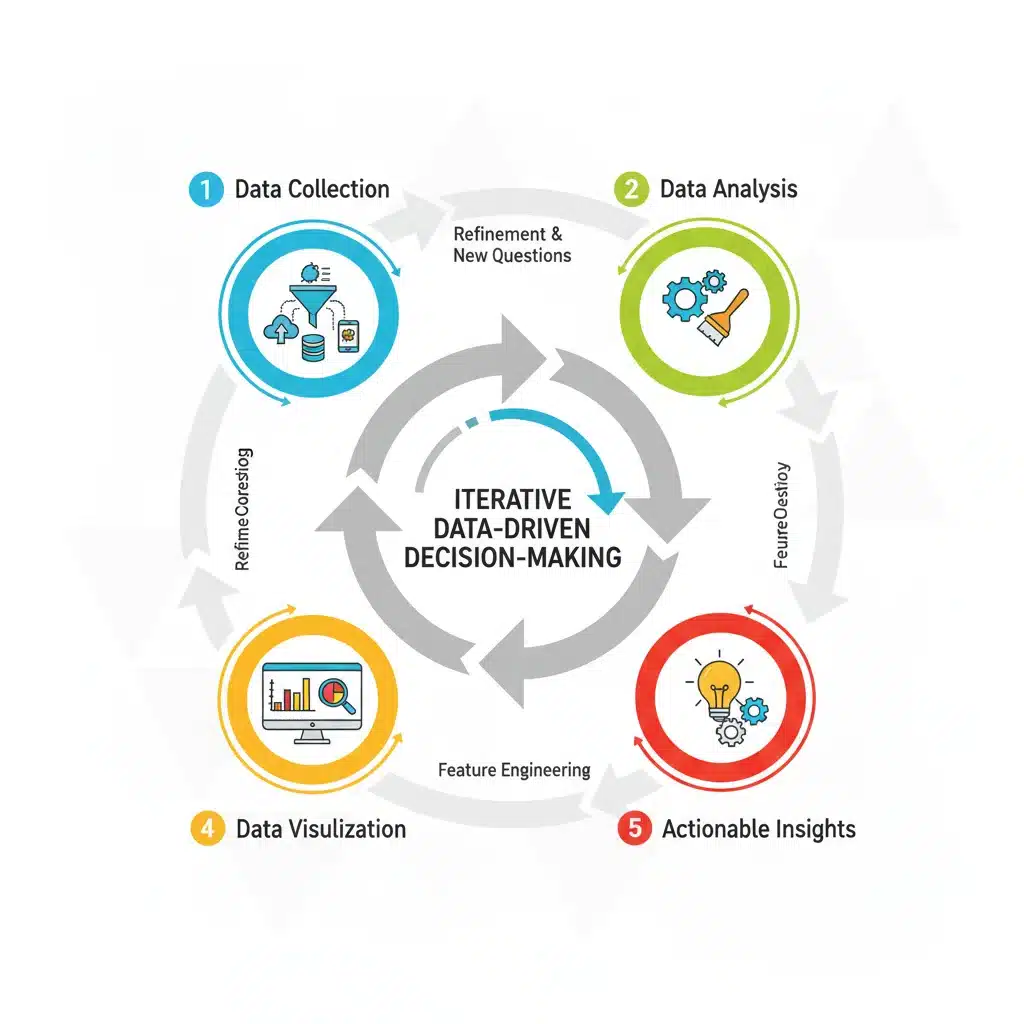
Accessible Tools and Technologies for SMEs
The good news is that you don’t need a team of data scientists or expensive enterprise software to get started. Many powerful and user-friendly tools are available for SMEs.
1. Business Intelligence (BI) Dashboards
BI dashboards provide a visual representation of your key performance indicators (KPIs), allowing you to monitor business health at a glance. Popular options include:
- Google Data Studio (Looker Studio): Free, highly customizable, and integrates seamlessly with other Google products.
- Microsoft Power BI: Offers robust features and integration with Microsoft ecosystem, with a free desktop version for individual users.
- Tableau Public: A free version of Tableau for public data analysis and visualization.
- Zoho Analytics: Part of the Zoho ecosystem, offering a comprehensive suite of BI features at an affordable price.
These tools allow you to create interactive reports and dashboards, making complex data understandable and actionable for SME Data Analytics Growth.
2. CRM and ERP Systems with Built-in Analytics
Many modern CRM (Customer Relationship Management) and ERP (Enterprise Resource Planning) systems now come with integrated analytics capabilities. Platforms like Salesforce, HubSpot, Zoho CRM, and Odoo provide valuable insights directly from your customer and operational data, streamlining your analytical efforts.
3. Web Analytics Tools
Google Analytics 4 (GA4): Essential for understanding website traffic, user behavior, and conversion funnels. GA4 provides event-based tracking, offering deeper insights into customer journeys across different devices.
4. Spreadsheet Software with Advanced Features
Don’t underestimate the power of advanced spreadsheet functions. Google Sheets and Microsoft Excel, with their pivot tables, conditional formatting, and various formulas, can perform significant data analysis for smaller datasets and initial explorations. Add-ons and plugins can further extend their capabilities for SME Data Analytics Growth.
5. Cloud-Based Data Warehousing (for larger SMEs)
As your data volume grows, consider cloud data warehousing solutions like Google BigQuery or Amazon Redshift. These platforms can handle massive datasets, provide scalable storage, and integrate with various BI tools, offering a robust foundation for advanced analytics.
Overcoming Challenges in SME Data Analytics Growth
While the benefits are clear, SMEs often face unique challenges when adopting data analytics.
Challenge 1: Lack of Internal Expertise
Many SMEs don’t have dedicated data analysts. This can be addressed by:
- Upskilling Existing Staff: Providing training on basic data analysis tools and concepts.
- Hiring Part-Time/Freelance Analysts: Engaging external experts for specific projects or ongoing support.
- Leveraging User-Friendly Tools: Opting for BI platforms that require minimal coding and have intuitive interfaces.
Challenge 2: Data Silos and Integration Issues
Data often resides in disparate systems, making it difficult to get a holistic view. Solutions include:
- Integration Platforms (iPaaS): Tools like Zapier or Make (formerly Integromat) can automate data transfer between different applications.
- Centralized Data Storage: Moving relevant data into a single database or data warehouse.
Challenge 3: Budget Constraints
Cost is always a consideration for SMEs. Start with free or low-cost tools and scale up as your needs and budget grow. Focus on high-impact projects that demonstrate clear ROI quickly to justify further investment in SME Data Analytics Growth.
Challenge 4: Data Overwhelm
The sheer volume of data can be paralyzing. Focus on your key business questions and the most relevant KPIs. Start small, achieve quick wins, and gradually expand your analytical scope.
Real-World Impact: Case Studies of SME Data Analytics Growth
To illustrate the tangible benefits, let’s consider hypothetical scenarios based on common SME challenges:
Case Study A: E-commerce Retailer Boosts Sales by 15%
A small online fashion boutique struggled with inconsistent sales and high marketing costs. By implementing a basic analytics strategy, they:
- Analyzed website traffic patterns to identify popular product categories and optimal posting times for social media.
- Segmented customers based on purchase history and browsing behavior to send personalized email promotions.
- Used conversion funnel analysis to redesign their checkout process, reducing abandonment rates.
Result: A 15% increase in monthly sales within six months and a 10% reduction in marketing spend due to better targeting.
Case Study B: Local Restaurant Optimizes Operations and Reduces Waste
A neighborhood restaurant faced issues with food waste and inefficient staffing. They began tracking:
- Daily sales data by dish and time of day.
- Customer footfall patterns.
- Ingredient usage and spoilage rates.
Result: By predicting peak demand and popular menu items, they optimized ingredient orders, reduced food waste by 20%, and adjusted staffing levels to match customer flow, improving profitability significantly. This is a prime example of SME Data Analytics Growth in action.
The Future of SME Data Analytics Growth: AI and Machine Learning
As technology advances, AI for Small Businesses and Machine Learning (ML) are becoming increasingly accessible to SMEs. While these might seem advanced, many tools are integrating AI-powered features that automate analysis and provide deeper insights:
- Automated Insights: BI tools can now automatically detect anomalies or trends in your data and highlight them for you.
- AI-Powered Chatbots: Using ML to analyze customer queries and provide instant, personalized support, freeing up human staff.
- Recommendation Engines: Leveraging ML to suggest products or services to customers based on their past behavior and preferences, similar to what large e-commerce sites do.
Embracing these advancements, even in their simpler forms, will further accelerate SME Data Analytics Growth and maintain a competitive edge.

Developing a Data-Driven Culture
Technology and tools are only part of the equation. For true SME Data Analytics Growth, you need to cultivate a data-driven culture within your organization. This involves:
- Leadership Buy-in: The management team must champion data initiatives and set an example by using data in their own decision-making.
- Training and Education: Empowering employees at all levels to understand and utilize data relevant to their roles.
- Encouraging Curiosity: Fostering an environment where employees are encouraged to ask data-related questions and explore insights.
- Transparency: Sharing relevant data and insights across departments to break down silos and encourage collaboration.
- Continuous Learning: Data analytics is an evolving field. Encourage continuous learning and adaptation to new tools and techniques.
A data-driven culture ensures that insights translate into action and that your investment in analytics yields sustained benefits.
Measuring Success: KPIs for SME Data Analytics Growth
To ensure your data analytics efforts are paying off, it’s essential to track relevant KPIs. These will vary based on your business goals, but common ones include:
- Revenue Growth Rate: The most direct measure of success.
- Customer Acquisition Cost (CAC): How much it costs to acquire a new customer. Data analytics should help lower this.
- Customer Lifetime Value (CLTV): The total revenue a business can reasonably expect from a single customer account. Analytics should help increase this.
- Conversion Rates: From website visitors to leads, or leads to sales.
- Customer Churn Rate: The percentage of customers who stop doing business with you.
- Operational Efficiency Metrics: Such as production time, delivery time, or cost per unit.
- Marketing ROI: The return on investment for your marketing campaigns.
Regularly reviewing these KPIs in your BI dashboards will provide clear indicators of your progress and highlight areas for further optimization, driving continuous SME Data Analytics Growth.
Conclusion: Seize the Opportunity for SME Data Analytics Growth
The opportunity for US SMEs to achieve significant revenue growth through data analytics is not a distant dream; it’s a present reality. By 2026, businesses that strategically implement data-driven practices stand to see a remarkable 22% increase in their revenue. This journey begins with defining clear goals, understanding your data, and leveraging accessible tools to gain actionable insights.
From enhancing customer experiences and optimizing marketing spend to streamlining operations and predicting future trends, data analytics offers a powerful roadmap for success. While challenges exist, they are surmountable with a pragmatic approach, a willingness to learn, and the right tools. Embrace the power of SME Data Analytics Growth, foster a data-driven culture, and position your business not just to survive, but to thrive and lead in the digital age. The time to act is now – your future growth depends on it.