Navigating 2026 Supply Chain Evolution: Key Trends for US Businesses
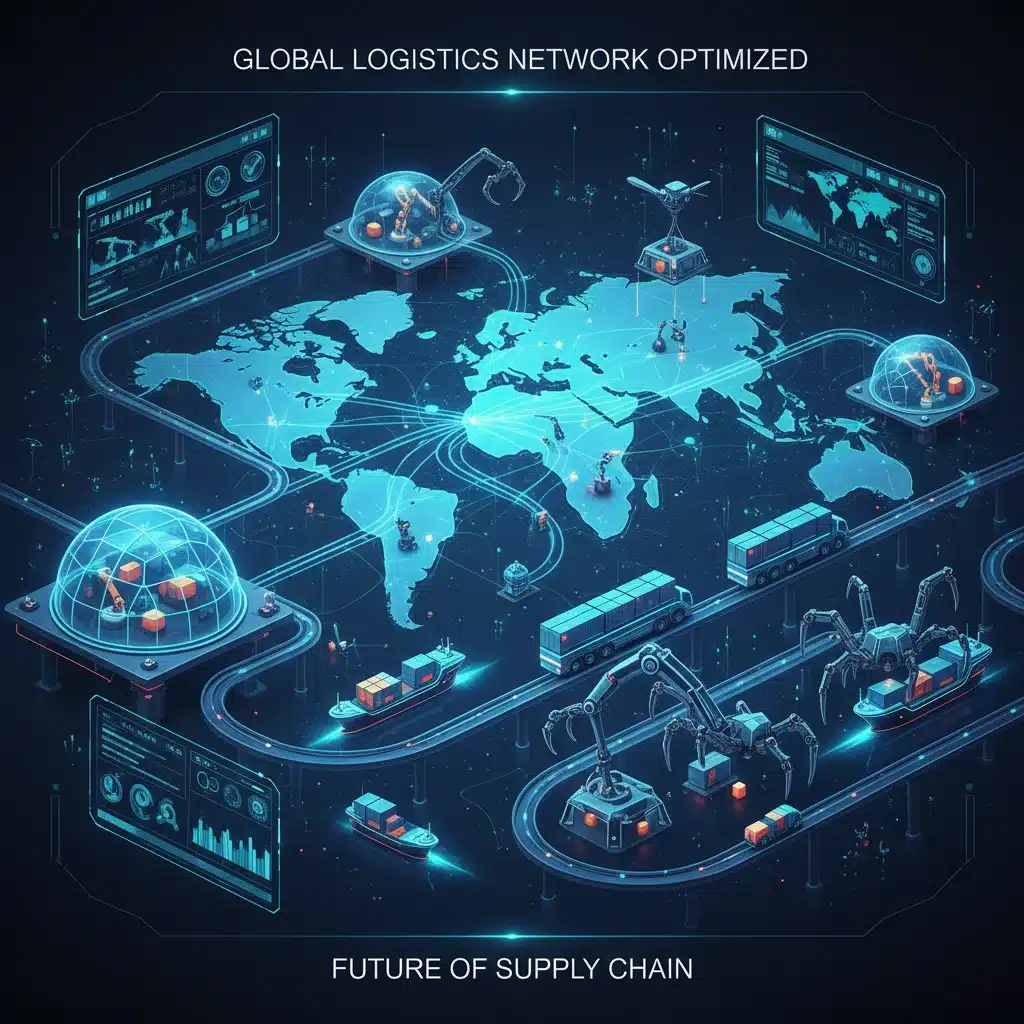
Navigating the 2026 Supply Chain Evolution: 7 Key Trends for US Businesses to Watch Now
The landscape of global commerce is in a constant state of flux, and nowhere is this more evident than in the supply chain. For US businesses, understanding and adapting to the impending shifts is not merely an advantage; it’s a necessity for survival and growth. As we rapidly approach 2026, a confluence of technological advancements, geopolitical realignments, and evolving consumer expectations is reshaping the very foundations of how goods are produced, moved, and delivered. The traditional models are being challenged, and new paradigms are emerging that demand strategic foresight and agile execution.
The past few years have been a stark reminder of the fragility and interconnectedness of global supply networks. From pandemics to geopolitical conflicts, the disruptions have highlighted critical vulnerabilities and spurred an unprecedented drive towards resilience and innovation. Businesses that once viewed their supply chains as a cost center are now recognizing them as strategic assets, capable of delivering competitive advantage and fostering customer loyalty. This paradigm shift means that keeping an eye on the future is no longer a luxury but a core operational imperative. This article delves into the seven pivotal supply chain 2026 trends that US businesses must not only watch but actively integrate into their strategic planning to thrive in the coming years.
Our exploration will cover everything from the transformative power of artificial intelligence to the growing imperative of sustainable practices, the re-evaluation of global sourcing strategies, and the critical need for enhanced cybersecurity. Each trend presents both challenges and unparalleled opportunities for businesses willing to embrace change and invest in the future. By proactively addressing these key areas, US companies can build more robust, efficient, and adaptable supply chains, ensuring their long-term success in an increasingly dynamic global marketplace.
1. Hyper-Automation and AI Integration: The Intelligent Supply Chain
The dawn of 2026 will see artificial intelligence (AI) and hyper-automation move beyond experimental phases to become deeply embedded within core supply chain operations. This isn’t just about automating repetitive tasks; it’s about creating an intelligent, self-optimizing network that can anticipate demand, mitigate risks, and streamline processes with unprecedented efficiency. US businesses are already experimenting with AI in various capacities, but the next few years will witness a widespread adoption that transforms the entire lifecycle of a product.
AI’s role in demand forecasting is perhaps one of its most impactful applications. Traditional forecasting methods, often reliant on historical data and statistical models, struggle to account for sudden market shifts or unpredictable events. AI, powered by machine learning algorithms, can analyze vast datasets – including social media trends, weather patterns, geopolitical news, and real-time sales data – to generate far more accurate and dynamic predictions. This enhanced foresight allows companies to optimize inventory levels, reduce waste, and improve customer satisfaction by ensuring products are available when and where they are needed. This is a crucial supply chain 2026 trends that will differentiate market leaders.
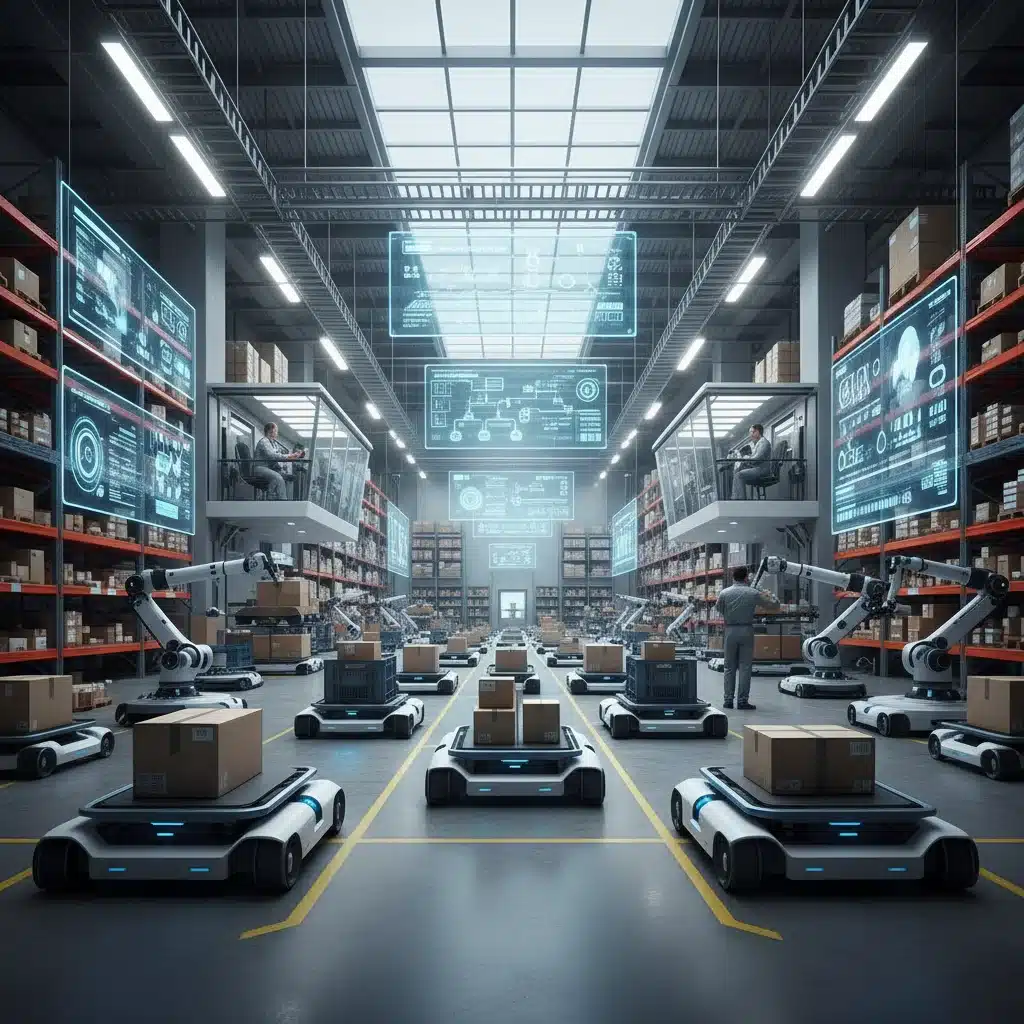
Beyond forecasting, AI is revolutionizing warehouse management and logistics. Robotic process automation (RPA) and autonomous mobile robots (AMRs) are increasingly handling tasks like picking, packing, and sorting, dramatically increasing throughput and reducing labor costs. AI-driven route optimization software analyzes traffic, weather, and delivery schedules in real-time to find the most efficient transportation paths, cutting fuel consumption and delivery times. Furthermore, predictive maintenance powered by AI monitors equipment health in factories and warehouses, anticipating failures before they occur and minimizing costly downtime. This proactive approach ensures operational continuity and efficiency, directly impacting the bottom line.
Implementing AI and hyper-automation requires significant investment in technology and upskilling the workforce. However, the returns on investment are substantial, manifesting in reduced operational costs, improved efficiency, and a more responsive supply chain. US businesses that fail to embrace this trend risk being outmaneuvered by competitors who leverage these intelligent systems to gain a significant competitive edge. The future of supply chain management is undeniably intelligent, and companies must prepare to integrate these advanced capabilities.
2. Enhanced Supply Chain Resilience and Regionalization
The vulnerabilities exposed by recent global events have unequivocally pushed supply chain resilience to the forefront of strategic priorities. For US businesses, this means moving away from solely cost-driven global sourcing to a more balanced approach that prioritizes robustness and continuity. By 2026, we will see a significant trend towards regionalization and diversification of supply chains, aiming to reduce dependence on single points of failure and minimize the impact of future disruptions.
Regionalization involves bringing production and sourcing closer to consumer markets. This can take several forms, including reshoring (bringing manufacturing back to the US), nearshoring (moving it to neighboring countries like Mexico or Canada), or friend-shoring (sourcing from politically aligned nations). The benefits are numerous: reduced lead times, lower transportation costs, greater control over quality and labor practices, and less exposure to geopolitical risks. While global supply chains offer economies of scale, the trade-off in terms of risk has become too high for many critical components and finished goods. This shift is a defining supply chain 2026 trends.
Diversification is another critical component of building resilience. Instead of relying on a single supplier for a key component, businesses are actively seeking out multiple suppliers across different geographical regions. This multi-sourcing strategy ensures that if one supplier or region is impacted by a disaster or disruption, alternatives are readily available, preventing complete operational shutdown. This requires a thorough understanding of the entire supplier ecosystem and the development of strong relationships with a broader network of partners.
Beyond geographical shifts, resilience also encompasses building robust risk management frameworks. This includes implementing advanced data analytics to identify potential risks early, developing contingency plans for various scenarios, and fostering greater transparency across the entire supply chain. Blockchain technology, for instance, is increasingly being explored to provide immutable records and enhance traceability, allowing companies to pinpoint the origin of issues quickly and effectively. US businesses must invest in these strategies to create shock-proof supply chains that can weather any storm.
3. Sustainability and ESG as Core Supply Chain Drivers
Environmental, Social, and Governance (ESG) factors are rapidly transitioning from corporate buzzwords to fundamental pillars of supply chain strategy. By 2026, consumer demand, regulatory pressure, and investor scrutiny will compel US businesses to embed sustainability deeply into every aspect of their supply chain operations. This isn’t just about compliance; it’s about creating long-term value, enhancing brand reputation, and attracting environmentally conscious customers and talent. Sustainability is a non-negotiable supply chain 2026 trends.
The focus on environmental sustainability includes reducing carbon footprints across the entire value chain. This means optimizing transportation routes to minimize fuel consumption, investing in renewable energy for manufacturing and warehousing, and adopting circular economy principles to reduce waste and maximize resource utility. Companies will increasingly design products for longevity, repairability, and recyclability, thereby minimizing their environmental impact from production to disposal. Measuring and reporting on these metrics will become standard practice, driven by both internal goals and external expectations.
Social responsibility within the supply chain emphasizes ethical labor practices, fair wages, and safe working conditions for all workers, regardless of their location. This includes rigorous auditing of suppliers to ensure compliance with human rights standards and the elimination of forced labor or child labor. Transparency in these areas is crucial, as consumers and advocacy groups are increasingly holding companies accountable for the ethical conduct of their entire supply network. Building a socially responsible supply chain not only mitigates reputational risks but also fosters stronger, more reliable supplier relationships.
Governance aspects of ESG relate to the transparent and ethical management of the supply chain, including anti-corruption measures, data privacy, and robust corporate oversight. Companies will need to establish clear policies and enforce them diligently across their extended network. The integration of ESG factors often leads to operational efficiencies and cost savings in the long run, such as reduced energy consumption or improved material utilization. US businesses that proactively embrace sustainability will not only meet regulatory requirements but also build a more resilient, ethical, and attractive brand in the market.
4. Digital Twins and End-to-End Visibility
Achieving true end-to-end visibility has long been an aspiration for supply chain managers, but by 2026, the widespread adoption of digital twin technology will make this a tangible reality. A digital twin is a virtual replica of a physical asset, process, or system. In the context of supply chains, it means creating a comprehensive, real-time digital model of the entire network, from raw material sourcing to final product delivery. This is one of the most transformative supply chain 2026 trends.
These digital twins are fed by data from various sources, including IoT sensors, enterprise resource planning (ERP) systems, transportation management systems (TMS), and warehouse management systems (WMS). This continuous stream of data allows businesses to monitor the status of goods, equipment, and processes in real-time, gaining an unparalleled understanding of their operations. For instance, a digital twin can track a product’s journey, monitor its environmental conditions (temperature, humidity), and even predict potential delays or quality issues before they occur.
The power of digital twins extends beyond mere monitoring. They enable advanced simulation and scenario planning. Companies can use these virtual models to test the impact of various disruptions – such as a port closure, a sudden surge in demand, or a supplier failure – without affecting physical operations. This allows them to identify bottlenecks, optimize resource allocation, and develop robust contingency plans proactively. The ability to model and predict outcomes with high accuracy provides a significant strategic advantage, allowing for more informed and agile decision-making.
Implementing digital twins requires significant investment in data infrastructure, advanced analytics, and integration capabilities. However, the benefits – including reduced operational costs, improved service levels, enhanced risk management, and faster response times to market changes – make it an indispensable tool for modern supply chain management. US businesses that embrace digital twins will gain a competitive edge through superior operational insight and strategic agility.
5. Blockchain for Transparency and Traceability
While often associated with cryptocurrencies, blockchain technology is proving to be a powerful tool for enhancing transparency and traceability within complex supply chains. By 2026, its application will expand significantly, particularly for US businesses dealing with high-value goods, perishable items, or those requiring stringent regulatory compliance. Blockchain addresses fundamental challenges of trust and data integrity that plague traditional supply chain models, making it a critical supply chain 2026 trends.
At its core, blockchain creates an immutable, distributed ledger that records every transaction and movement of a product. Each step in the supply chain – from raw material acquisition, through manufacturing, transportation, and distribution – can be recorded as a ‘block’ in the chain. Once a block is added, it cannot be altered, providing an unchangeable audit trail. This inherent immutability builds trust among all participants in the network, as everyone has access to the same verified information.
The benefits of blockchain are manifold. For consumers, it offers unprecedented transparency, allowing them to verify the origin, authenticity, and ethical journey of products. For businesses, it streamlines compliance processes, reduces fraud, and significantly improves product recall efficiency by precisely identifying affected batches. Imagine being able to trace a contaminated food product back to its farm of origin in seconds, rather than days or weeks. This level of granular traceability is invaluable for managing crises and protecting brand reputation.
Furthermore, blockchain can facilitate smart contracts, automating agreements and payments once predefined conditions are met. This reduces administrative overhead, speeds up transactions, and minimizes disputes. While initial setup costs and interoperability challenges remain, the long-term advantages in terms of trust, efficiency, and regulatory compliance position blockchain as a transformative technology for the future of supply chain management. US businesses should actively explore pilot programs and partnerships to leverage this technology effectively.

6. Hyper-Personalization and Last-Mile Innovation
Consumer expectations for speed, convenience, and personalization continue to escalate, driving significant innovation in last-mile delivery and fulfillment. By 2026, US businesses will need to master hyper-personalization, offering a range of delivery options tailored to individual customer preferences, alongside continuous advancements in how products reach their final destination. This focus on the customer experience is a dominant supply chain 2026 trends.
Hyper-personalization goes beyond simply offering fast shipping. It involves providing customers with choices regarding delivery windows, preferred pickup locations (e.g., lockers, retail stores), and even environmentally friendly delivery options. Data analytics and AI play a crucial role here, enabling businesses to understand individual customer behaviors and preferences, offering personalized recommendations for delivery services at the point of sale. This level of customization enhances customer loyalty and satisfaction.
Last-mile innovation is crucial for meeting these elevated expectations. Companies are exploring and implementing a variety of solutions, including:
- Drone Delivery: While still in nascent stages for widespread consumer use, drones hold promise for rapid delivery in specific geographic areas or for smaller, high-value items.
- Autonomous Vehicles: Self-driving delivery vans and robots are being tested for urban and suburban last-mile routes, offering potential for 24/7 delivery capabilities and reduced labor costs.
- Micro-fulfillment Centers (MFCs): Strategically located closer to urban populations, MFCs allow for faster order processing and delivery, drastically cutting down last-mile travel times.
- Crowdsourced Delivery: Leveraging gig-economy workers for flexible and scalable delivery services, especially during peak demand periods.
The challenge lies in balancing speed and convenience with profitability and sustainability. US businesses must carefully evaluate which last-mile innovations align best with their product offerings, customer base, and operational capabilities. Investing in a diversified last-mile strategy will be key to staying competitive and meeting the evolving demands of the modern consumer. The integration of these innovative approaches will define success in the competitive e-commerce landscape.
7. Workforce Transformation and Skill Development
The rapid technological advancements and strategic shifts in supply chain management necessitate a fundamental transformation of the workforce. By 2026, the demand for new skills will far outpace the current supply, requiring US businesses to invest heavily in upskilling and reskilling their employees, as well as rethinking their talent acquisition strategies. This human element is a critical, often overlooked, supply chain 2026 trends.
The traditional roles within supply chain are evolving. Manual, repetitive tasks are increasingly being automated, shifting the focus towards roles that require analytical thinking, problem-solving, and the ability to interact with advanced technologies. Key skills for the future supply chain workforce include:
- Data Analytics and Interpretation: The ability to collect, analyze, and derive actionable insights from vast amounts of supply chain data.
- AI and Automation Proficiency: Understanding how to operate, manage, and troubleshoot AI-driven systems and automated processes.
- Digital Literacy: Proficiency with various supply chain software platforms, cloud-based tools, and digital collaboration platforms.
- Risk Management and Resilience Planning: Expertise in identifying potential disruptions, developing contingency plans, and building robust supply networks.
- Sustainability Knowledge: Understanding ESG principles and how to implement sustainable practices throughout the supply chain.
- Collaboration and Communication: The ability to work effectively across diverse teams, both internal and external, and communicate complex information clearly.
Businesses must move beyond traditional training methods and embrace continuous learning initiatives. This includes offering online courses, certifications, apprenticeships, and on-the-job training programs that focus on developing these critical future-ready skills. Furthermore, attracting new talent will require highlighting the dynamic and technologically advanced nature of modern supply chain careers, shedding the outdated perception of logistics as a purely manual field.
Investing in workforce development is not just about filling skill gaps; it’s about fostering a culture of innovation and adaptability. A well-trained and empowered workforce will be better equipped to leverage new technologies, embrace change, and drive continuous improvement within the supply chain. US businesses that prioritize their human capital will find themselves with a significant competitive advantage in navigating the complexities of the 2026 supply chain landscape.
Conclusion: Preparing for the Future of Supply Chain
The journey towards 2026 presents a transformative period for supply chain management within US businesses. The seven trends outlined – hyper-automation and AI integration, enhanced resilience and regionalization, sustainability and ESG as core drivers, digital twins and end-to-end visibility, blockchain for transparency, hyper-personalization and last-mile innovation, and workforce transformation – are not isolated phenomena. Instead, they are deeply interconnected, forming a complex web of challenges and opportunities that demand a holistic and strategic approach.
Successfully navigating this evolving landscape requires more than just incremental changes; it calls for a fundamental re-imagining of how supply chains are designed, operated, and managed. Businesses must be prepared to invest in new technologies, adapt their operational models, and, crucially, invest in their people. The ability to leverage data, embrace automation, prioritize sustainability, and build resilient networks will be the hallmarks of leading organizations.
For US businesses, the time to act is now. Proactive engagement with these supply chain 2026 trends will not only mitigate potential risks but also unlock significant competitive advantages, foster innovation, and ensure long-term success in an increasingly interconnected and dynamic global economy. By embracing these changes, companies can transform their supply chains from mere operational necessities into powerful strategic differentiators, ready to meet the demands of tomorrow’s market.