The Metaverse Economy: 7 Key Tech Shifts Shaping US Consumer Engagement
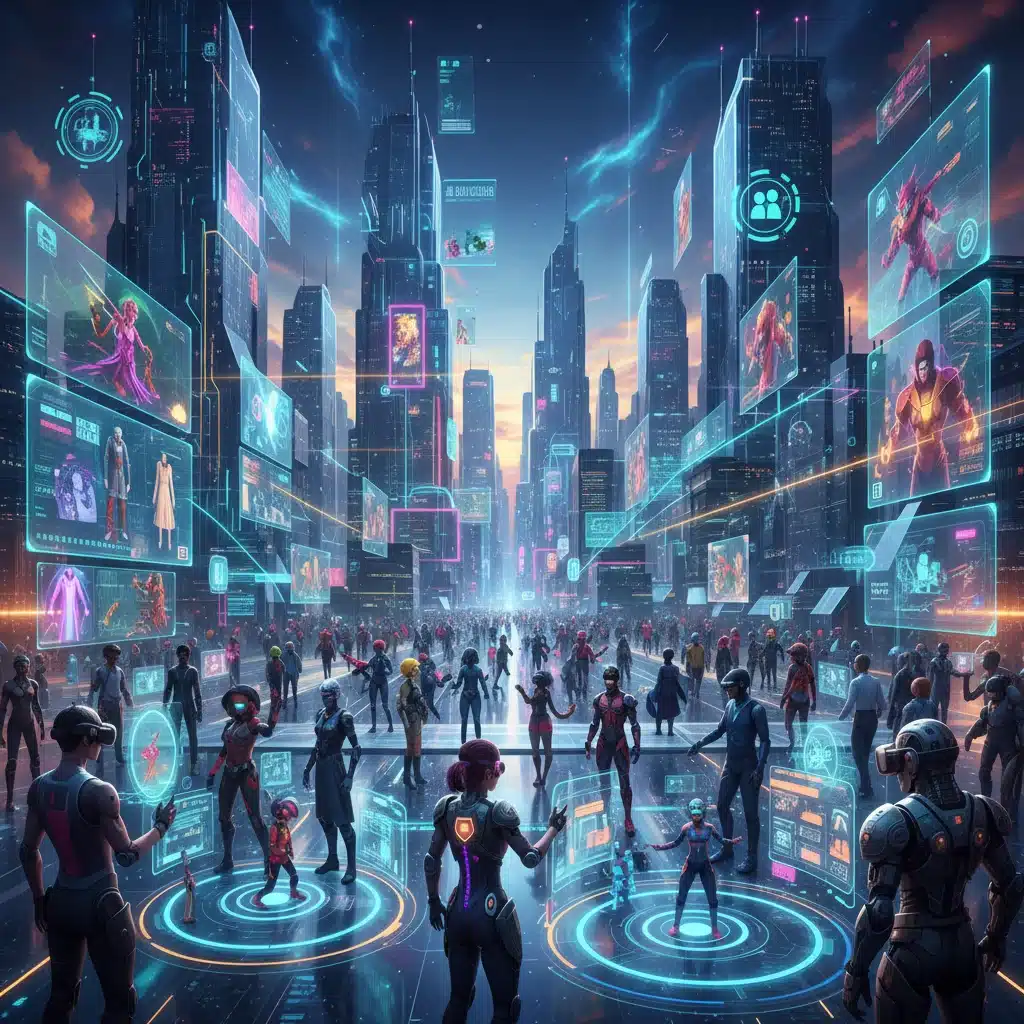
The Metaverse Economy: 7 Key Technology Shifts Shaping US Consumer Engagement in the Next 18 Months
The metaverse, once a distant sci-fi concept, is rapidly transforming into a tangible economic frontier. For businesses and consumers alike in the United States, the next 18 months promise a whirlwind of technological advancements that will fundamentally reshape how we interact, transact, and experience the digital world. This isn’t just about virtual reality headsets; it’s about a holistic evolution of digital presence, ownership, and interaction. Understanding these pivotal technology shifts is crucial for anyone looking to navigate and thrive in the burgeoning metaverse economy.
The concept of the metaverse describes a persistent, interconnected, and interactive virtual world where users can engage with digital content, other users, and AI-driven entities in real-time. It’s an evolution of the internet, moving from a flat, two-dimensional experience to an immersive, three-dimensional one. This paradigm shift will have profound implications for consumer behavior, marketing strategies, and even the very definition of digital ownership. As we delve into the seven key technology shifts, we’ll explore how each one contributes to this monumental transformation and what it means for US consumer engagement.
1. Hyper-Realistic Avatars and Digital Identities
One of the most immediate and impactful shifts in the metaverse economy will be the advancement of hyper-realistic avatars and sophisticated digital identities. For US consumers, their digital representation will become increasingly important, mirroring their real-world persona or even offering an aspirational alternative. Gone are the days of generic, blocky avatars; the next 18 months will see significant strides in rendering highly detailed, customizable, and expressive digital selves.
This shift is powered by advancements in 3D modeling, AI-driven facial recognition, and motion capture technologies. Consumers will be able to create avatars that not only look like them but also embody their unique style, personality, and even physical mannerisms. This enhanced realism fosters a deeper sense of presence and connection within virtual environments, making interactions more meaningful and engaging. Brands are already capitalizing on this by offering digital fashion lines, virtual accessories, and customizable elements that allow consumers to express their identity in the metaverse, driving a new wave of digital consumption.
The implications for metaverse consumer engagement are vast. A highly personalized avatar acts as a gateway to self-expression and social interaction. It allows for more authentic communication, fostering stronger communities and more immersive experiences. Businesses will need to consider how their products and services can integrate with these evolving digital identities, offering virtual goods and services that resonate with consumers’ chosen personas. The ability to seamlessly port these identities across different metaverse platforms will also be a critical factor, ensuring consistent experiences and reducing friction for users. This interoperability is a significant technical challenge but one that leading developers are actively addressing, recognizing its importance for widespread adoption.
2. Advanced Haptic Feedback and Sensory Immersion
Beyond visual and auditory experiences, the metaverse economy is moving towards a more complete sensory immersion through advanced haptic feedback technologies. While still in its nascent stages, the next 18 months will see notable improvements in devices that allow US consumers to ‘feel’ the digital world. This includes gloves, suits, and even chairs that can simulate textures, temperatures, and physical impacts, adding a new dimension to virtual interactions.
Imagine being able to feel the texture of a virtual garment before purchasing it, the resistance of a virtual tool, or the warmth of a digital handshake. This level of tactile feedback significantly enhances the realism and engagement of metaverse experiences. For gaming, it means more immersive gameplay; for retail, it means a more confident purchasing decision; and for social interactions, it means a closer approximation of real-world physical presence. The development of more affordable and less cumbersome haptic devices will be key to their widespread adoption among consumers.
The impact on metaverse consumer engagement is transformative. Sensory immersion makes virtual experiences more believable and memorable. It bridges the gap between the physical and digital, allowing consumers to form stronger emotional connections with virtual products, environments, and even other avatars. Brands that can effectively integrate haptic feedback into their metaverse offerings will gain a significant competitive advantage, providing unparalleled experiences that drive loyalty and spending. This technology will also open up new avenues for product testing and prototyping, allowing consumers to interact with digital twins of physical products in a highly realistic manner before they are even manufactured.

3. Seamless Interoperability and Cross-Platform Experiences
A fragmented metaverse, where assets and identities are locked into specific platforms, would hinder its true potential. The next 18 months will witness a concerted effort towards achieving greater interoperability, allowing US consumers to seamlessly move their digital assets, avatars, and experiences across different metaverse platforms. This is a crucial technology shift for fostering a truly open and expansive metaverse economy.
Interoperability is being driven by open standards, blockchain technology, and collaborative efforts among major tech companies. The goal is to create a digital ecosystem where a virtual item purchased in one game can be used in another, or an avatar created on one platform can be recognized and utilized across multiple virtual worlds. This empowers consumers by giving them true ownership and control over their digital possessions, a concept often referred to as digital portability.
For metaverse consumer engagement, seamless interoperability removes significant barriers to entry and enhances the overall value proposition. Consumers are more likely to invest time and money in a metaverse where their digital investments are not siloed. It fosters a sense of consistency and continuity, making the metaverse feel less like a collection of disparate experiences and more like a cohesive digital universe. Businesses will need to design their metaverse strategies with interoperability in mind, ensuring their digital products and services are compatible with emerging open standards. This shift also encourages competition and innovation, as developers will be incentivized to create compelling experiences that attract users, rather than relying on vendor lock-in. The development of universal asset formats and identity protocols will be foundational to this shift, enabling a truly connected digital landscape.
4. AI-Powered Personalization and Adaptive Environments
Artificial intelligence is already a cornerstone of personalized digital experiences, and its role in the metaverse economy will become even more profound over the next 18 months. AI will power adaptive environments and hyper-personalized experiences that cater directly to the preferences and behaviors of individual US consumers, creating a truly responsive digital world.
AI algorithms will analyze user data – from interaction history and preferences to emotional responses – to dynamically adjust virtual environments, recommend content, and even generate unique experiences. Imagine a virtual store that reconfigures its layout based on your shopping habits, or a social space that suggests connections with avatars sharing similar interests. This level of personalization moves beyond simple recommendations; it involves the dynamic creation and modification of digital spaces and interactions in real-time.
The impact on metaverse consumer engagement will be revolutionary. AI-powered personalization makes the metaverse feel more intuitive, relevant, and engaging. It reduces friction by anticipating user needs and offering bespoke experiences, leading to higher satisfaction and longer engagement times. For brands, AI offers unprecedented opportunities for targeted marketing and product development, allowing them to create highly customized offerings that resonate deeply with individual consumers. This also extends to AI-driven non-player characters (NPCs) and virtual assistants that can provide more natural and helpful interactions, further enhancing the immersive quality of the metaverse. Ethical considerations around data privacy and algorithmic bias will be paramount as these AI systems become more sophisticated, requiring careful development and regulation.
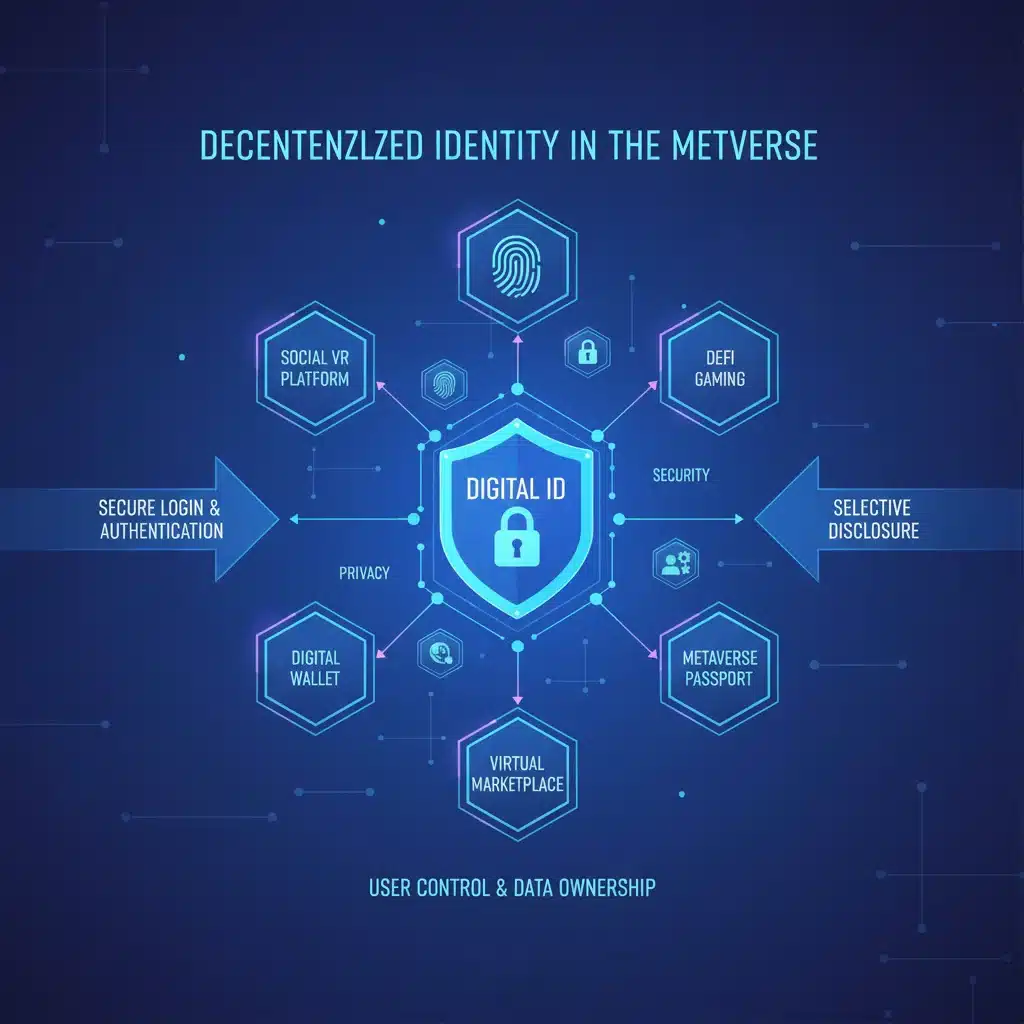
5. Decentralized Identity and Data Ownership
As consumers spend more time and conduct more transactions in the metaverse, the importance of digital identity and data ownership will skyrocket. The next 18 months will see a significant push towards decentralized identity solutions, giving US consumers greater control and ownership over their personal data and online personas within the metaverse economy.
Blockchain technology is at the forefront of this shift, enabling self-sovereign identity (SSI) models where users own and manage their digital credentials, rather than relying on centralized platforms. This means consumers can selectively share verified aspects of their identity (e.g., age, qualifications, purchase history) without revealing unnecessary personal information. It enhances privacy, security, and trust in the digital realm, which is critical for widespread metaverse adoption.
For metaverse consumer engagement, decentralized identity fosters a sense of empowerment and security. Consumers are more likely to engage deeply and conduct sensitive transactions in environments where they trust their data is protected and under their control. Businesses that embrace decentralized identity solutions will build stronger trust with their customer base, differentiate themselves, and comply with evolving data privacy regulations. This shift also lays the groundwork for a more equitable metaverse, where individual users, not just large corporations, have agency over their digital footprint. The development of user-friendly interfaces for managing these decentralized identities will be crucial for mainstream adoption, moving beyond complex cryptographic concepts to accessible tools.
6. Web3 and Blockchain-Powered Digital Economies
The foundational technology underpinning much of the metaverse economy is Web3, particularly blockchain technology. Over the next 18 months, we will see an accelerated integration of Web3 principles into metaverse platforms, enabling true digital ownership, transparent transactions, and new economic models for US consumers.
Blockchain facilitates the creation of non-fungible tokens (NFTs) for unique digital assets like virtual land, clothing, and art, providing verifiable proof of ownership. Cryptocurrencies will become increasingly prevalent as a medium of exchange within the metaverse, enabling micro-transactions and facilitating creator economies. This shift moves away from traditional, centralized digital economies towards open, user-owned, and transparent systems.
The implications for metaverse consumer engagement are profound. Consumers can become creators and owners, not just users. They can earn real value from their time and contributions in the metaverse, whether through creating digital content, participating in play-to-earn games, or trading virtual assets. This creates powerful incentives for engagement and fosters a vibrant, self-sustaining digital economy. Brands are exploring how to leverage NFTs for loyalty programs, exclusive access, and unique digital product drops, creating new revenue streams and deepening customer relationships. The security and immutability offered by blockchain also instill confidence in digital transactions, encouraging greater participation from consumers who might otherwise be wary of virtual spending. The continued development of scalable and energy-efficient blockchain solutions will be vital for supporting the high transaction volumes expected in a fully realized metaverse economy.
7. Spatial Computing and Augmented Reality Integration
While virtual reality (VR) offers full immersion, augmented reality (AR) and spatial computing will play an equally critical role in shaping US consumer engagement in the metaverse over the next 18 months. Spatial computing refers to the ability of computers to understand and interact with the physical world in three dimensions, seamlessly blending digital content with our real environments.
Advanced AR devices, such as smart glasses and powerful smartphone AR applications, will allow consumers to overlay digital information and experiences onto their physical surroundings. Imagine trying on virtual clothes in your living room, navigating with holographic directions, or seeing digital art integrated into public spaces. This creates a ‘metaverse layer’ over the real world, offering utility and entertainment without requiring full immersion.
This technology shift will significantly broaden the accessibility and utility of the metaverse. For metaverse consumer engagement, spatial computing and AR provide a less intrusive entry point than VR, allowing for continuous engagement throughout daily routines. It transforms everyday environments into interactive digital canvases, offering new ways for brands to connect with consumers through location-based experiences, interactive advertisements, and practical applications that enhance real-world tasks. The development of lightweight, stylish, and long-lasting AR devices will be crucial for widespread adoption, moving beyond bulky prototypes to consumer-friendly wearables. This hybrid approach, blending the physical and digital, is likely where many consumers will first experience the practical benefits of the metaverse, making it a critical area of development.
The Road Ahead: Navigating the Metaverse Economy
The seven technology shifts outlined above – hyper-realistic avatars, advanced haptic feedback, seamless interoperability, AI-powered personalization, decentralized identity, Web3 digital economies, and spatial computing/AR integration – are not isolated developments. They are interconnected threads weaving together the fabric of the emerging metaverse economy. For US consumers, these shifts promise an increasingly rich, immersive, and empowering digital experience. For businesses, they represent both immense opportunities and significant challenges.
Over the next 18 months, companies will need to strategically adapt to these changes. This involves investing in new technologies, understanding evolving consumer behaviors, and rethinking traditional business models. Early adopters who successfully integrate these shifts into their strategies will be well-positioned to capture market share and build strong, engaged communities in the metaverse.
Key considerations for businesses include:
- Strategic Investment: Identifying which technologies align best with their brand and consumer base.
- Talent Acquisition: Building teams with expertise in 3D design, blockchain, AI, and immersive experiences.
- Consumer Education: Helping consumers understand the value and safety of engaging with the metaverse.
- Ethical Frameworks: Developing responsible practices around data privacy, digital ownership, and content moderation.
- Collaboration: Partnering with other companies and metaverse platforms to ensure interoperability and broad reach.
The transformation of metaverse consumer engagement is not a distant future; it’s unfolding now. By understanding and proactively responding to these critical technology shifts, businesses and individuals in the US can unlock the vast potential of the metaverse economy, shaping a more interactive, personalized, and valuable digital future.
Consumer Behavior in the Evolving Metaverse
As these technology shifts mature, understanding their impact on consumer behavior is paramount. US consumers will increasingly expect seamless, personalized, and valuable experiences across both physical and digital realms. The lines between online and offline will continue to blur, making a holistic strategy essential for brands.
New Forms of Consumption
The metaverse economy introduces entirely new categories of consumer spending. Digital fashion, virtual real estate, unique NFTs, and play-to-earn game assets are just a few examples. Consumers will allocate a portion of their disposable income to these virtual goods and services, driven by desires for self-expression, status, utility within virtual worlds, and investment potential. Brands must consider how their physical product lines can be translated or complemented by digital offerings, creating a cohesive brand experience across all touchpoints.
Increased Demand for Authenticity and Transparency
With decentralized identities and blockchain-powered economies, consumers will have greater visibility into the provenance of digital assets and the terms of their engagement. This fosters a demand for authenticity and transparency from brands. Companies that operate with integrity, offering clear terms of service, verifiable digital assets, and respecting user data sovereignty, will build stronger trust and loyalty within the metaverse community. Conversely, brands that fail to adapt to these expectations risk alienating a significant portion of the digitally native consumer base.
Community and Social Connection as Drivers
The metaverse is inherently social. Consumers are drawn to virtual worlds not just for individual experiences but for shared interactions, community building, and social connection. Brands that can facilitate meaningful social experiences, create vibrant communities around their products, and empower users to co-create will see higher levels of metaverse consumer engagement. This moves beyond traditional social media interactions to immersive, shared virtual presence, where consumers can collectively participate in events, collaborate on projects, and form lasting digital relationships.
Expectations for Immersive and Interactive Experiences
The bar for digital experiences is being raised. Static websites and passive content will feel increasingly outdated compared to the immersive, interactive, and dynamic environments of the metaverse. Consumers will expect to be active participants rather than passive observers. This means brands need to move beyond simple digital marketing to creating interactive virtual storefronts, engaging virtual events, and personalized metaverse experiences that captivate and retain attention. The integration of haptic feedback and AI-powered personalization will further elevate these expectations, making truly multi-sensory experiences the new norm.
The Ethical and Regulatory Landscape
As the metaverse economy expands, so too will the need for robust ethical frameworks and regulatory oversight. The next 18 months will likely see increased discussion and initial steps towards addressing critical issues such as:
- Data Privacy and Security: Ensuring that consumer data collected within immersive environments is protected and used ethically, especially with the rise of AI-powered personalization and decentralized identities.
- Content Moderation and Safety: Developing effective mechanisms to combat harassment, hate speech, and other harmful behaviors in real-time, within persistent virtual spaces.
- Digital Ownership and Intellectual Property: Clarifying legal frameworks around NFTs, virtual goods, and intellectual property rights in a decentralized, interoperable metaverse.
- Economic Equity and Accessibility: Addressing potential disparities in access to the metaverse and ensuring that its economic opportunities are broadly available.
- Environmental Impact: Considering the energy consumption of underlying technologies like blockchain and developing sustainable solutions.
These challenges, while significant, also present opportunities for brands to lead with responsible innovation. Companies that proactively engage with these ethical considerations and contribute to the development of a safe, equitable, and sustainable metaverse will not only build consumer trust but also solidify their position as leaders in this new digital frontier.
Conclusion: A New Era of Digital Interaction
The metaverse economy is not a monolithic entity but a dynamic, evolving ecosystem shaped by rapid technological advancements. The next 18 months will be a crucial period, as the 7 key technology shifts – from hyper-realistic avatars and haptic feedback to Web3 economies and spatial computing – fundamentally redefine metaverse consumer engagement in the US. Businesses must prepare for a future where digital presence is immersive, ownership is verifiable, and experiences are hyper-personalized. By embracing these shifts, understanding their implications for consumer behavior, and navigating the emerging ethical landscape, brands can unlock unprecedented opportunities and forge deeper, more meaningful connections with their customers in this exciting new era of digital interaction.