Reshaping Customer Experience: 5 Innovative Strategies for US Service Industries by Q4 2026
Reshaping Customer Experience: 5 Innovative Strategies for US Service Industries to Implement by Q4 2026
In today’s hyper-competitive landscape, customer experience (CX) is no longer a mere buzzword; it’s the bedrock of business success, particularly within the US service industries. As we approach Q4 2026, the imperative to innovate and redefine how businesses interact with their clientele has never been more urgent. The modern customer is empowered, informed, and expects nothing less than seamless, personalized, and efficient interactions at every touchpoint. This comprehensive guide delves into five groundbreaking customer experience strategies that US service industries must embrace to not only meet but exceed these evolving expectations, ensuring sustained growth and unparalleled customer loyalty.
The shift from product-centric to customer-centric approaches has been ongoing for years, but the pace of change is accelerating. Digital transformation, fueled by advancements in artificial intelligence (AI), machine learning (ML), and data analytics, is reshaping the very fabric of service delivery. Businesses that fail to adapt risk obsolescence, while those that proactively invest in innovative customer experience strategies stand to gain a significant competitive advantage. This article will explore actionable insights and practical applications for each strategy, providing a clear roadmap for implementation by the end of 2026.
The Evolving Landscape of US Customer Expectations
Before diving into the strategies, it’s crucial to understand the current pulse of the US consumer. American customers are increasingly valuing convenience, speed, and personalization. They expect brands to anticipate their needs, resolve issues proactively, and provide consistent experiences across all channels. The rise of digital natives and the widespread adoption of smart devices mean that digital interactions are now the norm, not the exception. Furthermore, there’s a growing demand for ethical practices, transparency, and social responsibility from the brands they choose to engage with. These factors collectively underscore the need for sophisticated and empathetic customer experience strategies.
Moreover, the pandemic accelerated many digital trends, solidifying the importance of robust online support and self-service options. While face-to-face interactions still hold value, especially in certain service sectors, the expectation is for these to be seamlessly integrated with digital touchpoints. The challenge for US service industries is to create a harmonious ecosystem where every customer interaction, regardless of channel, contributes positively to their overall perception of the brand. This requires a holistic approach to customer experience strategies, moving beyond siloed departments and towards a unified, customer-first mindset.
Strategy 1: Hyper-Personalization at Scale Driven by AI and Data Analytics
True personalization goes beyond addressing a customer by their first name. It involves understanding their unique preferences, past behaviors, and potential future needs to deliver tailored experiences, products, and services. This level of hyper-personalization is no longer a luxury but a necessity, and it’s powered by advanced AI and robust data analytics. For US service industries, this means leveraging customer data to create individual profiles that inform every interaction.
Implementing AI-driven Personalization:
- Predictive Analytics for Proactive Service: AI algorithms can analyze historical data to predict customer needs or potential issues before they arise. Imagine an insurance company proactively offering a tailored policy adjustment based on life events detected through data, or a financial institution suggesting relevant investment opportunities. This proactive approach significantly enhances the customer journey and builds trust.
- Personalized Content and Offers: Beyond basic recommendations, AI can dynamically generate personalized content, marketing messages, and service offerings. This could be a healthcare provider sending highly relevant wellness tips based on a patient’s health profile, or a travel agency curating bespoke itineraries.
- Intelligent Chatbots and Virtual Assistants: While often associated with basic query resolution, AI-powered chatbots are evolving to offer highly personalized support. They can access customer histories, understand complex queries through natural language processing (NLP), and provide contextually relevant solutions, freeing up human agents for more intricate tasks.
- Dynamic Website and App Experiences: Websites and mobile applications can adapt their layout, content, and navigation based on individual user behavior and preferences. This creates a more intuitive and efficient experience, reducing friction and increasing engagement.
The key to successful hyper-personalization lies in ethical data collection and utilization, ensuring transparency with customers about how their data is used to enhance their experience. By Q4 2026, US service industries should aim to have sophisticated AI models in place that can not only predict customer behavior but also adapt their service delivery in real-time, making every interaction feel uniquely crafted for the individual. This is a cornerstone of effective customer experience strategies.
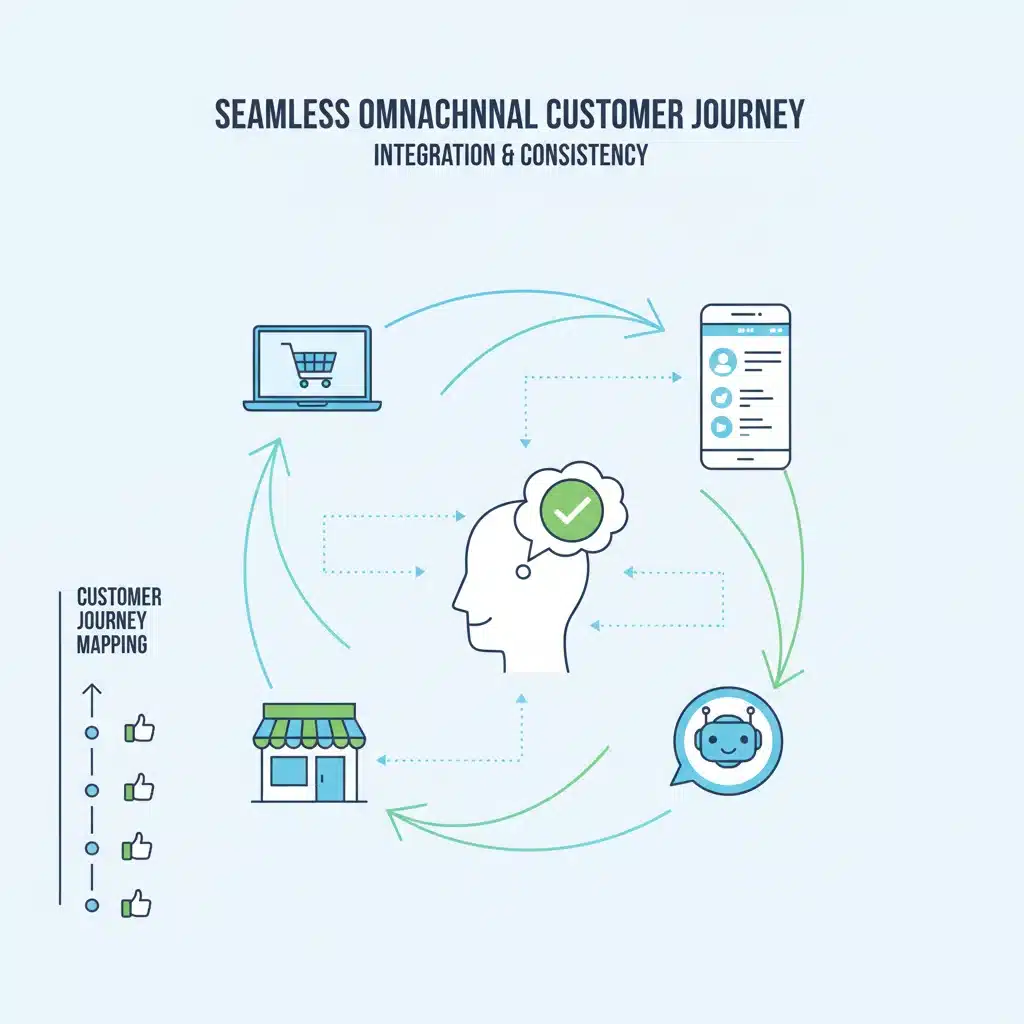
Strategy 2: Seamless Omnichannel Integration with a Human Touch
Customers today interact with businesses through a multitude of channels: websites, mobile apps, social media, email, phone calls, and in-person visits. A truly exceptional customer experience strategy ensures that these channels are not isolated silos but are seamlessly integrated, allowing customers to transition effortlessly between them without losing context. The goal is to provide a consistent brand voice and a unified customer journey, regardless of the chosen touchpoint.
Achieving Omnichannel Excellence:
- Unified Customer Profiles: A central customer relationship management (CRM) system that captures all interactions across all channels is fundamental. This ensures that every employee, from a call center agent to an in-store representative, has a complete view of the customer’s history and preferences.
- Consistent Messaging and Branding: Whether a customer is engaging with a chatbot, reading an email, or speaking to a human agent, the tone, messaging, and brand identity should remain consistent. This builds trust and reinforces brand recognition.
- Effortless Channel Switching: Customers should be able to start an interaction on one channel (e.g., a chatbot on a website) and seamlessly continue it on another (e.g., a phone call with an agent) without having to repeat information. This requires robust backend integration and intelligent routing systems.
- Self-Service Empowerment: While providing human support is crucial, empowering customers with intuitive self-service options (FAQs, knowledge bases, interactive guides) across all channels can significantly improve efficiency and satisfaction for routine queries.
The ‘human touch’ aspect is vital here. While technology facilitates seamlessness, it should never fully replace genuine human interaction when it’s needed most. Training employees to be empathetic, knowledgeable, and empowered to resolve issues quickly across all channels is paramount. By Q4 2026, US service industries should strive for an omnichannel model where technology enhances human interaction rather than replacing it, ensuring that every customer feels valued and understood. This integrated approach is critical for strong customer experience strategies.

Strategy 3: Proactive Problem Resolution and Journey Orchestration
Waiting for a customer to report an issue is a reactive approach that can lead to frustration and churn. Innovative customer experience strategies prioritize proactive problem resolution and intelligent journey orchestration. This involves identifying potential pain points before they impact the customer and guiding customers through their journey in a way that minimizes friction and maximizes satisfaction.
Embracing Proactive CX:
- Predictive Issue Detection: Leveraging AI and IoT (Internet of Things) devices, service industries can monitor systems and anticipate potential service disruptions or product failures. For example, a utility company might detect an impending outage and notify affected customers before it happens, offering solutions or alternative services.
- Automated Alerts and Notifications: Proactive communication is key. Sending timely updates about service status, delivery schedules, or appointment reminders can significantly reduce customer anxiety and the volume of inbound inquiries.
- Customer Journey Mapping with Predictive Insights: Regularly mapping the customer journey and using predictive analytics to identify common roadblocks or points of frustration allows businesses to proactively redesign processes and touchpoints. This ensures a smoother, more intuitive path for the customer.
- Personalized Onboarding and Education: For complex services, proactive onboarding and educational content can prevent future issues. This might include personalized tutorials, checklists, or dedicated support channels for new customers, ensuring they understand how to maximize the value of the service.
Journey orchestration takes this a step further by actively guiding customers through their interactions, ensuring they receive the right information or support at the right time. This can be achieved through intelligent workflows that trigger specific actions or communications based on customer behavior. By Q4 2026, US service industries should be adept at not just reacting to customer needs but actively shaping their experience to be as positive and seamless as possible. This proactive stance is a hallmark of leading customer experience strategies.
Strategy 4: Employee Empowerment and Experience (EX) as a CX Driver
It’s a well-established truth: happy employees lead to happy customers. The employee experience (EX) is inextricably linked to customer experience (CX). When employees feel valued, supported, and empowered, they are more engaged, motivated, and capable of delivering exceptional service. For US service industries, investing in EX is not just a moral imperative; it’s a strategic business decision that directly impacts the bottom line and strengthens customer experience strategies.
Fostering a Positive Employee Experience:
- Comprehensive Training and Development: Equip employees with the knowledge, skills, and tools they need to excel. This includes not only product/service training but also empathy, problem-solving, and communication skills. Continuous learning opportunities keep them engaged and adaptable.
- Empowerment to Resolve Issues: Give front-line employees the authority and resources to make decisions and resolve customer issues without unnecessary escalations. This speeds up resolution times and makes customers feel heard and valued.
- Advanced Tools and Technology: Provide employees with intuitive, efficient tools that reduce administrative burden and allow them to focus on customer interaction. This includes integrated CRM systems, knowledge bases, and communication platforms.
- Feedback Mechanisms and Recognition: Create channels for employees to provide feedback on processes, tools, and customer interactions. Act on this feedback. Additionally, recognize and reward employees for outstanding service, fostering a culture of excellence.
- Focus on Well-being and Work-Life Balance: A healthy and balanced workforce is a productive one. Prioritize employee well-being, mental health support, and flexible work arrangements where possible.
By Q4 2026, leading US service industries will have cultivated a culture where employees are seen as brand ambassadors and critical drivers of customer satisfaction. Their EX will be as meticulously designed and optimized as the CX itself, recognizing that an engaged workforce is the most powerful asset in delivering superior service. This symbiotic relationship between EX and CX is vital for robust customer experience strategies.
Strategy 5: Leveraging Customer Feedback for Continuous Improvement and Innovation
The customer’s voice is the most valuable data point a business can possess. Innovative customer experience strategies are built on a foundation of continuous listening, analyzing, and acting upon customer feedback. This goes beyond simple satisfaction surveys; it involves creating a robust feedback ecosystem that captures insights from various sources and translates them into actionable improvements and new service innovations.
Building a Feedback-Driven CX Loop:
- Multi-Channel Feedback Collection: Implement diverse feedback mechanisms across all touchpoints: post-interaction surveys (CSAT, NPS, CES), social media listening, online reviews, focus groups, user testing, and direct employee feedback.
- Advanced Sentiment Analysis: Utilize AI-powered sentiment analysis tools to process unstructured feedback (e.g., text from reviews, social media comments, call transcripts) and identify emerging trends, pain points, and areas of delight.
- Closed-Loop Feedback Systems: Ensure that feedback is not just collected but acted upon. Establish processes to acknowledge customer feedback, communicate how it will be addressed, and follow up once changes have been implemented. This demonstrates that their input is valued.
- Root Cause Analysis: When issues are identified through feedback, conduct thorough root cause analysis to understand why they occurred and implement systemic solutions, rather than just addressing symptoms.
- Co-creation and Innovation: Involve customers in the design and development of new services or improvements. Customer advisory boards, beta testing programs, and online communities can foster a sense of ownership and lead to highly relevant innovations.
By Q4 2026, US service industries should have a dynamic and integrated feedback loop that not only informs immediate service adjustments but also fuels long-term strategic innovation. This continuous cycle of listening, learning, and adapting ensures that customer experience strategies remain relevant, responsive, and consistently aligned with evolving customer needs and preferences. It transforms feedback from a static data point into a powerful engine for competitive advantage.
Measuring Success: Key Metrics for CX Strategies
Implementing these innovative customer experience strategies is only half the battle; measuring their effectiveness is equally crucial. US service industries must establish clear KPIs (Key Performance Indicators) to track progress and demonstrate ROI. Some essential metrics include:
- Net Promoter Score (NPS): Measures customer loyalty and willingness to recommend a brand.
- Customer Satisfaction (CSAT): Gauges satisfaction with a specific interaction or service.
- Customer Effort Score (CES): Quantifies the effort a customer had to exert to get an issue resolved or a request fulfilled.
- Churn Rate: The percentage of customers who stop using a company’s service during a given period.
- Customer Lifetime Value (CLTV): The total revenue a business can reasonably expect from a single customer account throughout their relationship.
- First Contact Resolution (FCR): The percentage of customer issues resolved during the first interaction.
- Average Resolution Time (ART): The average time it takes to resolve a customer issue.
- Employee Engagement Score: Reflects employee satisfaction and commitment, directly impacting EX and subsequently CX.
Regularly reviewing these metrics, alongside qualitative feedback, provides a holistic view of CX performance and helps identify areas for further optimization. Data visualization tools and dashboards can make this information easily accessible and actionable for all stakeholders. The goal by Q4 2026 is to not just collect data but to derive meaningful insights that drive continuous improvement in all customer experience strategies.
Challenges and Considerations for Implementation
While the benefits of these customer experience strategies are clear, their implementation is not without challenges. US service industries must consider several factors:
- Data Privacy and Security: With increased data collection comes greater responsibility. Adhering to privacy regulations (e.g., CCPA, state-specific laws) and ensuring robust cybersecurity measures are paramount to maintaining customer trust.
- Legacy Systems Integration: Many established businesses operate with outdated legacy systems that can hinder seamless data flow and omnichannel integration. Significant investment and strategic planning are required to modernize infrastructure.
- Change Management: Implementing new CX strategies often requires significant cultural shifts within an organization. Employees may resist new technologies or processes, necessitating strong leadership, clear communication, and comprehensive training.
- Budgetary Constraints: Advanced AI, data analytics platforms, and comprehensive training programs represent substantial investments. Businesses need to build a compelling business case and secure adequate funding.
- Talent Gap: The demand for skilled data scientists, AI specialists, and CX professionals is high. Attracting and retaining top talent will be crucial for successful implementation.
Addressing these challenges proactively, with a clear vision and phased implementation plan, will be key to success. A strong leadership commitment to a customer-first culture is the most significant enabler for overcoming these hurdles and effectively deploying innovative customer experience strategies.
Conclusion: A Future-Proof Approach to Customer Experience
The journey to reshaping customer experience in US service industries by Q4 2026 is an ambitious yet critical endeavor. By strategically implementing hyper-personalization driven by AI, fostering seamless omnichannel integration with a human touch, embracing proactive problem resolution, empowering employees, and leveraging continuous customer feedback, businesses can create truly exceptional experiences that differentiate them in the market.
These five innovative customer experience strategies are not isolated initiatives but interconnected components of a holistic framework. Their synergistic application will lead to increased customer satisfaction, enhanced loyalty, reduced churn, and ultimately, sustainable business growth. The time to act is now. US service industries that commit to this customer-centric transformation will not only meet the demands of the modern consumer but will also define the future of service excellence.
Embrace these strategies, invest in the right technologies and, most importantly, cultivate a culture that champions the customer at every level. The reward will be a loyal customer base and a resilient business poised for success in the years to come.