
Cracking the Code: How US Startups are Securing $10M+ in Funding for Sustainable Tech Innovations in 2026
The landscape of venture capital is constantly evolving, but one sector has consistently demonstrated remarkable resilience and growth: sustainable technology. As we look towards 2026, US startups in this vital field are not just surviving; they are thriving, attracting significant investment rounds often exceeding $10 million. This isn’t merely a trend; it’s a fundamental shift, driven by increasing environmental awareness, regulatory pressures, and a growing understanding of the long-term economic benefits of green solutions. For entrepreneurs and investors alike, understanding the strategies behind securing substantial sustainable tech funding is paramount.
This comprehensive guide delves into the intricate mechanisms, investor psychology, and market dynamics that are enabling US sustainable tech startups to raise over $10 million. From innovative business models to strategic partnerships and compelling impact narratives, we will explore the multifaceted approach required to unlock significant capital in this competitive yet rewarding space.
The Rising Tide of Sustainable Tech Funding: Why Now?
The confluence of several powerful forces is creating an unprecedented surge in sustainable tech funding. Firstly, the undeniable urgency of climate change and resource depletion has moved sustainability from a niche concern to a global imperative. Governments worldwide are implementing policies that incentivize green technologies, creating new markets and reducing investment risks. Secondly, consumer demand for eco-friendly products and services is at an all-time high, prompting corporations to integrate sustainability into their core strategies. This, in turn, creates a robust demand for B2B sustainable solutions.
Furthermore, technological advancements in areas such as artificial intelligence, biotechnology, and advanced materials are making sustainable solutions more efficient, cost-effective, and scalable than ever before. This convergence of environmental necessity, market demand, and technological feasibility has positioned sustainable tech as a prime target for venture capitalists seeking both financial returns and positive societal impact. Investors are increasingly recognizing that sustainable businesses are not just good for the planet but also inherently resilient and poised for long-term growth.
The investment community itself has undergone a transformation. Impact investing, once a peripheral concept, is now mainstream. Funds dedicated solely to sustainable and ESG (Environmental, Social, and Governance) criteria are proliferating, bringing with them a new wave of capital eager to back ventures that align with these values. This shift means that startups focusing on sustainable tech funding can tap into a broader and deeper pool of capital than ever before.
Decoding Investor Expectations: What VCs Look For in a $10M+ Sustainable Tech Round
Securing a funding round of $10 million or more requires more than just a good idea; it demands a meticulously crafted strategy that resonates with the sophisticated demands of venture capitalists. Investors at this level are looking for companies that have moved beyond the ideation phase and are demonstrating tangible progress and a clear path to market dominance. Here’s a breakdown of their key criteria:
1. Proven Technology and Scalability
At the heart of any successful sustainable tech startup is a robust, defensible technology. VCs want to see proof of concept, ideally with pilot programs or early commercial deployments. They are assessing the technology’s readiness level, its intellectual property protection, and its ability to scale rapidly to address large markets. Can your solution be replicated efficiently across different geographies or industries? Is it cost-effective at scale? These are critical questions that must be answered with data and real-world examples. The ability to demonstrate a clear scalability roadmap is non-negotiable for significant sustainable tech funding.
2. Clear Market Opportunity and Business Model
A $10M+ round signals confidence in a startup’s ability to capture a substantial market share. Investors will scrutinize your market analysis, looking for a deep understanding of your target customers, competitive landscape, and regulatory environment. Your business model must be clear, articulate, and demonstrate a strong revenue generation potential. Is it a subscription model, product sales, licensing, or a hybrid? How will you achieve profitability? A well-defined and validated go-to-market strategy is crucial.
3. Strong, Experienced Management Team
Ultimately, investors bet on people. A diverse team with a proven track record in relevant industries, strong leadership skills, and a clear vision is paramount. For sustainable tech, this often means a blend of technical expertise, business acumen, and a genuine passion for environmental impact. VCs look for teams that can execute, adapt, and navigate the challenges inherent in scaling a high-growth company. A team capable of attracting top talent and building a strong company culture will always be more appealing for substantial sustainable tech funding.
4. Demonstrable Impact and ESG Alignment
While financial returns are always a primary driver, for sustainable tech, the impact narrative is equally important, especially for impact investors. Startups must clearly articulate their environmental and social benefits, backed by metrics. How much carbon are you offsetting? How much waste are you reducing? What social good are you creating? A compelling impact story, integrated into the business model, can significantly enhance a startup’s appeal and unlock capital from a wider range of investors focused on ESG criteria. This is where the ‘sustainable’ in sustainable tech funding truly shines.
5. Capital Efficiency and Financial Projections
Investors want to see that their capital will be used wisely and will generate significant returns. Your financial projections must be realistic, well-researched, and demonstrate a clear path to profitability and exit opportunities. Understanding your burn rate, customer acquisition costs, and lifetime value are essential. Startups seeking $10M+ must showcase a disciplined approach to capital deployment and a solid understanding of financial metrics.
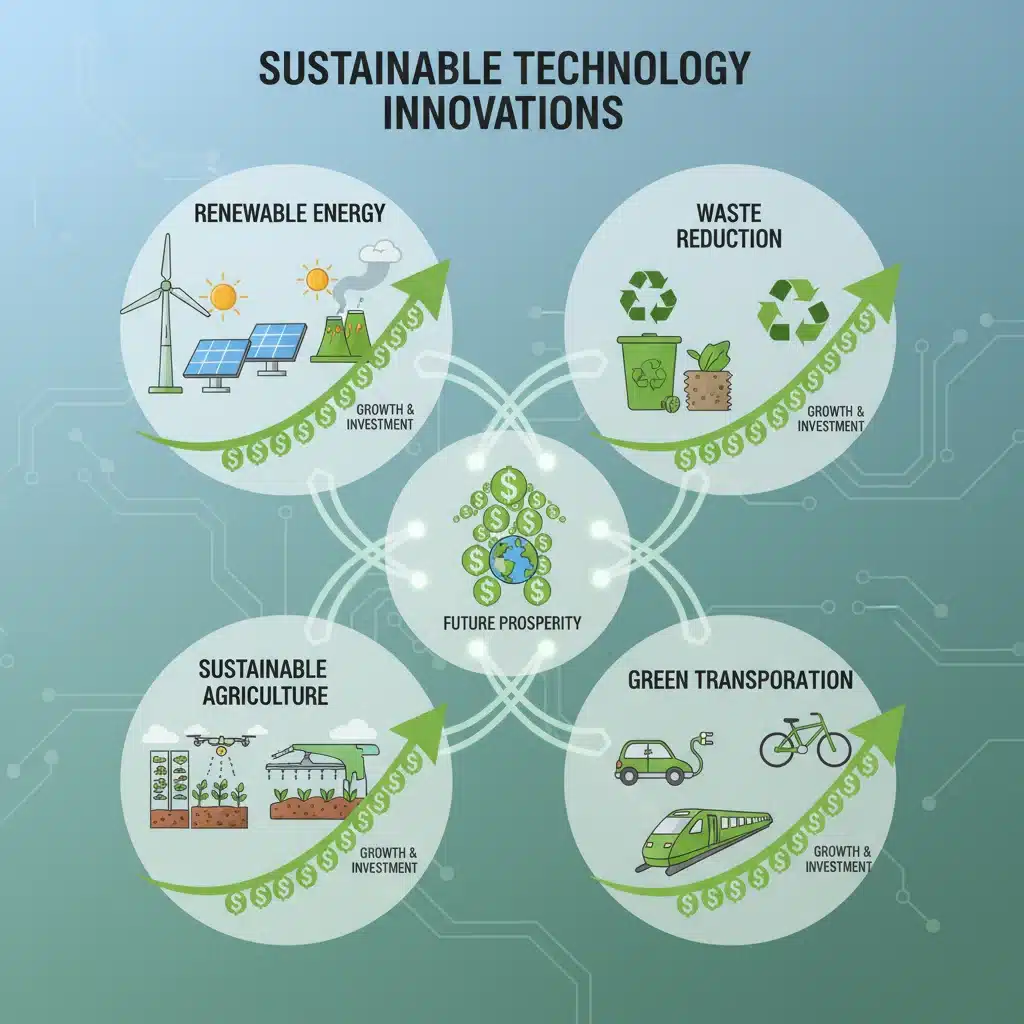
Key Sectors Attracting $10M+ Sustainable Tech Funding in 2026
While the entire sustainable tech ecosystem is booming, certain sectors are particularly hotbeds for significant investment. In 2026, expect these areas to continue leading the charge:
Renewable Energy Generation and Storage
Beyond traditional solar and wind, innovation in next-generation renewables (e.g., advanced geothermal, tidal, small modular reactors) and, critically, energy storage solutions (e.g., long-duration batteries, hydrogen, pumped hydro) are attracting massive capital. Startups optimizing grid management with AI or developing novel materials for efficiency gains are also highly sought after for sustainable tech funding.
Circular Economy and Waste Management
The push for a circular economy is creating immense opportunities. Companies focusing on advanced recycling technologies, waste-to-value solutions, upcycling, material science for sustainable alternatives, and platforms facilitating product-as-a-service models are seeing significant interest. Reducing waste, prolonging product lifecycles, and creating value from discarded materials are core tenets of this sector.
Sustainable Agriculture and Food Tech
Feeding a growing global population sustainably is a colossal challenge. Investment is pouring into precision agriculture (AI, IoT for optimized farming), alternative proteins (plant-based, cultivated meat), vertical farming, sustainable packaging for food, and technologies that reduce food waste and improve supply chain efficiency. These innovations are crucial for global food security and environmental protection, making them attractive for sustainable tech funding.
Green Building and Sustainable Infrastructure
Decarbonizing the built environment is a massive undertaking. Startups developing eco-friendly construction materials, smart building management systems that optimize energy use, sustainable urban planning solutions, and technologies for carbon capture in industrial processes are prime candidates for large funding rounds. The long-term nature of infrastructure projects often requires substantial upfront investment.
Water Management and Purification
Water scarcity is a global crisis. Innovations in water purification, desalination technologies, smart water grids, wastewater treatment, and resource recovery from industrial effluents are critical. Companies that can offer scalable, cost-effective solutions to address water challenges are highly attractive to investors seeking impactful and profitable ventures in sustainable tech funding.
Decarbonization Technologies
This broad category includes direct air capture, industrial decarbonization solutions (e.g., green hydrogen production, electrification of industrial processes), and carbon utilization technologies that turn captured carbon into valuable products. The race to net-zero emissions is driving significant investment into these hard-to-abate sectors.
Strategies for Securing $10M+ in Sustainable Tech Funding
Beyond meeting investor expectations, startups need a proactive and strategic approach to navigate the funding landscape. Here are key strategies:
1. Build a Robust Network and Strategic Partnerships
Networking isn’t just about meeting potential investors; it’s about building a strong ecosystem around your startup. Engage with industry leaders, participate in relevant conferences and accelerators, and forge strategic partnerships with corporations, research institutions, and even government agencies. These partnerships can provide validation, access to resources, and open doors to future funding opportunities. A strong network can also lead to warm introductions to key investors, which are invaluable for securing substantial sustainable tech funding.
2. Craft a Compelling Story and Vision
Investors, particularly in the sustainable tech space, are often driven by a dual mandate of financial return and impact. Your pitch needs to weave a compelling narrative that highlights both. Clearly articulate the problem you’re solving, the uniqueness of your solution, the size of the market opportunity, and the tangible environmental and social benefits. Your vision should be ambitious yet achievable, inspiring confidence in your ability to execute. A passionate and articulate presentation of your company’s mission and potential for impact can be a powerful differentiator in the quest for sustainable tech funding.
3. Demonstrate Traction and Metrics
For a $10M+ round, investors expect more than just projections. They want to see tangible traction. This could include:
- Customer acquisition and retention rates.
- Revenue growth and unit economics.
- Successful pilot program results and case studies.
- Key partnerships and letters of intent.
- Intellectual property development and patents.
- Team expansion and key hires.
Data-driven evidence of progress significantly de-risks the investment and proves your ability to execute. The more evidence you have of market validation and operational efficiency, the stronger your position for securing high-value sustainable tech funding.
4. Understand Different Investor Types
Not all investors are created equal. For sustainable tech, you might engage with traditional venture capital firms, corporate venture capital (CVCs) arms of large corporations, impact investors, family offices, and even government grants or debt financing. Each has different motivations, investment horizons, and due diligence processes. Tailor your approach and pitch to resonate with the specific type of investor you are targeting. For example, CVCs might be interested in strategic alignment and technology integration, while impact investors will prioritize measurable environmental outcomes alongside financial returns. Diversifying your investor outreach can broaden your chances of securing the necessary sustainable tech funding.
5. Prepare for Rigorous Due Diligence
A $10M+ funding round involves extensive due diligence. Be prepared to provide detailed documentation on every aspect of your business: financial records, legal documents, intellectual property, market analysis, team biographies, technical specifications, and environmental impact assessments. Having a virtual data room well-organized and ready from the outset can streamline the process and demonstrate your professionalism. Transparency and preparedness are key to building investor trust.

6. The Role of Government Incentives and Grants
In addition to private capital, government incentives and grants play a crucial role in de-risking early-stage sustainable tech and boosting its attractiveness for larger private investments. Programs from the Department of Energy, EPA, and various state-level initiatives offer non-dilutive funding, tax credits, and loan guarantees. While not direct equity, securing such grants validates your technology and mission, making your startup more appealing to venture capitalists seeking sustainable tech funding. These incentives often bridge the gap between R&D and commercialization, proving crucial for scaling innovative solutions.
7. Focus on Unit Economics and Profitability Path
While impact is vital, the ultimate goal for most investors is a financial return. Startups must demonstrate a clear path to positive unit economics and long-term profitability. This means understanding your customer acquisition costs, churn rates, lifetime value, and gross margins. Presenting a credible financial model that shows how your sustainable solution can generate significant revenue and profits will be essential for securing high-value sustainable tech funding. It’s about proving that sustainability can be, and is, good business.
The Future Landscape: 2026 and Beyond for Sustainable Tech Funding
Looking ahead to 2026, the trajectory for sustainable tech funding in the US remains overwhelmingly positive. Several trends are expected to intensify, further solidifying this sector’s position as a magnet for capital:
- Increased Corporate Demand: More corporations will commit to net-zero targets, driving demand for sustainable solutions across their supply chains and operations. This will lead to more corporate venture capital activity and strategic partnerships.
- Regulatory Tailwinds: Expect continued policy support at federal and state levels, including carbon pricing mechanisms, renewable energy mandates, and incentives for circular economy practices. These regulations create stable market conditions for sustainable tech.
- Technological Convergence: The fusion of AI, IoT, biotech, and advanced materials will accelerate innovation, leading to even more efficient and impactful sustainable solutions, attracting new waves of investment.
- Mainstreaming of Impact Investing: ESG considerations will become even more integrated into mainstream investment decisions, bringing a larger pool of generalist funds into the sustainable tech space.
- Focus on ‘Hard-to-Abate’ Sectors: As immediate solutions are deployed, more capital will flow into complex challenges like industrial decarbonization, sustainable aviation, and long-duration energy storage, requiring larger, more sophisticated funding rounds.
For US startups, this means the opportunity to secure significant sustainable tech funding will only grow. However, the competition will also intensify, making differentiation, strong execution, and a clear impact narrative more critical than ever.
Conclusion: Paving the Way for a Sustainable Future with Robust Funding
Securing $10 million or more in funding for a sustainable tech startup in the US by 2026 is an ambitious yet achievable goal. It requires a blend of groundbreaking innovation, a meticulously planned business strategy, a stellar team, and a compelling vision for a better, more sustainable future. Investors are increasingly recognizing that sustainable solutions offer not only a path to substantial financial returns but also a unique opportunity to contribute positively to global challenges.
By focusing on proven technology, understanding market dynamics, building strong relationships, and clearly articulating both financial potential and environmental impact, US sustainable tech startups can crack the code to significant investment. The capital is available, the demand is growing, and the need is urgent. The stage is set for a new generation of sustainable tech innovators to secure the funding they need to build the solutions that will define our future.
The journey to securing substantial sustainable tech funding is challenging, but the rewards – both financial and societal – are immense. As 2026 approaches, the spotlight on sustainable innovation will only brighten, providing fertile ground for visionary entrepreneurs to secure the capital required to transform our world.