Zero-Trust Architecture: 6-Month US Cloud Implementation Guide
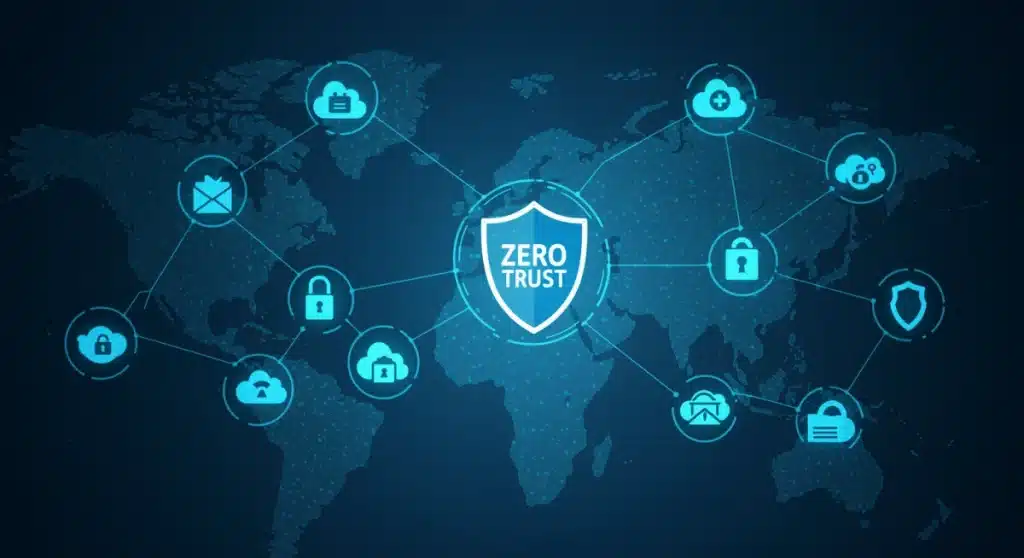
Implementing Zero-Trust Architecture in US cloud environments requires a strategic, phased approach focusing on identity verification, least privilege, and continuous monitoring to secure digital assets effectively.
Are you ready to revolutionize your organization’s cybersecurity posture? This guide offers Practical Solutions: A Step-by-Step Guide to Implementing Zero-Trust Architecture in US Cloud Environments within 6 Months, providing a clear roadmap to bolster your defenses in today’s dynamic threat landscape.
Understanding the Zero-Trust Philosophy for US Cloud Environments
The concept of Zero Trust has moved from a theoretical ideal to a fundamental necessity, especially for organizations operating within US cloud environments. It’s a paradigm shift from traditional perimeter-based security, which assumes everything inside the network is trustworthy. In contrast, Zero Trust operates on the principle of “never trust, always verify,” meaning no user, device, or application is inherently trusted, regardless of its location relative to the network perimeter.
This approach is particularly critical in cloud settings, where the traditional perimeter has largely dissolved. Resources are distributed, accessed from various locations, and managed by different entities. Adopting Zero Trust helps mitigate risks associated with compromised credentials, insider threats, and lateral movement of attackers within a network. It enforces strict access controls and continuous authentication, ensuring that only authorized entities can access specific resources for specific purposes.
The Core Principles of Zero Trust
Zero Trust is built upon several foundational principles that guide its implementation and ongoing management. These principles ensure a comprehensive and resilient security posture.
- Verify explicitly: Authenticate and authorize every access request based on all available data points, including user identity, location, device health, and sensitivity of the resource.
- Use least privilege access: Grant users only the minimum access necessary to perform their tasks, and only for the required duration. Regularly review and revoke access as roles and responsibilities change.
- Assume breach: Design systems and processes with the assumption that a breach will eventually occur. This mindset encourages proactive threat detection, rapid response, and robust segmentation.
By adhering to these tenets, organizations can significantly reduce their attack surface and limit the potential impact of a successful breach. The continuous evaluation of trust, rather than a one-time check, forms the backbone of a strong Zero-Trust strategy.
In essence, understanding Zero Trust in the context of US cloud environments means recognizing that the network itself is hostile. Every interaction, every data access, and every application request must be treated as potentially malicious until proven otherwise. This proactive stance is what makes Zero Trust an indispensable framework for modern cloud security.
Phase 1: Assessment and Planning (Months 1-2)
The journey to implementing Zero-Trust Architecture in a US cloud environment begins with a thorough assessment and meticulous planning. This initial phase is crucial for laying a solid foundation and ensuring that subsequent steps are aligned with organizational goals and regulatory requirements. It requires a deep dive into existing infrastructure, identifying critical assets, and understanding current security vulnerabilities.
Without a clear understanding of the current state, any Zero-Trust implementation risks becoming disjointed and ineffective. This phase involves not just technical evaluations but also strategic alignment with business objectives and stakeholder buy-in.
Key Activities in Assessment and Planning
During these first two months, several critical activities must be undertaken to set the stage for a successful Zero-Trust deployment.
- Identify and classify sensitive data: Pinpoint where sensitive data resides across all cloud services and classify it based on its importance and regulatory requirements. This includes personally identifiable information (PII), intellectual property, and financial data.
- Map existing user identities and access patterns: Catalog all user accounts, their roles, and how they currently access cloud resources. This helps in understanding typical behavior and identifying anomalies.
- Inventory devices and applications: Create a comprehensive list of all devices (endpoints, mobile, IoT) and applications interacting with your cloud environment. Assess their security posture and compliance.
This inventory and classification process provides the necessary intelligence to design a Zero-Trust framework that is both secure and operationally efficient. It allows for a targeted approach, prioritizing the protection of the most critical assets.
Furthermore, defining the scope and objectives of the Zero-Trust initiative is paramount. What specific security challenges are you trying to solve? Which regulatory mandates (e.g., NIST, CMMC, HIPAA, GDPR for US entities handling international data) must be addressed? Establishing clear, measurable objectives will guide decision-making throughout the project.
Finally, selecting the right tools and technologies is an integral part of this phase. This involves researching and evaluating various Zero-Trust platforms, identity and access management (IAM) solutions, micro-segmentation tools, and security information and event management (SIEM) systems. Compatibility with existing cloud providers (AWS, Azure, Google Cloud) and integration capabilities are key considerations.
Phase 2: Identity and Access Management (Months 3-4)
With a comprehensive assessment and planning phase complete, the focus shifts to strengthening identity and access management (IAM). This is arguably the cornerstone of any effective Zero-Trust Architecture, as it dictates who can access what, under what conditions, and for how long. In US cloud environments, robust IAM is critical for compliance and data protection.
This phase involves implementing advanced authentication mechanisms and meticulously defining access policies that adhere strictly to the principle of least privilege. It moves beyond simple username and password combinations to a more dynamic and adaptive approach to identity verification.
Strengthening Identity Verification
Multi-factor authentication (MFA) is non-negotiable in a Zero-Trust model. It adds an essential layer of security beyond passwords.
- Implement strong MFA: Deploy MFA across all user accounts, especially for privileged access. Consider various methods like biometrics, hardware tokens, or push notifications to enhance security and user experience.
- Adopt single sign-on (SSO): Streamline user access to multiple cloud applications while maintaining strong authentication through a centralized identity provider.
- Leverage identity governance and administration (IGA): Implement tools to manage user identities, roles, and access rights throughout their lifecycle, including provisioning, de-provisioning, and regular access reviews.
These measures collectively ensure that user identities are verified explicitly and continuously, reducing the risk of unauthorized access due to compromised credentials.
Beyond MFA and SSO, continuous authentication is a crucial aspect. This involves constantly re-evaluating user trust based on behavioral analytics, device health, and contextual information. If any anomalies are detected, access can be automatically re-verified or revoked.
Defining granular access policies is equally important. Instead of broad access permissions, Zero Trust mandates segmenting resources and assigning access based on specific roles, tasks, and data sensitivity. This often involves attribute-based access control (ABAC) or policy-based access control (PBAC) to create dynamic and flexible access rules.
Finally, establishing a centralized identity provider (IdP) is vital for consistency and manageability. An IdP acts as the authoritative source for all user identities and their associated attributes, simplifying policy enforcement and auditing across disparate cloud services. This centralized approach reduces administrative overhead and minimizes the chances of misconfigurations.
Phase 3: Micro-segmentation and Network Security (Month 5)
Once identity and access management are robustly in place, the next critical step in implementing Zero-Trust Architecture in US cloud environments is micro-segmentation and enhancing network security. This phase focuses on limiting lateral movement within the network, even if an attacker manages to breach an initial perimeter. It’s about containing potential threats and minimizing their impact.
Micro-segmentation effectively creates secure zones within your cloud infrastructure, allowing for granular control over traffic flow between individual workloads. This contrasts sharply with traditional network segmentation, which often divides networks into much larger, less secure segments.
Implementing Granular Network Controls
Micro-segmentation is a powerful tool for enforcing the “least privilege” principle at the network layer. It ensures that only necessary communication paths are established.
- Define application and workload boundaries: Identify logical groupings of applications and workloads that need to communicate. This forms the basis for defining micro-segments.
- Apply policy-based segmentation: Implement policies that control traffic flow between these segments, allowing only authorized communication based on identity, application, and context.
- Leverage cloud-native security features: Utilize cloud provider services like security groups, network access control lists (NACLs), and firewall rules to enforce segmentation policies effectively.
This granular control significantly reduces the attack surface and prevents unauthorized lateral movement, making it much harder for attackers to move from one compromised system to another.
Beyond micro-segmentation, enhancing overall network security involves several other key components. This includes deploying advanced threat protection capabilities within the cloud environment. Next-generation firewalls (NGFWs), intrusion detection/prevention systems (IDPS), and web application firewalls (WAFs) play a crucial role in monitoring and filtering malicious traffic.
Furthermore, secure connectivity is paramount. This means ensuring that all communication, both internal and external, is encrypted. Implementing VPNs for remote access, using TLS/SSL for data in transit, and encrypting data at rest are fundamental practices. Regular vulnerability scanning and penetration testing of the network infrastructure are also essential to identify and remediate weaknesses before they can be exploited.
Ultimately, Phase 3 is about building a resilient network architecture where every connection is scrutinized, and every communication path is explicitly authorized, reinforcing the core tenets of Zero Trust.
Phase 4: Data Protection and Device Security (Month 6)
As the Zero-Trust Architecture matures, month six focuses on comprehensive data protection and robust device security within US cloud environments. This phase ensures that sensitive information is safeguarded at every stage of its lifecycle and that all devices accessing cloud resources are secure and compliant. Data is the ultimate target for attackers, making its protection paramount.
Device security, often overlooked, is equally crucial. A compromised endpoint can provide an entry point into even the most well-segmented cloud environment. Therefore, a holistic approach is required, intertwining data encryption, data loss prevention, and endpoint security management.
Securing Data at Rest and in Transit
Protecting data, whether it’s stored or moving across networks, is a cornerstone of Zero Trust. This involves a multi-layered approach to encryption and access control.
- Implement data encryption: Ensure all sensitive data at rest in cloud storage (databases, object storage) is encrypted using strong cryptographic algorithms. Similarly, enforce encryption for all data in transit using protocols like TLS/SSL.
- Deploy Data Loss Prevention (DLP) solutions: Implement DLP tools to monitor, detect, and prevent sensitive data from leaving the controlled cloud environment or being misused. This includes identifying and classifying data across various cloud services.
- Manage encryption keys securely: Utilize key management services (KMS) provided by cloud providers or third-party solutions to securely generate, store, and manage encryption keys, ensuring they are protected from unauthorized access.
These measures create a strong defensive perimeter around your data, making it unreadable to unauthorized entities even if a breach occurs.
Device security involves ensuring that every endpoint attempting to access cloud resources is healthy, compliant, and authorized. This includes laptops, desktops, mobile devices, and even IoT devices. Endpoint Detection and Response (EDR) solutions are vital here, providing continuous monitoring, threat detection, and automated response capabilities.
Furthermore, implementing strict device posture checks is essential. Before granting access, the Zero-Trust framework should verify the device’s operating system version, patch level, presence of antivirus software, and adherence to security policies. Non-compliant devices should either be denied access or placed into a quarantined network segment for remediation.
Regular security awareness training for employees is also a critical component. Human error remains a significant vulnerability, and educating users on best practices for data handling and device security can significantly reduce risks. This phase consolidates the efforts, ensuring that data is protected and devices are trusted components within the Zero-Trust ecosystem.
Continuous Monitoring and Optimization (Ongoing)
Implementing Zero-Trust Architecture is not a one-time project; it’s an ongoing journey of continuous monitoring, evaluation, and optimization. Once the initial phases are complete within the six-month timeframe, the emphasis shifts to maintaining and enhancing the security posture. In the dynamic landscape of US cloud environments, threats evolve rapidly, making continuous adaptation essential.
This phase involves leveraging advanced analytics, automation, and regular audits to ensure the Zero-Trust framework remains effective and resilient against emerging threats. It’s about staying ahead of potential vulnerabilities and refining policies based on real-world operational data.
Leveraging Security Analytics and Automation
To effectively monitor and optimize a Zero-Trust environment, organizations must harness the power of security analytics and automation. Manual processes are simply not scalable or efficient enough.
- Implement SIEM and SOAR solutions: Integrate Security Information and Event Management (SIEM) and Security Orchestration, Automation, and Response (SOAR) platforms to aggregate logs, detect anomalies, and automate incident response workflows.
- Utilize behavioral analytics: Employ user and entity behavior analytics (UEBA) to detect unusual activities that might indicate a compromised account or insider threat, providing early warnings of potential breaches.
- Automate policy enforcement: Develop automated mechanisms to enforce Zero-Trust policies, such as automatically revoking access for non-compliant devices or users, or dynamically adjusting access based on risk scores.
These tools provide the visibility and agility needed to respond effectively to threats and maintain a strong security posture.
Regularly reviewing and updating Zero-Trust policies is another critical aspect of continuous optimization. As business requirements change, new applications are deployed, or cloud services evolve, access policies must be adjusted accordingly. This prevents policy drift and ensures that the principle of least privilege is consistently applied.
Furthermore, conducting periodic security audits and penetration testing is essential. These exercises help identify weaknesses in the implemented Zero-Trust controls, validate their effectiveness, and uncover potential misconfigurations. Feedback from these assessments should be used to refine policies, improve automation, and enhance overall system resilience.
Finally, staying informed about the latest cybersecurity threats and vulnerabilities is paramount. Subscribing to threat intelligence feeds, participating in industry forums, and continuously training security teams ensure that the Zero-Trust Architecture remains robust and capable of defending against sophisticated attacks. This ongoing commitment to security is what truly defines a mature Zero-Trust implementation.
Overcoming Challenges in Zero-Trust Adoption
Implementing a Zero-Trust Architecture in US cloud environments, while highly beneficial, is not without its challenges. Organizations often encounter hurdles related to complexity, legacy systems, and organizational resistance. Addressing these challenges proactively is crucial for a smooth and successful transition within the six-month timeframe.
The complexity often stems from integrating disparate systems and applying granular policies across a vast and dynamic cloud infrastructure. Legacy systems, not designed with Zero Trust in mind, can pose significant integration difficulties. Moreover, shifting organizational culture to embrace a “never trust, always verify” mindset requires effective communication and change management.
Common Hurdles and Strategic Solutions
Navigating the path to Zero Trust requires a strategic approach to overcome predictable obstacles. Anticipating these issues can significantly streamline the implementation process.
- Integration with legacy systems: Develop phased migration strategies for legacy applications, utilizing API gateways and micro-segmentation to isolate them while gradually modernizing. Consider wrapping legacy applications with Zero-Trust network access (ZTNA) solutions.
- Managing policy complexity: Start with a small, critical segment of your environment. Gradually expand the Zero-Trust scope, leveraging automation tools for policy management and grouping similar resources to simplify rule sets.
- Securing executive and employee buy-in: Clearly communicate the benefits of Zero Trust, focusing on enhanced security and compliance. Provide comprehensive training and support to employees to ease the transition and address concerns.
By tackling these challenges head-on, organizations can minimize disruptions and accelerate their Zero-Trust adoption.
Another significant challenge can be the initial cost and resource allocation. Implementing Zero Trust requires investments in new tools, training, and potentially additional personnel. Justifying these costs requires demonstrating the return on investment (ROI) in terms of reduced breach risk, improved compliance, and long-term operational efficiency. A strong business case, highlighting the financial and reputational impacts of a breach, can help secure the necessary resources.
Furthermore, avoiding vendor lock-in is a critical consideration in cloud environments. Organizations should strive for solutions that offer flexibility and interoperability, allowing them to integrate with various cloud providers and security tools. Open standards and API-driven architectures can help mitigate this risk. This strategic foresight ensures that the Zero-Trust framework remains adaptable to future technological advancements and business needs.
Ultimately, overcoming these challenges requires a blend of technical expertise, strategic planning, and effective organizational change management. With a clear roadmap and a commitment to continuous improvement, a successful Zero-Trust implementation within six months is an achievable goal for US cloud environments.
| Key Implementation Phase | Brief Description |
|---|---|
| Assessment & Planning | Identify assets, data, and current vulnerabilities; define ZT scope and objectives. |
| Identity & Access Management | Implement strong MFA, SSO, and least privilege access policies across all users. |
| Micro-segmentation | Divide network into small, secure zones; control traffic between individual workloads. |
| Continuous Monitoring | Leverage SIEM/SOAR, behavioral analytics, and automation for ongoing threat detection. |
Frequently Asked Questions About Zero Trust in US Cloud
The main benefit is significantly enhanced security by eliminating implicit trust. It protects against internal and external threats, reduces the attack surface, and limits lateral movement, ultimately safeguarding sensitive data and ensuring compliance with US regulations.
Yes, Zero Trust can be integrated with existing cloud infrastructure, though it often requires thoughtful planning and phased implementation. Leverage cloud-native security tools and third-party solutions to overlay Zero-Trust principles without a complete overhaul.
While comprehensive Zero Trust is an ongoing journey, a foundational implementation in US cloud environments can realistically be achieved within 6 months by focusing on key phases like assessment, IAM, micro-segmentation, and data protection.
MFA is a critical component of Zero Trust, ensuring explicit verification of user identities. It adds a crucial layer of security beyond passwords, making it significantly harder for unauthorized users to gain access even if credentials are compromised.
No, Zero Trust principles are scalable and beneficial for organizations of all sizes, including small and medium businesses, operating in US cloud environments. The core concepts of explicit verification and least privilege apply universally to enhance security.
Conclusion
The journey to implementing Zero-Trust Architecture in US cloud environments within a six-month timeframe, as outlined in this guide, is a strategic imperative for modern organizations. By systematically approaching assessment, identity management, micro-segmentation, data, and device security, and committing to continuous monitoring, businesses can establish a resilient security posture. This proactive strategy not only mitigates the escalating risks of cyber threats but also reinforces compliance and builds a foundation for secure, agile operations in the ever-evolving digital landscape. Embracing Zero Trust is no longer an option but a necessary evolution in safeguarding critical assets.