Sustainable Tech 2026: 6 Innovations for US Carbon Reduction
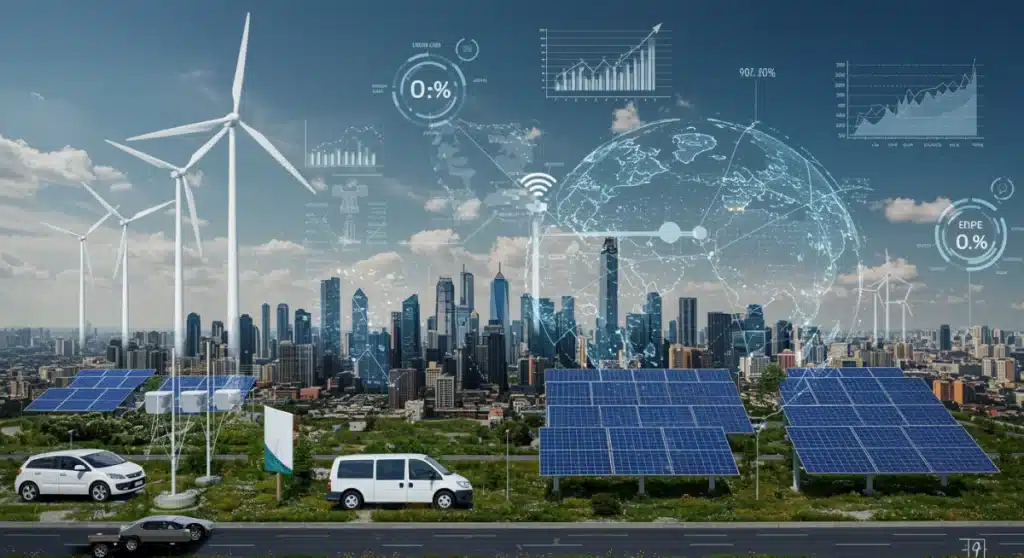
By 2026, six key sustainable tech innovations are set to revolutionize how US enterprises reduce their carbon footprint, offering practical solutions for a 30% reduction and fostering a greener economy.
The imperative for businesses to reduce their environmental impact has never been more urgent. As 2026 approaches, the landscape of green technology is rapidly evolving, offering unprecedented opportunities for US enterprises. This article delves into sustainable tech in 2026, highlighting six groundbreaking innovations poised to help companies slash their carbon footprints by a significant 30%.
Advanced Carbon Capture and Utilization (CCU) Technologies
Carbon Capture and Utilization (CCU) is rapidly moving from theoretical concept to practical application, offering a lifeline for industries with hard-to-abate emissions. By 2026, significant advancements in CCU are expected to make these systems more efficient and cost-effective, enabling a broader adoption across various sectors. These technologies not only prevent carbon dioxide from entering the atmosphere but also transform it into valuable products, creating a circular carbon economy.
The next generation of CCU systems focuses on direct air capture (DAC) and point-source capture, offering versatile solutions for different emission profiles. These innovations are critical for industries like cement, steel, and chemical manufacturing, which historically struggle with substantial carbon emissions.
Enhanced Adsorption Materials for CO2 Capture
Breakthroughs in material science are leading to the development of novel adsorption materials that can more efficiently capture CO2. These materials exhibit:
- Higher selectivity for CO2 over other gases.
- Improved stability and regeneration cycles.
- Lower energy requirements for operation.
- Scalability for industrial applications.
These materials, often metal-organic frameworks (MOFs) or porous polymers, promise to significantly reduce the energy penalty associated with traditional amine-based capture systems, making CCU a more economically viable option for businesses.
Transforming Captured Carbon into Value-Added Products
Beyond mere storage, the utilization aspect of CCU is gaining traction. Technologies are emerging that convert captured CO2 into a range of commercial products, thereby offsetting capture costs and creating new revenue streams. This includes:
- Synthetic fuels and chemicals.
- Building materials like concrete.
- Enhanced oil recovery (though with careful consideration of overall emissions).
- Food and beverage applications, such as carbonated drinks.
This innovative approach not only tackles emissions but also contributes to a more resource-efficient economy, aligning with the broader goals of sustainability for US enterprises. The integration of these CCU innovations represents a pivotal step towards achieving ambitious carbon reduction targets by 2026.
Smart Grid and Renewable Energy Integration
The evolution of smart grids is fundamental to maximizing the potential of renewable energy sources and achieving significant carbon footprint reductions. By 2026, intelligent grid systems will be more sophisticated, capable of seamlessly integrating diverse renewable energy inputs while ensuring grid stability and efficiency. This integration is crucial for US enterprises looking to power their operations with clean energy, reducing reliance on fossil fuels.
Smart grids leverage advanced data analytics, AI, and IoT devices to optimize energy distribution, predict demand, and manage intermittent renewable sources like solar and wind power. This creates a resilient and sustainable energy infrastructure.
AI-Powered Energy Management Systems
Artificial Intelligence (AI) is transforming energy management by enabling predictive analytics and real-time optimization. AI algorithms can:
- Forecast energy demand and supply with high accuracy.
- Optimize the dispatch of renewable energy.
- Identify and mitigate potential grid imbalances.
- Reduce energy waste in industrial and commercial buildings.
These systems empower enterprises to make informed decisions about their energy consumption, leading to substantial savings and a reduced carbon footprint. The ability to dynamically respond to energy market fluctuations and renewable availability is a game-changer for corporate sustainability strategies.
Advanced Battery Storage Solutions
While often discussed, battery storage continues to evolve rapidly, becoming more efficient, cheaper, and safer. By 2026, next-generation battery technologies, including solid-state and flow batteries, will offer enhanced capabilities for grid-scale storage. These advancements are vital for:
- Storing surplus renewable energy for later use.
- Providing grid stability and black start capabilities.
- Enabling microgrids for localized energy independence.
- Supporting the electrification of transportation and industrial processes.
Integrating these advanced storage solutions with smart grids allows enterprises to maintain a consistent power supply from renewables, even when the sun isn’t shining or the wind isn’t blowing, thereby solidifying their commitment to a 30% carbon reduction.
Circular Economy Platforms and Resource Efficiency
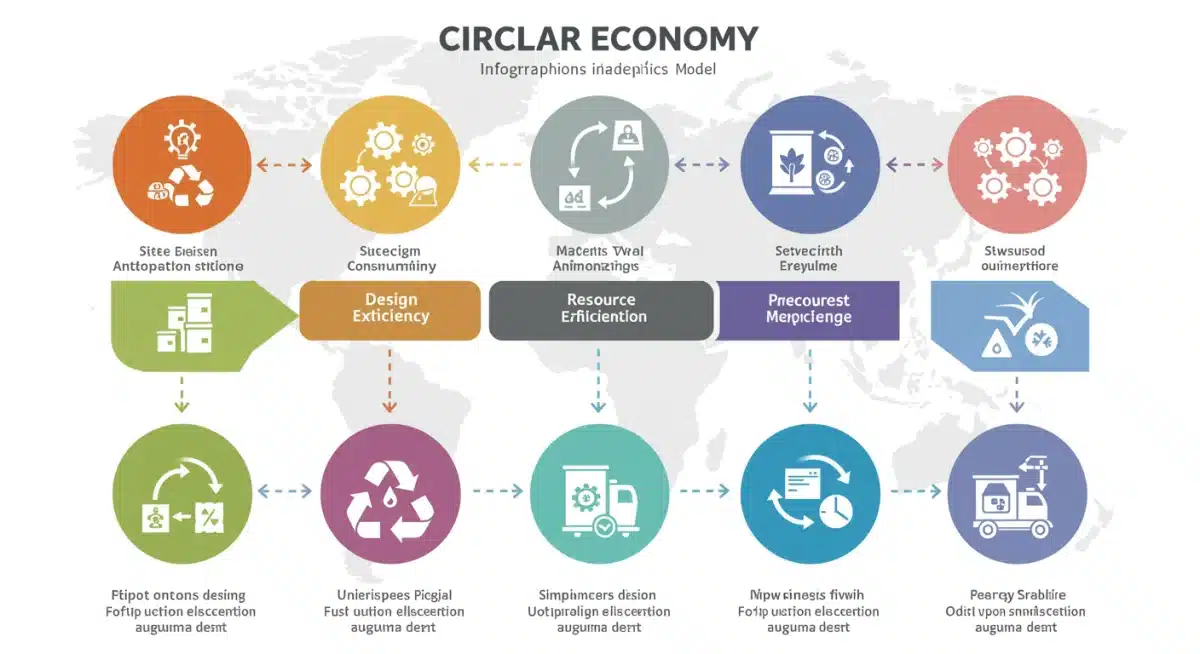
Shifting from a linear ‘take-make-dispose’ model to a circular economy is a powerful strategy for reducing environmental impact. By 2026, digital platforms and advanced technologies will facilitate greater resource efficiency and waste reduction within US enterprises. These platforms connect businesses with opportunities for material reuse, recycling, and upcycling, minimizing raw material extraction and landfill waste.
The circular economy aims to keep products and materials in use for as long as possible, extracting maximum value from them while in use, then recovering and regenerating products and materials at the end of each service life. This systemic approach is key to achieving significant carbon reductions.
Digital Marketplaces for Waste and By-Products
New digital platforms are emerging that act as marketplaces for industrial waste and by-products. These platforms allow companies to:
- Identify potential buyers or users for their waste streams.
- Source recycled materials for their production processes.
- Reduce disposal costs and generate new revenue.
- Track and report on their circular economy metrics.
By transforming waste into a commodity, these platforms foster inter-industry collaboration and significantly reduce the environmental burden associated with industrial processes. This direct connection between waste producers and potential users streamlines the circular flow of materials.
Product-as-a-Service (PaaS) Models
The adoption of Product-as-a-Service (PaaS) models is gaining momentum, particularly in sectors like electronics, machinery, and textiles. Instead of selling products, companies lease them, retaining ownership and responsibility for maintenance, upgrades, and end-of-life recycling. This model:
- Incentivizes manufacturers to design durable, repairable, and recyclable products.
- Reduces consumption and extends product lifespans.
- Minimizes waste and resource depletion.
- Offers cost savings and flexibility for customers.
PaaS models fundamentally alter the relationship between producers and consumers, driving a more sustainable approach to resource management and contributing directly to lower carbon footprints across supply chains. The shift towards such models is crucial for enterprises aiming for a 30% carbon reduction.
Sustainable Bio-based Materials and Manufacturing Processes
The shift away from fossil fuel-derived materials towards sustainable bio-based alternatives is a critical innovation for reducing embedded carbon in products and manufacturing. By 2026, advancements in biotechnology and materials science will make bio-based materials more competitive in terms of performance and cost, enabling widespread adoption across various industries within US enterprises.
These materials are derived from renewable biomass sources, such as plants, algae, and agricultural waste, offering a lower carbon footprint throughout their lifecycle. Their integration into manufacturing processes significantly reduces reliance on petrochemicals.
Bioplastics with Enhanced Properties
The new generation of bioplastics goes beyond simple biodegradability, offering properties comparable to, or even surpassing, traditional plastics. These innovations include:
- High-performance bioplastics for packaging and automotive parts.
- Compostable bioplastics for single-use applications.
- Bio-based polymers derived from agricultural waste.
- Materials with improved heat resistance and durability.
The expanded availability and improved performance of these bioplastics provide viable alternatives for businesses seeking to reduce their reliance on petroleum-based products, thereby cutting down on the carbon intensity of their supply chains. The move towards these materials is a clear indicator of a commitment to a greener future.
Algae-Based Industrial Feedstocks
Algae cultivation is emerging as a highly promising source for sustainable industrial feedstocks. Algae offer several advantages:
- Rapid growth rates and high biomass yield.
- Ability to grow on non-arable land or in wastewater.
- Conversion into biofuels, bioplastics, and biochemicals.
- CO2 sequestration during growth.
By utilizing algae as a raw material, industries can significantly reduce their dependence on fossil resources and traditional agriculture, minimizing land use and water consumption. This innovative approach provides a scalable and environmentally friendly pathway for sustainable manufacturing processes, directly contributing to the 30% carbon footprint reduction target for US enterprises.
Precision Agriculture and Smart Farming Technologies
Agriculture, a significant contributor to global greenhouse gas emissions, is undergoing a profound transformation through precision agriculture and smart farming technologies. By 2026, these innovations will enable US enterprises in the agricultural sector to optimize resource use, reduce waste, and minimize environmental impact, leading to a substantial reduction in their carbon footprint.
These technologies leverage data, automation, and advanced analytics to make farming more efficient and sustainable, addressing challenges like soil degradation, water scarcity, and excessive fertilizer use.
IoT Sensors and Data Analytics for Crop Management
The deployment of Internet of Things (IoT) sensors in fields provides real-time data on soil conditions, crop health, and environmental factors. This data, combined with advanced analytics, allows farmers to:
- Apply fertilizers and pesticides precisely where needed, reducing overuse.
- Optimize irrigation schedules, conserving water.
- Monitor crop growth and predict yields more accurately.
- Detect early signs of disease or pest infestation.
This precision approach not only boosts productivity but also significantly reduces the emissions associated with agricultural inputs, such as nitrous oxide from fertilizers and fuel consumption from machinery. The data-driven decisions enabled by IoT are essential for sustainable farming.
Robotics and Automation in Farming
Agricultural robotics are becoming increasingly sophisticated, performing tasks with greater efficiency and less environmental impact. Robotic systems can:
- Automate planting, harvesting, and weeding, reducing labor and fuel costs.
- Apply targeted treatments, minimizing chemical use.
- Monitor individual plants, optimizing care for each one.
- Reduce soil compaction through lighter, more agile machinery.
These automated solutions lead to more efficient operations, fewer emissions from machinery, and a healthier ecosystem. By embracing precision agriculture and smart farming, US enterprises can achieve significant carbon reductions, enhancing both profitability and environmental stewardship by 2026.
Energy-Efficient Data Centers and Edge Computing
The digital economy relies heavily on data centers, which are significant energy consumers. By 2026, innovations in energy-efficient data centers and the proliferation of edge computing will drastically reduce the carbon footprint of digital infrastructure for US enterprises. These advancements focus on optimizing power consumption, improving cooling systems, and leveraging renewable energy sources.
Edge computing, by processing data closer to the source, reduces the need for data to travel long distances to centralized data centers, thereby lowering network energy consumption and latency.
Liquid Cooling and AI-Optimized Cooling Systems
Traditional air-cooling systems in data centers are highly energy-intensive. New cooling technologies offer substantial improvements:
- Liquid immersion cooling, which is far more efficient than air cooling.
- Direct-to-chip liquid cooling for targeted heat removal.
- AI-driven cooling management that dynamically adjusts based on workload and ambient conditions.
- Use of waste heat from data centers for district heating or other industrial processes.
These innovations dramatically cut down on the energy required for data center operations, directly translating into lower carbon emissions. The focus on maximizing cooling efficiency is a cornerstone of sustainable data infrastructure.
Edge Computing for Decentralized Data Processing
Edge computing brings computational power and data storage closer to the data sources, reducing the amount of data that needs to be transmitted to and processed by large, centralized data centers. This decentralization offers several environmental benefits:
- Reduced energy consumption for data transmission over networks.
- Lower energy requirements for localized processing.
- Enables more efficient real-time applications with reduced latency.
- Facilitates the deployment of smaller, more energy-efficient micro-data centers.
By strategically deploying edge computing infrastructure, US enterprises can optimize their digital operations for both performance and sustainability. This shift is vital for achieving a 30% reduction in the carbon footprint associated with digital services by 2026, making digital transformation inherently greener.
| Key Innovation | Carbon Reduction Impact |
|---|---|
| Advanced Carbon Capture and Utilization (CCU) | Prevents CO2 emissions and converts them into valuable products, particularly for heavy industries. |
| Smart Grid & Renewable Integration | Optimizes renewable energy use and grid efficiency, reducing reliance on fossil fuels. |
| Circular Economy Platforms | Promotes material reuse and waste reduction, minimizing raw material extraction and landfill waste. |
| Energy-Efficient Data Centers | Reduces energy consumption of digital infrastructure through advanced cooling and edge computing. |
Frequently Asked Questions About Sustainable Tech in 2026
The main objective is to enable US enterprises to significantly reduce their carbon footprint, targeting a 30% reduction by leveraging advanced green technologies. This includes optimizing resource use, minimizing waste, and transitioning to cleaner energy sources across various industrial sectors.
CCU technologies will capture CO2 emissions from industrial processes and convert them into valuable products like synthetic fuels or building materials. This approach not only prevents CO2 release but also creates new economic opportunities, fostering a circular carbon economy.
Smart grids utilize AI and IoT to efficiently manage and distribute renewable energy sources like solar and wind. They optimize energy flow, predict demand, and enhance grid stability, facilitating a greater reliance on clean energy and reducing fossil fuel consumption for enterprises.
The circular economy promotes reusing, recycling, and upcycling materials, moving away from a linear ‘take-make-dispose’ model. Digital platforms and Product-as-a-Service models facilitate this by minimizing waste, conserving resources, and extending product lifespans, leading to lower carbon footprints.
Data centers are major energy consumers. Innovations like liquid cooling, AI-optimized systems, and edge computing reduce their power usage significantly. This decentralization of data processing minimizes network energy consumption and overall carbon emissions from digital infrastructure, essential for green business operations.
Conclusion
The journey towards a more sustainable future for US enterprises is being profoundly shaped by technological innovation. The six sustainable tech trends discussed—from advanced carbon capture to energy-efficient data centers—represent a powerful toolkit for achieving substantial carbon footprint reductions by 2026. Embracing these innovations is not merely an environmental imperative but a strategic business advantage, fostering efficiency, resilience, and new economic opportunities. As these technologies mature and become more accessible, US businesses have a clear pathway to not only meet but exceed their sustainability goals, contributing to a healthier planet and a more prosperous economy.