Cybersecurity Threats 2026: Top 4 AI Defenses for US Companies

By 2026, US companies must implement advanced AI-powered cybersecurity defenses, including predictive analytics, autonomous response systems, behavioral biometrics, and sophisticated threat intelligence, to counter increasingly complex digital threats and protect critical assets.
The digital landscape is evolving at an unprecedented pace, and with it, the sophistication of cyber threats. For US companies, the challenge of protecting sensitive data and critical infrastructure from increasingly intelligent adversaries is paramount. By 2026, embracing advanced AI Cybersecurity Defenses will not just be an advantage, but a necessity for survival in an interconnected world.
The accelerating cyber threat landscape for US companies
The year 2026 is rapidly approaching, and the cybersecurity threats facing US companies are becoming more complex and persistent. Attackers are leveraging advanced techniques, including AI and machine learning, to bypass traditional defenses, making it crucial for organizations to upgrade their protective measures.
From ransomware attacks that cripple operations to sophisticated phishing campaigns that steal credentials, the attack surface for businesses is expanding. Supply chain vulnerabilities and the rise of nation-state actors add further layers of complexity, demanding a proactive and intelligent approach to security. The sheer volume of data generated daily means manual monitoring is no longer sufficient to detect and respond to these threats effectively.
Rise of sophisticated attack vectors
Cybercriminals are no longer relying on simple brute-force attacks. They are employing highly targeted and adaptive methods:
- AI-powered malware: Malware that can learn, adapt, and evade detection by traditional antivirus software.
- Deepfake phishing: Using AI to create convincing audio or video of executives to authorize fraudulent transactions.
- Automated vulnerability exploitation: Bots that scan for and exploit newly discovered vulnerabilities at scale and speed.
These evolving tactics highlight the urgent need for US companies to implement equally advanced, AI-driven defense mechanisms. Waiting for a breach to occur is no longer a viable strategy; prevention and rapid response are key.
The cost of inaction
The financial and reputational costs of a cyberattack can be devastating for any company. Beyond the immediate monetary losses from ransom payments or data recovery, there are long-term consequences such as:
- Loss of customer trust and loyalty.
- Regulatory fines and legal liabilities.
- Disruption of business operations and productivity.
These factors underscore why investing in robust AI Cybersecurity Defenses is not an expense, but an essential investment in business continuity and resilience. Companies must recognize that cybersecurity is a core business function, not just an IT concern.
In this rapidly evolving threat landscape, understanding the nature of these attacks is the first step towards building effective defenses. US companies must anticipate future threats and prepare their infrastructure with cutting-edge solutions that can adapt and neutralize these challenges before they cause significant damage.
Predictive analytics for proactive threat identification
One of the most powerful applications of AI in cybersecurity is predictive analytics. This technology moves beyond reactive defense, allowing US companies to anticipate and neutralize threats before they can even materialize. By analyzing vast datasets of historical and real-time security events, AI algorithms can identify patterns and anomalies indicative of impending attacks.
Predictive analytics leverages machine learning models to correlate data from various sources, including network traffic, endpoint logs, threat intelligence feeds, and user behavior. This comprehensive analysis enables the system to forecast potential attack vectors, identify vulnerable assets, and even predict the likelihood of specific types of breaches. The goal is to shift from detecting active attacks to predicting and preventing them.
How predictive analytics works
At its core, predictive analytics in cybersecurity involves several key steps:
- Data collection: Gathering massive amounts of security-related data from all corners of an organization’s IT environment.
- Pattern recognition: AI algorithms learn normal behavior and identify deviations or emerging patterns that signal malicious activity.
- Threat forecasting: Based on identified patterns, the system predicts potential attack scenarios and their probable impact.
- Proactive mitigation: Security teams receive alerts and recommendations for hardening defenses or isolating suspicious activities before a breach occurs.
This proactive stance is critical for US companies operating in highly regulated industries or handling sensitive customer data, where even a minor breach can have significant repercussions.
Benefits for US enterprises
Implementing predictive analytics offers numerous advantages for US companies looking to bolster their AI Cybersecurity Defenses:
- Reduced false positives: AI can distinguish between legitimate anomalies and true threats more accurately than traditional rule-based systems.
- Optimized resource allocation: Security teams can focus their efforts on the most probable and impactful threats, improving efficiency.
- Enhanced incident response: By anticipating attacks, companies can develop response plans in advance, significantly reducing reaction times.
- Improved compliance: Proactive security measures demonstrate a strong commitment to data protection, aiding in regulatory compliance.
The ability to look into the future of cyber threats is a game-changer. Predictive analytics empowers US companies to build truly resilient security postures, moving them from a defensive crouch to an offensive readiness against cyber adversaries.
Autonomous response systems for rapid threat neutralization
Once a threat is identified, the speed of response is paramount. Traditional security operations often involve human intervention at multiple stages, which can introduce delays, especially when dealing with fast-moving, automated attacks. This is where AI-powered autonomous response systems become indispensable for US companies in 2026.
These systems are designed to automatically take predefined actions based on detected threats, without requiring human approval for every step. From isolating infected endpoints to blocking malicious IP addresses, autonomous response significantly reduces the time between detection and mitigation, minimizing potential damage and operational disruption.
The mechanics of autonomous response
Autonomous response systems operate on a foundation of sophisticated AI and machine learning algorithms. They are fed with extensive threat intelligence and pre-configured playbooks that dictate appropriate actions for various threat scenarios. When a threat is detected by other security tools, the autonomous system evaluates its severity and origin, then initiates an immediate, automated countermeasure.
This could involve automatically patching vulnerabilities, rerouting network traffic, or even deploying honeypots to gather more information about the attacker. The key is that these actions occur in milliseconds, far faster than any human team could react. This rapid neutralization is vital against polymorphic malware and zero-day exploits that evolve too quickly for manual responses.
Impact on security operations
The integration of autonomous response capabilities profoundly transforms security operations for US companies:
- Reduced dwell time: The period an attacker remains undetected within a network is drastically shortened, limiting data exfiltration or system damage.
- Alleviated analyst fatigue: Routine and repetitive threat responses are handled automatically, freeing up human security analysts to focus on more complex, strategic tasks.
- Consistent enforcement: Automated systems ensure that security policies are applied uniformly and consistently across the entire IT environment.
While autonomous systems offer incredible advantages, they require careful configuration and continuous monitoring to prevent unintended consequences. US companies must ensure that these systems are integrated with their existing security infrastructure and that there are clear escalation paths for human oversight when necessary. The aim is not to replace human analysts, but to augment their capabilities and accelerate their response. 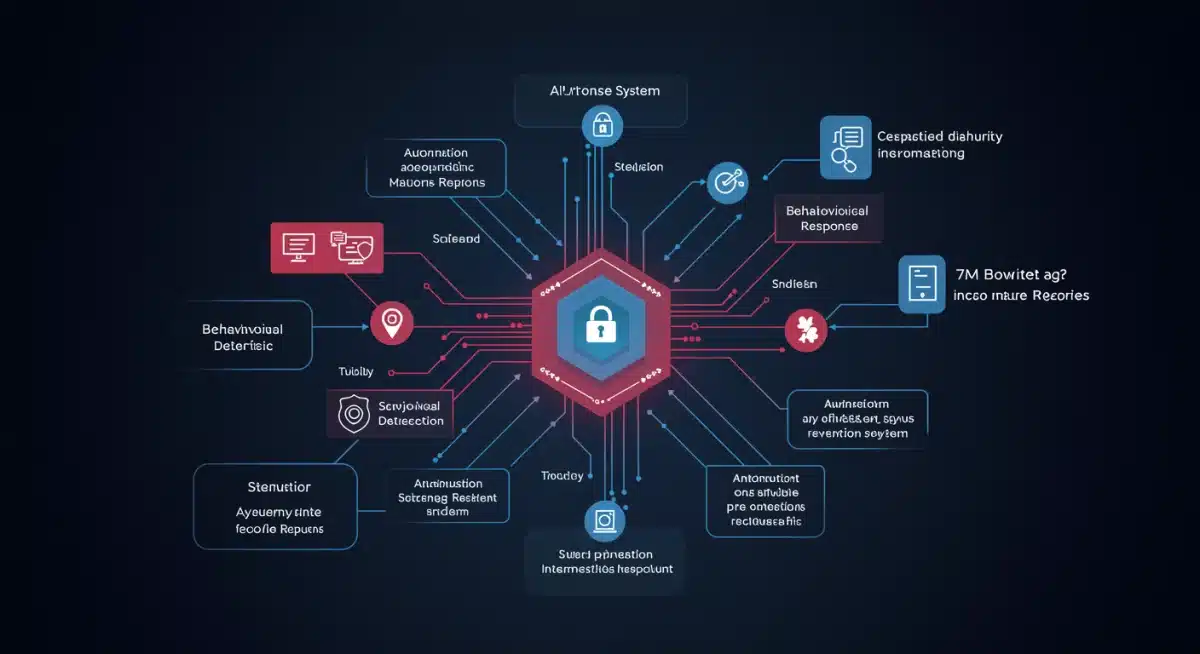
Behavioral biometrics for enhanced user authentication
Traditional authentication methods, such as passwords and even multi-factor authentication (MFA), are increasingly vulnerable to sophisticated attacks. Phishing, credential stuffing, and social engineering can bypass these safeguards, granting unauthorized access to critical systems. Behavioral biometrics offers a powerful new layer of defense by continuously verifying user identity based on their unique interaction patterns.
This AI-driven technology analyzes subtle, subconscious behaviors like typing rhythm, mouse movements, scrolling speed, and even how a user holds their mobile device. By creating a unique behavioral profile for each legitimate user, the system can detect anomalies in real-time, flagging potential imposters even if they possess valid credentials.
How behavioral biometrics works
Behavioral biometrics systems continuously monitor a user’s digital interactions. Initially, the system learns and establishes a baseline of normal behavior for each user. This involves collecting data points on hundreds of parameters related to human-computer interaction. Once a profile is established, the AI constantly compares ongoing user behavior against this baseline.
If significant deviations are detected—for instance, a sudden change in typing speed or an unusual mouse pattern—the system can trigger various responses. These might include requesting additional authentication, escalating the session to a security analyst for review, or even locking the account to prevent potential fraud. This continuous authentication is far more robust than one-time login checks.
Key advantages for security
For US companies, integrating behavioral biometrics into their AI Cybersecurity Defenses provides several critical benefits:
- Continuous authentication: Verification doesn’t stop at login; it’s ongoing throughout the user session, providing persistent protection.
- Enhanced fraud detection: Early detection of account takeovers and insider threats, even from legitimate accounts.
- Improved user experience: Unlike traditional MFA, behavioral biometrics is often seamless and invisible to the legitimate user, reducing friction.
- Adaptability: AI models can adapt to changes in a user’s legitimate behavior over time, reducing false positives.
The beauty of behavioral biometrics lies in its ability to protect against threats that bypass conventional authentication, offering a truly dynamic and user-centric approach to identity verification. This continuous vigilance is essential for protecting sensitive data and intellectual property.
Advanced threat intelligence platforms
Threat intelligence is the bedrock of any robust cybersecurity strategy, but by 2026, static and manually updated feeds will be insufficient. US companies need advanced threat intelligence platforms that leverage AI to process, correlate, and disseminate actionable insights at machine speed. These platforms collect vast amounts of data from global sources, analyze it with AI, and provide context-rich, predictive intelligence.
This includes information on emerging attack campaigns, new malware variants, attacker tactics, techniques, and procedures (TTPs), and vulnerabilities being actively exploited. AI enhances these platforms by identifying subtle connections and predicting future threat trajectories that humans or traditional systems might miss, turning raw data into strategic advantage.
Components of AI-driven threat intelligence
An advanced threat intelligence platform typically integrates several AI-powered capabilities:
- Automated data aggregation: Continuously collecting data from open-source intelligence (OSINT), dark web forums, proprietary feeds, and internal security logs.
- Machine learning for analysis: AI algorithms identify patterns, classify threats, and determine the relevance and severity of incoming intelligence.
- Contextualization and correlation: Linking seemingly disparate pieces of information to build a comprehensive picture of an attacker’s motives and methods.
- Predictive insights: Forecasting future attack trends and potential targets based on current intelligence and historical data.
The ability to rapidly consume, analyze, and act upon this intelligence is what sets leading US companies apart in the fight against cybercrime.
Strategic benefits for businesses
Implementing an advanced threat intelligence platform offers significant strategic advantages for US companies:
- Informed decision-making: Security leaders can make data-driven decisions about resource allocation and defense priorities.
- Proactive defense: Understanding the adversary’s playbook allows companies to strengthen defenses against specific TTPs before an attack.
- Reduced response time: Faster identification of indicators of compromise (IoCs) and faster, more targeted incident response.
- Enhanced risk management: Better assessment of organizational risk exposure and improved overall security posture.
By integrating AI into threat intelligence, US companies can move beyond reactive defenses, gaining a critical edge by understanding their adversaries better than ever before. This intelligence becomes a strategic asset, guiding security investments and operational strategies.
AI-powered security orchestration, automation, and response (SOAR)
Managing the sheer volume of alerts and security tools can overwhelm even the most experienced security teams. This is where AI-powered Security Orchestration, Automation, and Response (SOAR) platforms become indispensable. SOAR solutions integrate various security tools, automate incident response workflows, and leverage AI to enhance decision-making and efficiency.
For US companies, SOAR acts as a central nervous system for their security operations center (SOC), streamlining processes, reducing manual tasks, and accelerating threat containment. AI within SOAR platforms helps prioritize alerts, suggest response actions, and even execute some of these actions autonomously, ensuring a faster, more consistent, and effective response to cyber incidents.
The role of AI in SOAR
AI plays a crucial role in elevating SOAR capabilities beyond simple automation:
- Intelligent alert triage: AI analyzes incoming alerts from various sources (SIEM, EDR, firewalls) to determine their true severity and potential impact, reducing false positives.
- Dynamic playbook generation: AI can suggest or even automatically generate custom playbooks for novel or complex threats based on real-time context and historical data.
- Automated threat hunting: AI can proactively search for indicators of compromise (IoCs) across the network, even without specific alerts, based on emerging threat intelligence.
- Post-incident analysis: AI assists in analyzing the root cause of incidents, identifying vulnerabilities, and recommending preventive measures to avoid future occurrences.
This integration allows security teams to move from reactive firefighting to a more strategic and predictive posture, significantly enhancing their overall effectiveness.
Transforming security operations
The adoption of AI-powered SOAR platforms brings about a transformative change in how US companies manage their cybersecurity:
- Increased efficiency: Automating repetitive tasks frees up security analysts to focus on complex investigations and strategic planning.
- Faster response times: Incidents are detected, investigated, and remediated much more quickly, minimizing potential damage.
- Improved consistency: Automated workflows ensure that every incident is handled according to best practices and established policies.
- Better visibility: Centralized management and orchestration provide a holistic view of the security posture, making it easier to identify gaps and weaknesses.
By 2026, SOAR will be a cornerstone of effective AI Cybersecurity Defenses, enabling US companies to cope with the growing volume and complexity of cyber threats while optimizing their security investments.
Implementing AI defenses: best practices for US organizations
While the benefits of AI-powered cybersecurity defenses are clear, successful implementation requires a strategic approach. US companies cannot simply deploy AI solutions and expect instant results. A thoughtful, phased strategy is essential to maximize the effectiveness of these advanced technologies and ensure they integrate seamlessly into existing security frameworks.
Starting with a clear understanding of current vulnerabilities and business objectives is crucial. AI is a tool, and like any powerful tool, its efficacy depends on how well it is wielded. Companies must consider their specific threat models, regulatory requirements, and the maturity of their current security operations before embarking on an AI integration journey.
Strategic considerations for adoption
Before deploying specific AI solutions, US companies should consider these foundational best practices:
- Assess current infrastructure: Understand existing security tools, data sources, and operational gaps that AI can address.
- Define clear objectives: What specific security challenges are you trying to solve with AI? Threat detection, response automation, or fraud prevention?
- Start small and scale: Begin with pilot projects to validate AI effectiveness in a controlled environment before full-scale deployment.
- Invest in talent: Ensure your security team has the skills to manage, interpret, and optimize AI-driven systems, or invest in training.
These initial steps lay the groundwork for a successful and sustainable AI cybersecurity strategy.
Integration and continuous improvement
The true power of AI Cybersecurity Defenses comes from their ability to integrate and adapt. Companies must ensure their AI solutions can communicate with each other and with existing security tools to create a unified defense posture. This integration fosters a synergistic environment where data from one system can enhance the intelligence and response capabilities of another.
Furthermore, AI models require continuous training and tuning. The threat landscape is constantly changing, meaning AI systems must be regularly updated with new threat intelligence and performance data to remain effective. This iterative process ensures that defenses evolve alongside the adversaries, maintaining a strong and adaptive security posture for US companies well into 2026 and beyond.
| Key Defense | Brief Description |
|---|---|
| Predictive Analytics | AI analyzes data to forecast and prevent cyber threats before they occur, shifting from reactive to proactive security. |
| Autonomous Response | Automated systems rapidly detect and neutralize threats without human intervention, minimizing damage. |
| Behavioral Biometrics | Continuously verifies user identity through unique interaction patterns, enhancing authentication beyond passwords. |
| Threat Intelligence Platforms | AI processes vast data to provide actionable insights on emerging threats, guiding strategic defense. |
Frequently asked questions about AI cybersecurity defenses
AI significantly enhances cybersecurity by enabling proactive threat detection, automating rapid responses, improving user authentication through behavioral analysis, and providing superior threat intelligence. This leads to reduced breach risks, faster incident resolution, and more efficient security operations, crucial for protecting sensitive data and maintaining business continuity in a complex digital environment.
Predictive analytics uses AI to analyze historical and real-time data from various sources to identify patterns and anomalies that indicate potential future attacks. By forecasting threats, it allows US companies to implement proactive countermeasures, harden vulnerable systems, and prepare targeted response strategies before an actual breach occurs, thereby preventing attacks rather than just reacting to them.
Autonomous response systems are designed to execute predefined actions based on detected threats, offering rapid neutralization. While highly effective, they require careful configuration, continuous monitoring, and clear human oversight escalation paths to prevent unintended consequences. US companies must ensure robust testing and validate automated playbooks to balance speed with control, minimizing risks of erroneous actions.
Behavioral biometrics continuously verifies user identity by analyzing unique, subconscious interaction patterns like typing rhythm and mouse movements, rather than relying on static credentials. Unlike passwords, which can be stolen or guessed, behavioral biometrics provides ongoing authentication throughout a session, making it far more difficult for attackers to impersonate legitimate users and bypass security.
US companies should begin by assessing their current security infrastructure and defining clear objectives for AI implementation. Starting with pilot projects, investing in security talent, and focusing on integration with existing tools are crucial first steps. Continuous training of AI models and regular updates are also essential to adapt to the evolving threat landscape and maintain effective defenses.
Conclusion
The escalating sophistication of cyber threats by 2026 demands a paradigm shift in how US companies approach their digital defenses. Traditional security measures, while still foundational, are no longer sufficient against AI-powered adversaries. The adoption of advanced AI Cybersecurity Defenses, including predictive analytics, autonomous response systems, behavioral biometrics, and sophisticated threat intelligence platforms, is not merely an option but a strategic imperative. These technologies offer the ability to move from a reactive posture to one of proactive prevention and rapid, intelligent response, safeguarding critical assets, maintaining business continuity, and preserving stakeholder trust in an increasingly volatile digital world. Investing in these AI-driven solutions today will define the resilience and security of US enterprises tomorrow.