Cloud Adoption Soars: 25% Increase in US SME Digital Transformation
Cloud Adoption Soars: A 25% Increase in US SME Digital Transformation in the Last 12 Months
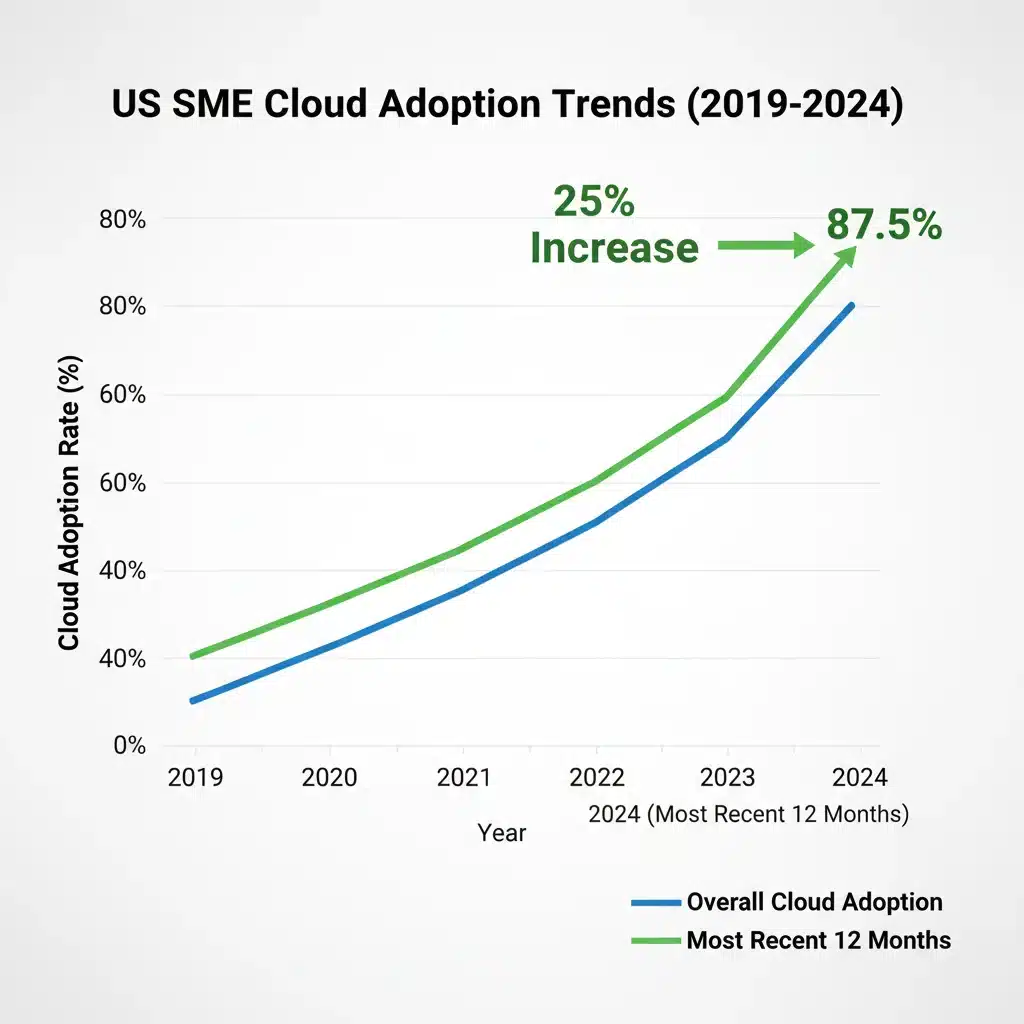
The landscape of business technology is in constant flux, but few trends have been as impactful and as rapid as the recent surge in cloud adoption among Small and Medium-sized Enterprises (SMEs) in the United States. Recent data reveals a compelling story: a remarkable 25% increase in SME Cloud Adoption over just the past 12 months. This isn’t merely a statistic; it represents a fundamental shift in how businesses operate, innovate, and compete in an increasingly digital world. This accelerated digital transformation is reshaping industries, empowering smaller players, and setting new benchmarks for efficiency and scalability.
For years, cloud computing was often seen as the domain of large corporations with vast IT budgets. However, the democratizing power of cloud technology has made it accessible and indispensable for businesses of all sizes. The past year, marked by unprecedented global challenges and rapid technological advancements, has served as a powerful catalyst, pushing many SMEs to finally make the leap to the cloud or significantly expand their existing cloud footprints. This article delves into the reasons behind this significant increase, the tangible benefits SMEs are reaping, the challenges they face, and what the future holds for SME Cloud Adoption.
Understanding the Surge: Why US SMEs are Embracing the Cloud
Several factors have converged to fuel this impressive 25% jump in SME Cloud Adoption. While the benefits of cloud computing have been discussed for years, recent events and evolving business needs have amplified their urgency and appeal.
The Pandemic’s Enduring Legacy: Remote Work and Business Continuity
The COVID-19 pandemic acted as an undeniable accelerator for digital transformation across all sectors. For SMEs, the immediate need to support remote workforces and ensure business continuity became paramount. Cloud-based solutions offered the flexibility, accessibility, and scalability required to keep operations running smoothly, even when physical offices were inaccessible. Tools for collaborative document editing, virtual meetings, project management, and customer relationship management (CRM) all found their home in the cloud, proving essential for survival and adaptation.
Cost-Efficiency and Scalability: A Budget-Friendly Solution
One of the most persistent appeals of cloud computing for SMEs is its cost-effectiveness. Traditional IT infrastructure requires significant upfront capital investment in hardware, software licenses, and ongoing maintenance. Cloud services, typically offered on a subscription-based model (pay-as-you-go), eliminate these large initial outlays, making advanced technology accessible even to businesses with limited budgets. This shift from CapEx to OpEx is particularly attractive to SMEs looking to conserve capital. Furthermore, the inherent scalability of cloud services means businesses can easily scale their IT resources up or down based on demand, avoiding over-provisioning or under-provisioning, which optimizes costs and performance.
Enhanced Security and Data Protection
While some SMEs initially harbored concerns about cloud security, the reality is that major cloud providers invest heavily in cutting-edge security infrastructure, often far exceeding what a small business could afford independently. These providers offer robust data encryption, disaster recovery planning, compliance certifications, and continuous threat monitoring. For many SMEs, outsourcing security to cloud experts offers a higher level of protection against cyber threats and data loss than they could achieve with in-house solutions, driving increased SME Cloud Adoption.
Access to Advanced Technologies
The cloud isn’t just about storage and basic applications; it’s a gateway to advanced technologies that were once out of reach for SMEs. Artificial intelligence (AI), machine learning (ML), big data analytics, and Internet of Things (IoT) capabilities are increasingly offered as cloud services. This allows SMEs to leverage sophisticated tools for competitive advantage without needing to build and maintain complex infrastructure or hire specialized in-house experts.
Competitive Pressure and Customer Expectations
As larger competitors and even other agile SMEs adopt cloud technologies to improve customer experiences, streamline operations, and offer innovative services, others feel the pressure to keep up. Customers today expect seamless digital interactions, personalized services, and quick responses, all of which are facilitated by cloud-enabled platforms. To remain competitive and meet these evolving customer expectations, SME Cloud Adoption has become a strategic imperative.
Key Benefits Driving SME Cloud Adoption
The decision to move to the cloud isn’t made lightly. SMEs are seeing tangible, measurable benefits that directly impact their bottom line and operational efficiency.
Increased Operational Efficiency and Productivity
By automating routine tasks, providing centralized access to data and applications, and facilitating seamless collaboration, cloud solutions significantly boost operational efficiency. Employees can access necessary tools and information from anywhere, at any time, on any device, leading to increased productivity and flexibility. This is particularly crucial for businesses with distributed teams or those that rely on field service personnel.
Enhanced Collaboration and Communication
Cloud-based collaboration tools have revolutionized how teams work together. Whether it’s shared document workspaces, communication platforms, or project management software, the cloud removes geographical barriers and fosters real-time interaction. This improved collaboration leads to faster decision-making, better project outcomes, and a more connected workforce, which is a major driver of SME Cloud Adoption.
Greater Flexibility and Agility
The ability to adapt quickly to changing market conditions is a hallmark of successful SMEs. Cloud computing provides this agility by allowing businesses to rapidly deploy new applications, test new services, and scale resources as needed. This flexibility empowers SMEs to be more responsive to customer demands and seize new opportunities without being bogged down by IT limitations.
Improved Data Insights and Decision Making
Cloud platforms often come with integrated analytics tools or facilitate easy integration with third-party analytical solutions. This enables SMEs to collect, process, and analyze vast amounts of data, gaining valuable insights into customer behavior, operational performance, and market trends. Data-driven decision-making leads to more effective strategies and better business outcomes.
Disaster Recovery and Business Continuity
For SMEs, data loss due to hardware failure, cyber-attack, or natural disaster can be catastrophic. Cloud providers offer robust backup and disaster recovery solutions that ensure business-critical data is protected and recoverable, minimizing downtime and safeguarding business continuity. This peace of mind is invaluable for many small business owners.
Navigating the Challenges of Cloud Migration for SMEs
While the benefits are clear, the path to cloud adoption isn’t without its hurdles. SMEs often face unique challenges that require careful planning and strategic execution.
Initial Migration Complexity
Migrating existing data, applications, and workflows to the cloud can be a complex undertaking, especially for businesses with legacy systems. It requires careful planning, technical expertise, and often, some downtime. Many SMEs lack dedicated IT staff with the necessary experience, making the initial transition a significant challenge. This is where partnering with experienced cloud service providers or IT consultants becomes crucial for successful SME Cloud Adoption.
Vendor Lock-in Concerns
Choosing a cloud provider involves a significant commitment. SMEs often worry about vendor lock-in, where switching providers becomes difficult or costly due to proprietary technologies or data formats. This concern highlights the importance of selecting providers with open standards and robust data portability options.
Cost Management and Optimization
While cloud computing offers cost savings, managing cloud costs effectively requires vigilance. Without proper monitoring and optimization strategies, costs can escalate, particularly with pay-as-you-go models. SMEs need to understand their usage patterns, implement cost-saving measures like rightsizing instances, and leverage reserved instances where appropriate.
Security and Compliance Considerations
Despite the advanced security features offered by cloud providers, SMEs still bear responsibility for their data in the cloud. Understanding the shared responsibility model (where the provider secures the cloud infrastructure, and the customer secures their data within the cloud) is critical. Compliance with industry regulations (e.g., HIPAA, GDPR, PCI DSS) also remains a key consideration that SMEs must address, often requiring specific cloud configurations and policies.
Skill Gaps and Training
Adopting new cloud technologies often means that existing staff need new skills. Training employees on cloud-based applications, data management, and security best practices is essential for maximizing the benefits of SME Cloud Adoption. Without adequate training, the full potential of cloud investments may not be realized.

The Future of SME Cloud Adoption: Trends and Predictions
The 25% increase in SME Cloud Adoption is not an anomaly but a clear indicator of a continuing trend. Several factors suggest that cloud integration will only deepen and become more sophisticated for US SMEs.
Hybrid and Multi-Cloud Strategies
While many SMEs start with a single cloud provider, there’s a growing trend towards hybrid cloud (combining on-premises infrastructure with public cloud services) and multi-cloud (using services from multiple public cloud providers) strategies. These approaches offer greater flexibility, reduce vendor lock-in, and allow SMEs to optimize workloads for performance, cost, and compliance across different environments.
Edge Computing Integration
As IoT devices proliferate and real-time data processing becomes more critical, edge computing will increasingly complement cloud strategies. SMEs in sectors like manufacturing, retail, and logistics will find value in processing data closer to its source (at the ‘edge’) before sending it to the cloud for further analysis and long-term storage. This reduces latency and bandwidth costs.
Serverless Computing and Microservices
Serverless computing and microservices architectures are gaining traction, offering even greater agility and cost efficiency. These approaches allow SMEs to build and run applications without managing servers, paying only for the compute resources consumed. This abstraction of infrastructure further lowers the barrier to entry for developing powerful cloud-native applications.
AI and Machine Learning as a Service (AIaaS/MLaaS)
The accessibility of AI and ML capabilities through cloud platforms will continue to grow. SMEs will increasingly leverage these services for tasks such as customer support (chatbots), personalized marketing, predictive analytics, and process automation, democratizing access to advanced intelligence.
Specialized Cloud Solutions for Verticals
As cloud adoption matures, there will be a greater proliferation of industry-specific cloud solutions. These vertical clouds are tailored to meet the unique regulatory requirements, workflows, and data models of particular sectors (e.g., healthcare, finance, legal), offering specialized tools and compliance features that are highly attractive to SMEs in those fields.
Strategic Considerations for SMEs Looking to Further Their Cloud Journey
For SMEs that have already embarked on their cloud journey or are contemplating the next steps, several strategic considerations are crucial to maximize the benefits of SME Cloud Adoption.
Develop a Clear Cloud Strategy
A successful cloud journey begins with a well-defined strategy. This includes identifying business objectives, assessing current IT infrastructure, evaluating potential cloud services and providers, and creating a phased migration plan. A clear strategy ensures that cloud investments align with overall business goals and deliver measurable ROI.
Prioritize Security and Compliance
Security should be a non-negotiable priority. SMEs must implement robust security practices, including strong access controls, multi-factor authentication, regular security audits, and employee training. Understanding and adhering to relevant data protection regulations is also paramount to avoid costly penalties and maintain customer trust.
Invest in Employee Training and Skill Development
To fully leverage cloud capabilities, employees need to be proficient in using cloud-based tools and understanding cloud concepts. Investing in ongoing training and skill development ensures that the workforce can adapt to new technologies and contribute effectively to the digital transformation process.
Monitor and Optimize Cloud Costs
Cloud cost management is an ongoing process. SMEs should implement tools and practices to monitor cloud usage, identify inefficiencies, and optimize spending. Regular reviews of cloud bills, rightsizing resources, and negotiating favorable contracts can lead to significant cost savings.
Seek Expert Guidance
For many SMEs, navigating the complexities of cloud computing requires external expertise. Partnering with cloud consultants, managed service providers (MSPs), or value-added resellers (VARs) can provide invaluable guidance, technical support, and strategic insights, especially during migration and ongoing management.
Conclusion: The Cloud as a Cornerstone of SME Growth
The impressive 25% increase in SME Cloud Adoption in the US over the last 12 months is a testament to the cloud’s indispensable role in modern business. It highlights a proactive and strategic embrace of digital transformation by small and medium-sized enterprises, recognizing the cloud not just as a technological tool, but as a fundamental enabler of growth, resilience, and innovation.
From enhancing operational efficiency and fostering collaboration to providing access to advanced technologies and ensuring business continuity, the benefits of cloud computing are profound and far-reaching. While challenges such as migration complexity and cost management persist, the strategic advantages overwhelmingly outweigh the hurdles. As technology continues to evolve, the cloud will remain a cornerstone of SME success, empowering businesses to compete effectively, adapt to change, and thrive in the digital age. For any US SME looking to secure its future, embracing and strategically leveraging cloud technology is no longer an option, but a necessity.