Reclaiming Public Spaces: 5 Innovative Urban Initiatives Reshaping American Community Life in 2026
Reclaiming Public Spaces: 5 Innovative Urban Initiatives Reshaping American Community Life in 2026
In an increasingly urbanized world, the concept of Urban Public Spaces has taken on renewed importance. These shared environments, from sprawling parks to bustling town squares, are more than just aesthetic elements; they are the beating heart of our communities, fostering social cohesion, promoting well-being, and driving local economies. As we navigate the complexities of modern life, the need to reclaim, revitalize, and reimagine these spaces has become a critical endeavor for cities across America. The year 2026 marks a pivotal moment in this transformation, with numerous innovative urban initiatives setting new benchmarks for how we interact with and benefit from our shared environments.
The evolution of Urban Public Spaces is a testament to our collective desire for connection, sustainability, and quality of life. For decades, urban planning often prioritized vehicular traffic and commercial development, sometimes at the expense of pedestrian-friendly areas and green infrastructure. However, a growing awareness of the environmental, social, and economic benefits of well-designed public spaces has spurred a movement towards human-centric urban design. This shift is not merely about aesthetics; it’s about creating resilient, inclusive, and vibrant communities that can adapt to future challenges.
This article will delve into five groundbreaking urban initiatives that are actively redefining Urban Public Spaces across America in 2026. These projects showcase a diverse range of approaches, from integrating advanced technology to fostering community-led stewardship, all with the common goal of enhancing the urban experience. We will explore how these initiatives are tackling issues such as climate resilience, social equity, economic revitalization, and public health, offering valuable insights for urban planners, policymakers, and engaged citizens alike.
Understanding these innovations is crucial for anyone interested in the future of our cities. They represent a paradigm shift in how we conceive, design, and utilize our shared environments, moving from passive recreational areas to dynamic hubs of activity, learning, and interaction. Join us as we journey through these inspiring examples of urban transformation, highlighting the creativity, collaboration, and commitment that are shaping the next generation of American public spaces.
1. The Green Ribbon Network: Connecting Communities with Nature
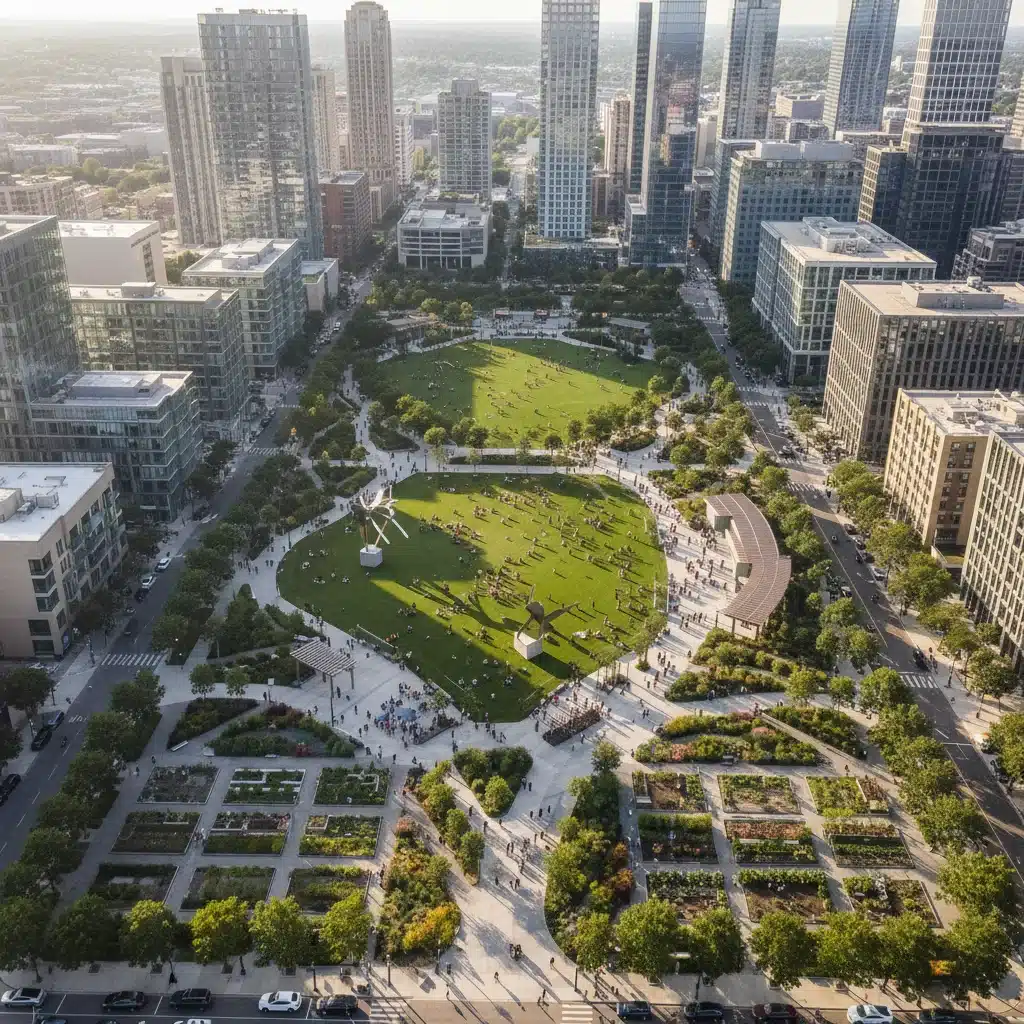
One of the most ambitious and impactful initiatives transforming Urban Public Spaces is the ‘Green Ribbon Network.’ This multi-city project, gaining significant traction in 2026, focuses on creating interconnected corridors of green infrastructure that weave through urban landscapes. Far beyond traditional parks, the Green Ribbon Network integrates linear parks, restored waterways, urban forests, and community gardens into a cohesive ecosystem designed to enhance biodiversity, manage stormwater, and provide accessible recreational opportunities.
The genesis of the Green Ribbon Network lies in the recognition that isolated green spaces, while valuable, often fail to provide the broader ecological and social benefits that a connected system can offer. By linking existing parks, schoolyards, and vacant lots with new greenways, cities like Portland, Oregon, and Minneapolis, Minnesota, are demonstrating how to create a seamless natural experience within dense urban fabric. These corridors serve multiple purposes: they act as ecological highways for wildlife, provide safe pedestrian and cycling routes, and offer residents direct access to nature, improving mental and physical health.
Ecological Resilience and Stormwater Management
A key aspect of the Green Ribbon Network is its emphasis on ecological resilience. Many sections incorporate bioswales, rain gardens, and permeable pavements, effectively turning public spaces into vital components of a city’s stormwater management system. This reduces the burden on traditional infrastructure, mitigates urban heat island effects, and improves water quality. For instance, in areas prone to flooding, these green corridors are designed to absorb and filter rainwater, preventing property damage and replenishing groundwater reserves. This innovative approach to Urban Public Spaces directly addresses the challenges of climate change, making cities more adaptable and sustainable.
Boosting Biodiversity and Environmental Education
Beyond water management, the network is a haven for urban biodiversity. Native plantings attract pollinators, birds, and other wildlife, transforming concrete jungles into vibrant ecosystems. Educational signage and interactive installations are strategically placed along the greenways, offering residents opportunities to learn about local flora and fauna, ecological processes, and the importance of conservation. This integration of nature and education within Urban Public Spaces fosters a deeper connection between citizens and their environment, promoting environmental stewardship from a young age.
Social Equity and Accessibility
Perhaps most importantly, the Green Ribbon Network prioritizes social equity. The planning process actively engages underserved communities to ensure that these green corridors are accessible to all, not just affluent neighborhoods. Routes are designed to connect residential areas with public transit hubs, schools, and essential services, providing safe and pleasant alternatives to car travel. Community input shapes the design of playgrounds, seating areas, and public art installations, ensuring that these Urban Public Spaces truly reflect the needs and desires of the people who use them. This inclusive approach ensures that the benefits of green infrastructure are shared across the entire urban population, reducing health disparities and fostering a stronger sense of community belonging.
2. Digital Placemaking Hubs: Integrating Technology for Enhanced Engagement
The second innovative initiative is the emergence of ‘Digital Placemaking Hubs,’ which are redefining how technology can enrich Urban Public Spaces. In cities like Austin, Texas, and Boston, Massachusetts, traditional squares and plazas are being transformed into interactive environments where digital art, augmented reality (AR) experiences, and smart city technologies converge to create dynamic public realms. These hubs move beyond passive observation, inviting active participation and fostering new forms of social interaction.
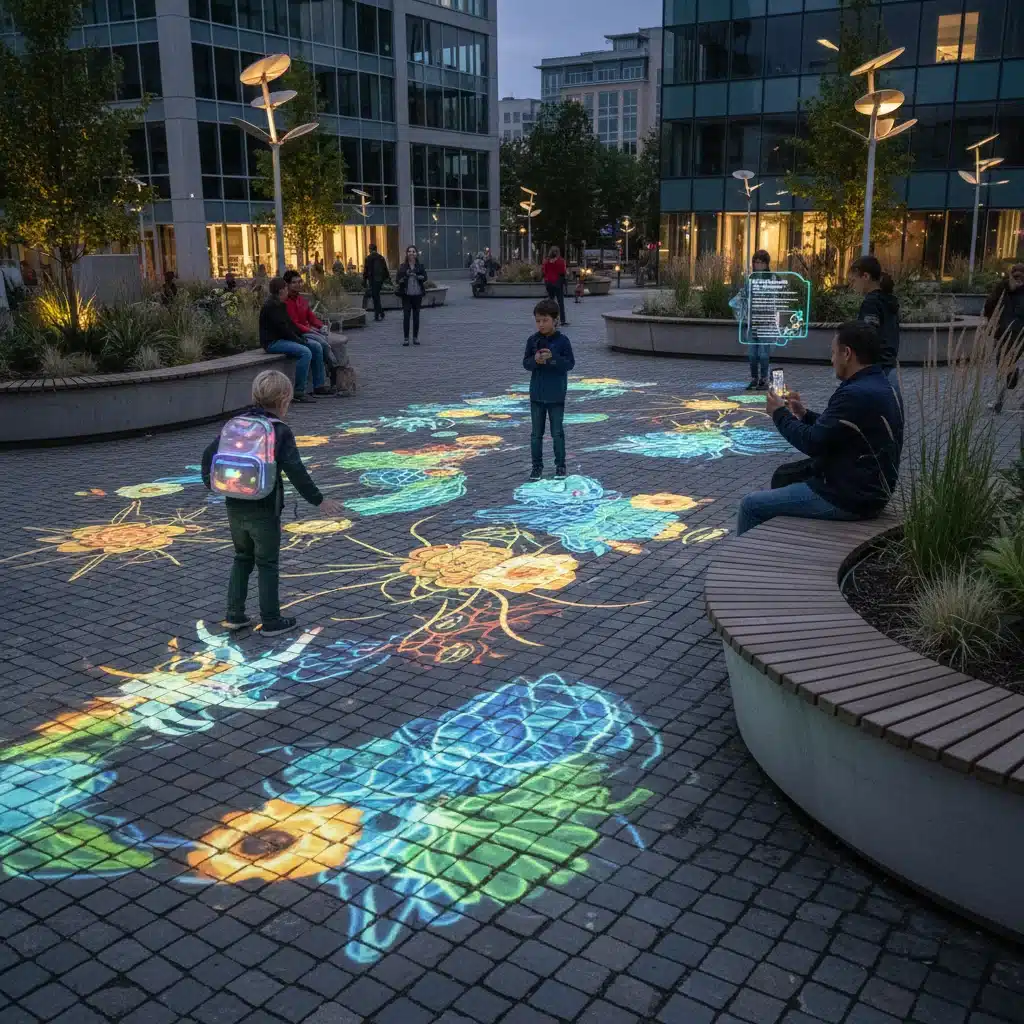
Digital Placemaking is not about replacing physical interaction with screens; rather, it’s about using technology to augment the physical environment and enhance human connection. Imagine a public square where the pavement comes alive with interactive projections that respond to movement, or where a historical monument can be overlaid with AR narratives, bringing its past to life. These are the experiences offered by Digital Placemaking Hubs, making Urban Public Spaces more engaging, educational, and entertaining for all ages.
Interactive Art and Immersive Experiences
At the core of these hubs are interactive digital art installations. Large-scale LED screens display generative art that reacts to real-time environmental data or public input, transforming static walls into vibrant, ever-changing canvases. Projection mapping illuminates historic buildings with dynamic visual stories, turning evening strolls into immersive cultural experiences. These installations not only beautify Urban Public Spaces but also create focal points for gathering and conversation, attracting both residents and tourists.
Augmented Reality and Educational Content
Beyond visual spectacles, Digital Placemaking Hubs leverage augmented reality (AR) to provide rich layers of information and engagement. Visitors can use their smartphones or dedicated public AR kiosks to access historical facts, local business directories, public event schedules, or even playful games tied to the physical environment. For example, a city park might offer an AR overlay that identifies native plants and animals, or a historical district could present virtual reconstructions of past events. This makes Urban Public Spaces into open-air museums and learning centers, democratizing access to information and fostering a deeper understanding of the local context.
Smart City Integration and Community Feedback
Crucially, these hubs are often integrated with broader smart city initiatives. Sensors collect anonymized data on foot traffic, air quality, and noise levels, providing valuable insights for urban planners to optimize space usage and improve environmental conditions. Digital kiosks and mobile apps also serve as feedback channels, allowing citizens to report issues, suggest improvements, or participate in local governance discussions. This two-way communication strengthens community engagement and ensures that Urban Public Spaces evolve in response to public needs, making them truly responsive and user-centered.
3. Adaptive Reuse Alleys: Transforming Neglected Spaces into Vibrant Connectors
The third innovative approach to Urban Public Spaces is the ‘Adaptive Reuse Alleys’ initiative, which is gaining momentum in cities with dense urban fabrics and underutilized back alleys or service lanes. Instead of seeing these narrow passages as mere service corridors or neglected eyesores, cities like Philadelphia, Pennsylvania, and Seattle, Washington, are transforming them into vibrant pedestrian thoroughfares, pop-up commercial zones, and intimate public gathering spots. This initiative maximizes existing urban infrastructure, demonstrating that even the smallest spaces hold immense potential for revitalization.
Historically, alleys have been overlooked in urban planning, often becoming repositories for trash and symbols of urban decay. However, the Adaptive Reuse Alleys movement recognizes their latent value as connective tissue within the urban grid. By applying creative design, strategic lighting, public art, and thoughtful programming, these formerly neglected areas are being reimagined as safe, attractive, and functional Urban Public Spaces that enhance walkability and local commerce.
Enhancing Walkability and Pedestrian Safety
A primary goal of transforming alleys is to improve urban walkability. By cleaning, paving, and lighting these passages, cities create alternative pedestrian routes that can bypass busy streets, connect different neighborhoods, and offer a more intimate urban experience. Enhanced security measures, including surveillance and increased foot traffic, contribute to a safer environment, encouraging more people to explore these newly activated Urban Public Spaces. This provides a more diverse and enjoyable urban journey for residents and visitors alike, reducing reliance on vehicular transport for short distances.
Pop-Up Commerce and Local Entrepreneurship
Adaptive Reuse Alleys also provide unique opportunities for small businesses and local entrepreneurs. The smaller scale and lower overhead of alley-facing storefronts or pop-up kiosks make them ideal incubators for new ventures, from artisanal coffee shops to craft vendors and food trucks. These micro-economies add character and vibrancy to the urban landscape, offering distinct experiences that complement larger commercial streets. This economic revitalization within Urban Public Spaces supports local economies and fosters a sense of unique place identity.
Public Art and Intimate Gathering Spots
Art plays a crucial role in the transformation of these alleys. Murals, light installations, and sculptural elements turn otherwise drab passages into open-air galleries, creating visual interest and encouraging exploration. Seating areas, small planters, and even performance spaces are incorporated into the design, allowing these narrow Urban Public Spaces to function as intimate gathering spots for impromptu meetings, small events, or quiet contemplation. This artistic integration creates a sense of discovery and delight, transforming forgotten corners into cherished community assets.
4. Community-Managed Rooftop Parks: Elevating Green Spaces
The fourth innovative initiative tackling Urban Public Spaces is the rise of ‘Community-Managed Rooftop Parks.’ In densely populated cities where ground-level space is at a premium, communities are looking upwards, transforming unused or underutilized rooftops into lush green oases. Cities like New York City, New York, and Chicago, Illinois, are leading the way in developing these elevated public spaces, which offer a multitude of environmental, social, and aesthetic benefits.
The concept goes beyond private rooftop gardens; these are publicly accessible or communally managed spaces designed to serve the broader neighborhood. They represent a creative solution to urban sprawl and a commitment to integrating nature into even the most constrained urban environments. These rooftop parks are not just about aesthetics; they are functional ecosystems contributing to urban sustainability and community well-being, demonstrating a powerful reimagining of Urban Public Spaces.
Environmental Benefits: Stormwater and Heat Island Mitigation
Rooftop parks offer significant environmental advantages. They act as natural sponges, absorbing rainwater and reducing stormwater runoff, which lessens the burden on municipal drainage systems and helps prevent urban flooding. The vegetation also plays a crucial role in mitigating the urban heat island effect, by absorbing sunlight and releasing moisture, thereby cooling the surrounding air. This leads to reduced energy consumption for air conditioning in adjacent buildings and a more comfortable microclimate for residents. These environmental contributions make rooftop parks vital components of sustainable Urban Public Spaces.
Food Security and Community Engagement
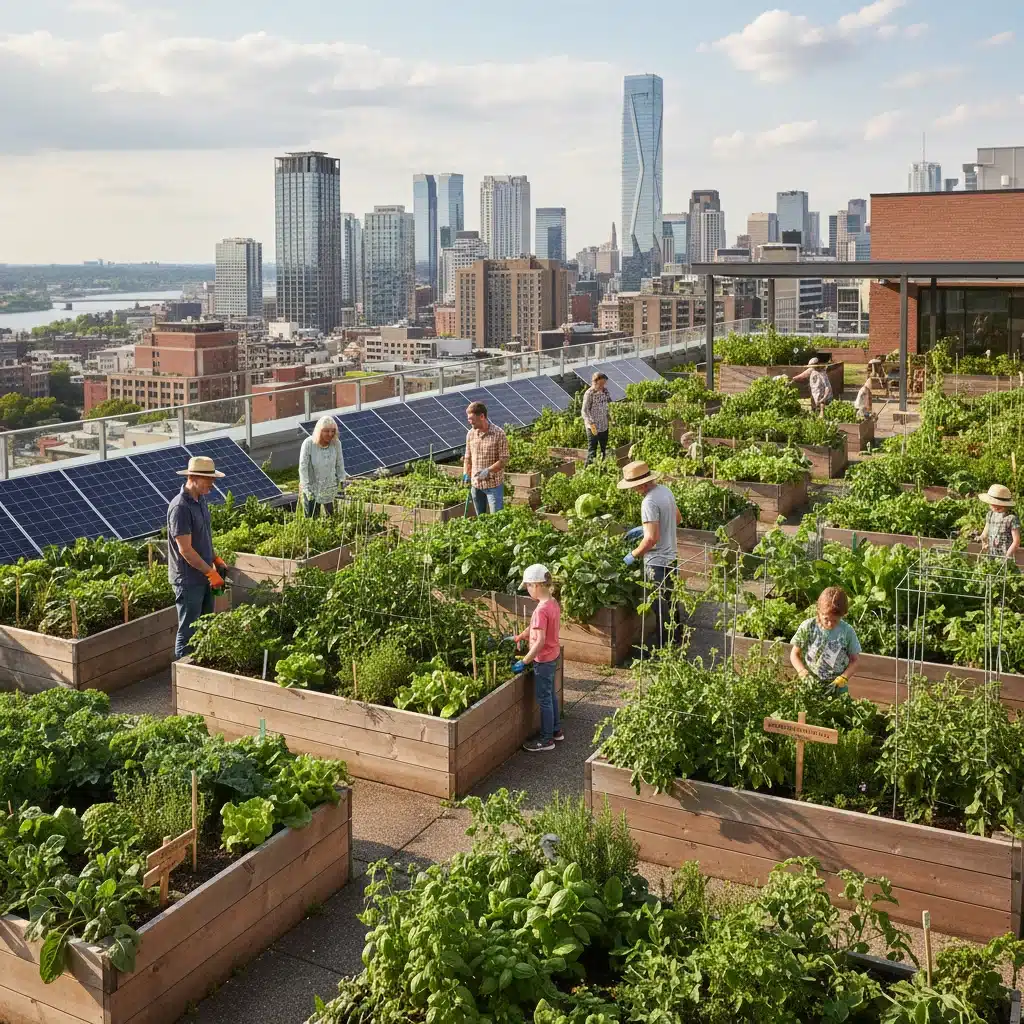
Many community-managed rooftop parks incorporate urban agriculture, providing valuable space for growing fresh produce. These rooftop gardens contribute to local food security, offer educational opportunities for residents of all ages, and foster a strong sense of community ownership and collaboration. Residents can volunteer to tend the gardens, share harvests, and participate in workshops on sustainable gardening practices. This shared responsibility and bounty strengthen social ties and create vibrant, productive Urban Public Spaces where people can connect with nature and each other.
Recreational Opportunities and Panoramic Views
Beyond gardening, these elevated Urban Public Spaces often feature seating areas, walking paths, and even small performance stages, providing unique recreational opportunities with unparalleled panoramic views of the city skyline. They offer a tranquil escape from the hustle and bustle of street level, a place for quiet contemplation, social gatherings, or simply enjoying a different perspective of the urban landscape. The novelty and beauty of these spaces make them sought-after amenities, enhancing the quality of life for urban dwellers and adding significant value to surrounding properties.
5. Pop-Up Play Streets and Shared Zones: Flexible and Resident-Led Transformations
Finally, the ‘Pop-Up Play Streets and Shared Zones’ initiative highlights a more agile and resident-led approach to transforming Urban Public Spaces. This movement, prominent in cities like Denver, Colorado, and Atlanta, Georgia, involves temporarily or semi-permanently converting residential streets, parking lots, or underutilized public areas into pedestrian-priority zones for play, social interaction, and community events. These initiatives are characterized by their flexibility, low cost, and strong emphasis on community participation, making them incredibly effective at quickly revitalizing neighborhoods.
The core idea behind Pop-Up Play Streets and Shared Zones is to challenge the dominance of vehicular traffic in residential areas and to empower communities to reclaim their streets as legitimate Urban Public Spaces. By temporarily closing off streets to cars or implementing shared-space design principles, these initiatives create safe, car-free environments where children can play freely, neighbors can socialize, and impromptu events can flourish. This bottom-up approach fosters a strong sense of ownership and adaptability, allowing communities to experiment with different uses and designs.
Prioritizing Pedestrians and Children’s Play
The immediate benefit of Pop-Up Play Streets is the creation of safe zones for children. In many urban environments, opportunities for unsupervised outdoor play are limited due to traffic concerns. By designating specific times or days for car-free streets, communities provide invaluable spaces for children to run, cycle, and interact, promoting physical activity and social development. These temporary transformations of Urban Public Spaces also encourage walking and cycling for residents of all ages, contributing to overall public health and reducing reliance on cars for short trips.
Fostering Community Connection and Social Interaction
Beyond play, these shared zones are powerful catalysts for community building. When streets are freed from traffic, they become natural gathering places. Neighbors set up tables for potlucks, organize street games, host outdoor movie nights, or simply enjoy casual conversations. This increased social interaction strengthens neighborhood bonds, builds trust, and creates a more cohesive community fabric. The ease of implementation and the temporary nature of these initiatives allow for experimentation, enabling communities to discover what works best for their unique context and to continually adapt their Urban Public Spaces to evolving needs.
Low-Cost, High-Impact Urban Interventions
One of the most attractive aspects of Pop-Up Play Streets and Shared Zones is their relatively low cost and high impact. Unlike large-scale infrastructure projects, these initiatives often rely on temporary barriers, movable street furniture, and community volunteers, making them accessible to a wide range of neighborhoods. This allows for rapid deployment and quick feedback loops, enabling cities to test ideas and scale successful interventions. This agile approach to transforming Urban Public Spaces empowers citizens to directly shape their immediate environment, leading to more responsive and beloved public realms.
The Future of Urban Public Spaces: A Holistic Vision
The five innovative urban initiatives discussed—the Green Ribbon Network, Digital Placemaking Hubs, Adaptive Reuse Alleys, Community-Managed Rooftop Parks, and Pop-Up Play Streets and Shared Zones—collectively paint a hopeful picture for the future of Urban Public Spaces in America. These projects are not isolated endeavors but rather interconnected elements of a broader, more holistic vision for urban development. They demonstrate a shift from monolithic, top-down planning to a more collaborative, adaptive, and human-centered approach.
What unites these diverse initiatives is their commitment to creating spaces that are:
- Inclusive: Ensuring equitable access and benefits for all community members, regardless of socioeconomic status or physical ability.
- Sustainable: Integrating green infrastructure, promoting biodiversity, and mitigating environmental impacts like climate change and urban heat.
- Engaging: Offering diverse opportunities for recreation, education, cultural expression, and social interaction, often enhanced by technology.
- Resilient: Designed to adapt to changing environmental conditions, community needs, and technological advancements.
- Community-Driven: Empowering residents to participate in the planning, design, and stewardship of their shared environments.
As cities continue to grow and evolve, the importance of these well-designed and actively managed Urban Public Spaces will only intensify. They are essential for fostering physical and mental well-being, stimulating local economies, preserving cultural heritage, and building strong, resilient communities. The innovations highlighted in 2026 serve as powerful examples of how creativity, technology, and community spirit can transform our cities into more livable, vibrant, and sustainable places for everyone.
Conclusion: A New Era for American Cities
The reclamation and revitalization of Urban Public Spaces stand as a defining characteristic of American cities in 2026. From the sweeping ecological corridors of the Green Ribbon Network to the intimate, tech-infused plazas of Digital Placemaking Hubs, and from the surprising vitality of Adaptive Reuse Alleys to the elevated tranquility of Community-Managed Rooftop Parks and the dynamic energy of Pop-Up Play Streets, these initiatives are fundamentally reshaping how urban dwellers experience their environment.
These projects are more than just physical transformations; they are social experiments, economic engines, and environmental solutions rolled into one. They are proving that with thoughtful design, strategic investment, and active community engagement, even the most challenging urban environments can be transformed into thriving hubs of activity and connection. The future of Urban Public Spaces is bright, promising cities that are not just places to live and work, but places to truly belong, thrive, and connect with nature and each other.
As we look ahead, the lessons learned from these innovative initiatives will undoubtedly inspire further advancements in urban planning and design. The emphasis on flexibility, sustainability, and community empowerment will continue to drive the evolution of our shared spaces, ensuring that American cities remain at the forefront of creating healthy, vibrant, and resilient urban landscapes for generations to come. The ongoing commitment to enhancing Urban Public Spaces is a commitment to a better quality of life for all.