Hyper-Personalization in 2026: Boosting Customer Engagement with AI
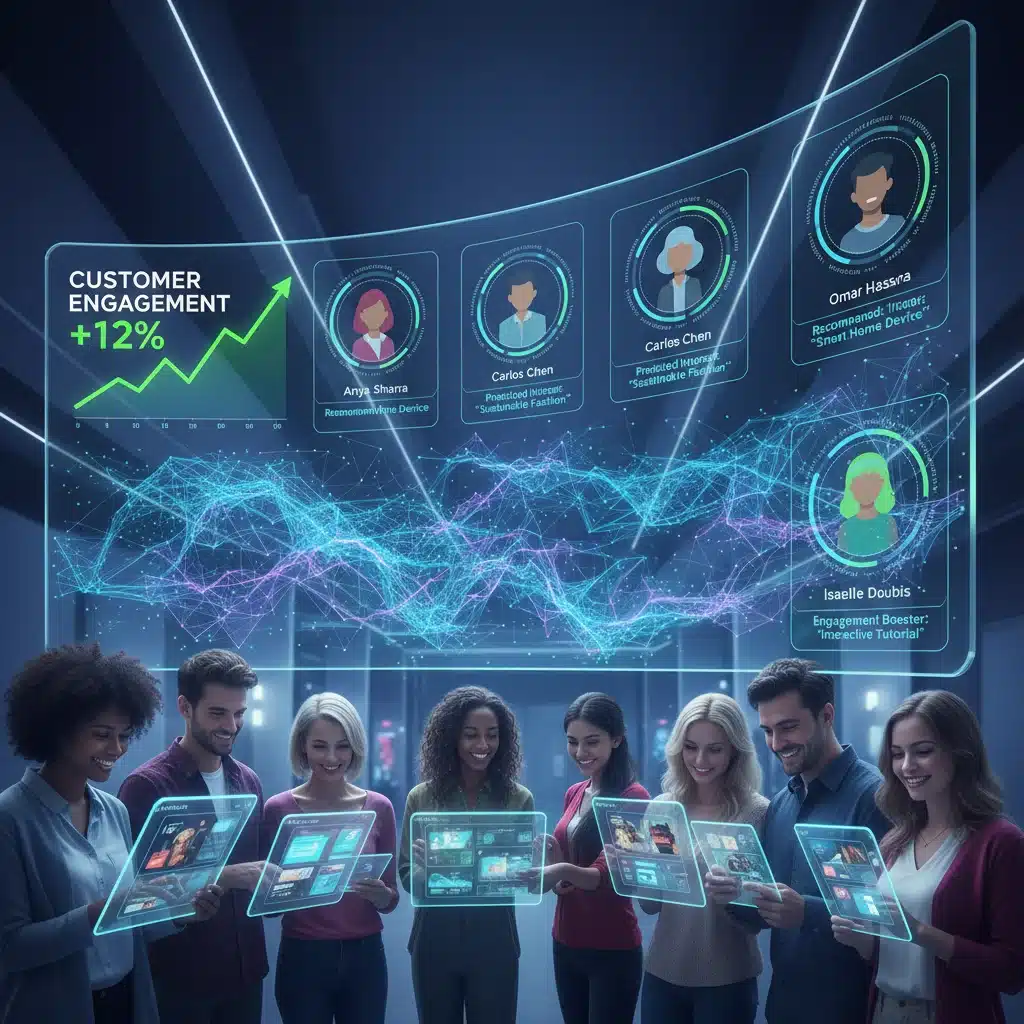
The business landscape is constantly evolving, driven by technological advancements and shifting consumer expectations. In this dynamic environment, one trend stands out as a critical differentiator: hyper-personalization. No longer just a buzzword, hyper-personalization, especially when powered by Artificial Intelligence (AI), is proving to be a monumental force in shaping customer interactions and driving tangible business outcomes. Recent data from Q1 2026 unequivocally highlights this paradigm shift, revealing a remarkable 12% increase in customer engagement for businesses that have strategically adopted AI-driven strategies for hyper-personalization. This significant surge underscores the transformative power of tailoring experiences to individual preferences, needs, and behaviors at an unprecedented scale.
Understanding the nuances of AI customer engagement through hyper-personalization is no longer optional; it’s a strategic imperative. This article delves deep into the mechanisms, benefits, challenges, and future outlook of this powerful combination, offering insights for businesses aiming to thrive in the ultra-competitive market of tomorrow.
The Dawn of Hyper-Personalization: Beyond Basic Customization
For years, businesses have understood the value of personalization. From addressing customers by name in emails to recommending products based on past purchases, the goal has always been to make interactions more relevant and appealing. However, hyper-personalization elevates this concept to an entirely new level. It moves beyond superficial customization to create deeply individualized experiences, often in real-time, by leveraging vast amounts of data and sophisticated AI algorithms. This is where the true power of AI customer engagement lies.
Imagine a scenario where a customer’s online journey is not just tailored by their browsing history, but also by their current mood (inferred from click patterns and time spent on pages), their location, the weather, their social media sentiment, and even their tone of voice in a customer service interaction. This is the promise of hyper-personalization – an experience so seamless and intuitive that it feels as if the brand inherently understands the individual.
The distinction between personalization and hyper-personalization can be likened to the difference between a custom-made suit and a suit that perfectly anticipates your next style choice based on your daily routine and upcoming events. While personalization reacts to known data, hyper-personalization predicts and adapts, creating a proactive and predictive engagement strategy.
The Role of AI in Fueling Hyper-Personalization
At the heart of this revolution is Artificial Intelligence. AI’s capabilities in processing, analyzing, and interpreting massive datasets are what make hyper-personalization feasible and effective. Without AI, the sheer volume and complexity of data required to create truly individualized experiences would be insurmountable. AI algorithms, particularly machine learning and deep learning, excel at identifying patterns, making predictions, and automating decision-making at scale.
Here’s how AI empowers hyper-personalization for enhanced AI customer engagement:
- Data Collection and Analysis: AI systems can ingest data from an enormous array of sources – CRM, ERP, web analytics, social media, IoT devices, voice interactions, and more. They then process this data to create a comprehensive, 360-degree view of each customer.
- Behavioral Prediction: Machine learning models can predict future customer actions and preferences based on historical data and real-time interactions. This allows businesses to anticipate needs and offer relevant solutions before the customer even expresses them.
- Real-time Adaptation: AI enables dynamic content delivery and experience adjustments in real-time. For instance, an e-commerce website can instantly change product recommendations, pricing, or promotional offers based on a user’s current browsing behavior, even within a single session.
- Content Generation: Generative AI can create personalized content – from email subject lines and ad copy to product descriptions and even entire articles – tailored to individual preferences and communication styles.
- Automated Decision Making: AI can automate complex decisions related to customer segmentation, campaign optimization, pricing strategies, and service routing, ensuring that each customer receives the most appropriate and effective interaction.
Q1 2026 Data: A Testament to AI’s Impact on Customer Engagement
The recent Q1 2026 data serves as compelling evidence of hyper-personalization’s effectiveness. The reported 12% increase in customer engagement for businesses leveraging AI-driven strategies is not just a statistic; it represents a significant competitive advantage and a clear indicator of market direction. This engagement manifests in various forms:
- Higher Conversion Rates: Personalized recommendations and offers lead to more relevant purchases, increasing conversion rates across sales funnels.
- Improved Customer Satisfaction: Customers feel understood and valued when their experiences are tailored, leading to higher satisfaction scores and positive brand perception.
- Increased Customer Retention: A personalized journey fosters loyalty. Customers are more likely to stick with brands that consistently provide relevant and valuable interactions.
- Reduced Churn: By anticipating potential issues or changes in customer sentiment, AI can trigger proactive interventions to prevent churn.
- Enhanced Brand Advocacy: Highly satisfied and engaged customers are more likely to become brand advocates, sharing their positive experiences with others.
These benefits collectively contribute to a stronger bottom line and sustainable business growth. The 12% increase is a powerful signal that the investment in AI and hyper-personalization is yielding substantial returns, proving that AI customer engagement is a critical success factor.
Sector-Specific Triumphs
While the 12% increase is an aggregate, specific sectors are witnessing even more dramatic shifts:
- Retail & E-commerce: AI-powered personalized product recommendations, dynamic pricing, and tailored promotions have led to significant upticks in average order value and repeat purchases. Virtual try-on experiences and AI-driven style advice are also boosting engagement.
- Financial Services: Banks and fintech companies are using AI to offer personalized financial advice, fraud detection alerts, and customized product bundles based on individual financial goals and risk profiles.
- Healthcare: AI is enabling personalized health recommendations, treatment plans, and appointment scheduling, improving patient adherence and outcomes.
- Media & Entertainment: Streaming services and content platforms have long used AI for recommendations, but hyper-personalization now extends to dynamic content creation, interactive storytelling, and personalized news feeds, dramatically boosting consumption and retention.
- Travel & Hospitality: AI is tailoring travel itineraries, hotel recommendations, and in-destination experiences based on individual preferences, past travel history, and real-time conditions, leading to more satisfying trips.
Key Strategies for Implementing AI-Driven Hyper-Personalization
Achieving successful AI customer engagement through hyper-personalization requires a strategic approach. It’s not just about deploying AI tools; it’s about integrating them into a holistic customer experience strategy.
1. Robust Data Infrastructure
The foundation of any effective AI strategy is data. Businesses must invest in robust data collection, storage, and management systems. This includes:
- Unified Customer Profiles: Consolidating data from all touchpoints into a single, comprehensive customer view.
- Data Quality Assurance: Ensuring data is accurate, consistent, and up-to-date.
- Ethical Data Handling: Adhering to privacy regulations (e.g., GDPR, CCPA) and building customer trust through transparent data practices.
2. Advanced Analytics and Machine Learning
Leveraging advanced analytics and machine learning models is crucial for extracting actionable insights from data. This involves:
- Predictive Analytics: Using AI to forecast customer behavior, preferences, and potential churn.
- Segmentation and Clustering: Dynamically grouping customers based on shared attributes and behaviors to tailor strategies.
- Recommendation Engines: Implementing sophisticated algorithms to suggest relevant products, services, or content.
3. Omnichannel Integration
Hyper-personalization must be consistent across all customer touchpoints – online, offline, mobile, social, and voice. An omnichannel strategy ensures a seamless and coherent experience, reinforcing the perception that the brand truly understands the customer, regardless of the channel they choose. This unified approach significantly enhances AI customer engagement.
4. Continuous Optimization and A/B Testing
The effectiveness of hyper-personalization strategies is not static. Businesses must continuously monitor performance, conduct A/B testing, and use AI to learn and adapt. This iterative process ensures that personalization efforts remain relevant and impactful over time.
5. Human-AI Collaboration
While AI automates and scales personalization, human oversight and creativity remain indispensable. AI should augment human capabilities, allowing marketers and customer service representatives to focus on higher-value tasks, empathy, and complex problem-solving. It’s about creating a synergistic relationship where AI handles the heavy lifting of data and pattern recognition, while humans provide the strategic direction and emotional intelligence.
Challenges and Ethical Considerations in Hyper-Personalization
Despite its immense benefits, the journey to hyper-personalization is not without its hurdles. Businesses must navigate several challenges and ethical considerations to ensure responsible and effective deployment of AI customer engagement strategies.
1. Data Privacy and Security
The collection and use of extensive personal data raise significant privacy concerns. Businesses must be transparent about their data practices, obtain explicit consent, and implement robust security measures to protect sensitive information from breaches. A lapse in trust can quickly erode any gains from personalization.
2. The "Creepiness" Factor
There’s a fine line between helpful personalization and intrusive surveillance. When personalization becomes too accurate or predictive, customers might feel their privacy is being invaded, leading to discomfort or even alienation. Businesses need to strike a balance, focusing on value-add rather than mere data demonstration.
3. Algorithmic Bias
AI models are only as unbiased as the data they are trained on. If training data contains inherent biases, the AI might perpetuate or even amplify these biases, leading to discriminatory or unfair personalized experiences. Regular auditing and diverse data sources are crucial to mitigate this risk.
4. Implementation Complexity and Cost
Building and maintaining a sophisticated AI-driven hyper-personalization system requires significant investment in technology, talent, and infrastructure. Small and medium-sized businesses might find the initial outlay challenging, though scalable cloud-based AI solutions are making it more accessible.
5. Integration with Legacy Systems
Many established businesses operate with legacy systems that are not easily integrated with modern AI platforms. Overcoming these technical hurdles can be time-consuming and costly, delaying the full realization of hyper-personalization benefits.

The Future of AI Customer Engagement: What Lies Ahead?
The 12% increase in customer engagement observed in Q1 2026 is just the beginning. The future of AI customer engagement through hyper-personalization promises even more sophisticated and integrated experiences. Several emerging trends will shape this evolution:
1. Proactive and Predictive AI
Future AI systems will move beyond reactive personalization to become even more proactive. Imagine AI anticipating a customer’s need for a new product based on their life events (e.g., a new baby, a house move) inferred from various data points, and then proactively offering relevant solutions. This predictive capability will further deepen engagement and loyalty.
2. Hyper-Personalized Immersive Experiences
The rise of virtual reality (VR), augmented reality (AR), and the metaverse will open new frontiers for hyper-personalization. AI will tailor immersive experiences, virtual stores, and digital interactions based on individual preferences, creating highly engaging and memorable brand encounters. Think of a virtual fitting room that not only shows how clothes look but also recommends outfits based on your digital twin’s body shape and your upcoming social calendar.
3. Emotional AI and Sentiment Analysis
AI’s ability to understand and respond to human emotions will become more refined. Emotional AI will allow systems to detect a customer’s mood during interactions (e.g., frustration, delight) and adapt responses accordingly, leading to more empathetic and effective customer service and personalized marketing messages. This will significantly elevate the quality of AI customer engagement.
4. Ethical AI and Trust-Centric Personalization
As AI becomes more pervasive, the focus on ethical AI development and trust will intensify. Businesses will need to implement robust governance frameworks, ensure algorithmic transparency, and empower customers with greater control over their data. Building and maintaining trust will be paramount for sustained success in hyper-personalization.
5. AI-Powered Personal Assistants
The integration of AI into personal digital assistants (like Siri, Alexa, Google Assistant) will enable a new level of ambient personalization. These assistants will learn preferences across various services and devices, acting as a central hub for hyper-personalized recommendations and interactions, simplifying everyday life for consumers and creating new touchpoints for brands.
Transforming Business Models with Hyper-Personalization
The impact of hyper-personalization extends beyond just customer engagement; it has the potential to fundamentally transform business models. From product development to service delivery, AI-driven personalization is enabling companies to operate with unprecedented efficiency and customer focus.
Product Development and Innovation
By analyzing hyper-personalized data, businesses can gain deep insights into unmet customer needs, emerging preferences, and product gaps. This allows for more targeted and efficient product development, reducing wastage and increasing the likelihood of market success. AI can even simulate product variations and predict their reception, streamlining the innovation process.
Dynamic Pricing and Offer Optimization
Hyper-personalization allows for dynamic pricing strategies that are optimized for individual customers based on their perceived value, purchase history, and real-time market conditions. This not only maximizes revenue but also ensures that offers are always relevant and attractive to the specific customer, enhancing the perception of value and fairness. This is a crucial aspect of advanced AI customer engagement.
Operational Efficiency and Resource Allocation
AI-driven insights from hyper-personalization can optimize operational processes. For instance, understanding individual customer preferences can lead to more efficient inventory management, personalized supply chain logistics, and optimized staffing for customer service based on anticipated demand peaks and individual customer needs. This leads to cost savings and improved service quality.
Building Brand Loyalty Through Unique Experiences
In a world where products and services are increasingly commoditized, the customer experience becomes the ultimate differentiator. Hyper-personalization enables brands to create unique, memorable, and deeply satisfying experiences that foster emotional connections and cultivate fierce brand loyalty. This loyalty is invaluable, leading to repeat business, positive word-of-mouth, and a strong competitive moat.
Expanding Market Reach and Accessibility
AI-driven personalization can help businesses identify niche markets and underserved customer segments by recognizing subtle patterns in data that human analysis might miss. This allows for tailored marketing and product offerings that resonate with diverse groups, expanding market reach and fostering inclusivity. AI can also adapt content and interfaces to be more accessible to individuals with different needs and preferences, further broadening the potential customer base.

Conclusion: Embracing the Hyper-Personalized Future
The Q1 2026 data, showcasing a 12% increase in customer engagement for businesses adopting AI-driven hyper-personalization, is a clear clarion call for the business world. The era of generic, one-size-fits-all customer interactions is rapidly fading, replaced by a future where every customer interaction is a unique, tailored experience designed to resonate deeply with the individual. This shift is not merely a technological upgrade but a fundamental reorientation of how businesses perceive and interact with their customers.
For organizations looking to not just survive but thrive in the coming years, investing in AI-driven hyper-personalization is no longer a luxury but a necessity. It promises not just enhanced customer engagement but also improved brand loyalty, higher conversion rates, and significant operational efficiencies. However, success hinges on a commitment to ethical data practices, continuous innovation, and a strategic balance between AI automation and human oversight.
As AI continues to evolve, its capabilities in understanding and predicting human behavior will only grow, paving the way for even more sophisticated and impactful hyper-personalized experiences. Businesses that embrace this future, prioritizing the intelligent application of AI to truly understand and serve their customers on an individual level, will be the ones that capture market share, build enduring relationships, and redefine the meaning of AI customer engagement in the years to come. The journey has just begun, and the rewards for those who lead the charge are substantial.