Vaccine Development: 3 Innovations and Impact on US Public Health

Three pivotal advancements in vaccine innovation US, including mRNA technology, universal vaccine platforms, and AI-driven design, are poised to significantly reshape disease prevention and public health strategies across the United States.
The landscape of public health is continually evolving, driven by relentless scientific inquiry and technological breakthroughs. In the United States, the focus on preventative medicine has never been sharper, particularly in the wake of recent global health challenges. This article delves into how three major advancements in vaccine innovation US are set to redefine our approach to disease prevention, potentially safeguarding communities and bolstering national health security.
The rise of mRNA vaccine technology
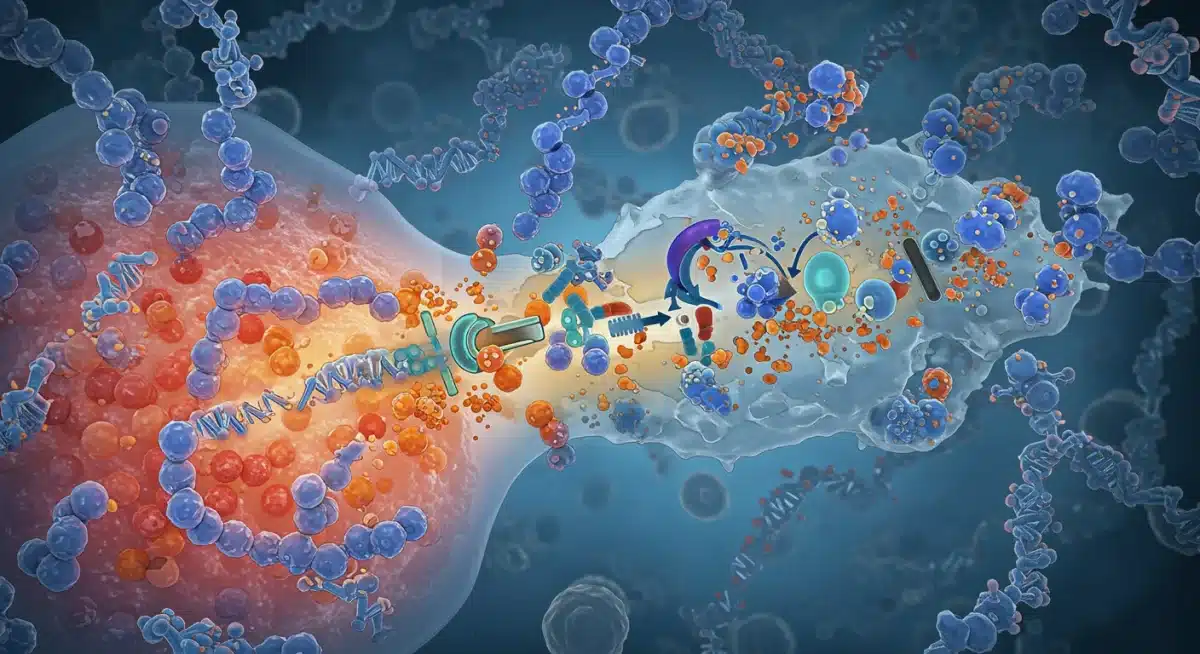
Messenger RNA (mRNA) vaccine technology has emerged as a transformative force in vaccinology, moving from a niche research area to a frontline defense against infectious diseases. Its rapid development and deployment during the recent pandemic showcased its unparalleled agility and efficacy, promising a new era for vaccine production and application. This innovation fundamentally changes how vaccines are conceived and delivered.
Unlike traditional vaccines that introduce weakened or inactivated pathogens, or parts of them, mRNA vaccines instruct our cells to produce a harmless piece of a virus or bacteria. This piece then triggers an immune response, teaching our bodies to recognize and fight off future infections. The beauty of mRNA lies in its simplicity and speed of manufacturing, bypassing the need for cell cultures or eggs, which are common in conventional vaccine production.
Accelerated development and manufacturing
- Rapid response to outbreaks: mRNA platforms can be quickly adapted to new pathogens, significantly shortening the development timeline from identification to clinical trials.
- Scalability: Manufacturing processes are largely synthetic and can be scaled up more efficiently than traditional methods, crucial during widespread health crises.
- Flexibility: The same basic mRNA platform can be used for different diseases by simply changing the genetic sequence, allowing for versatile vaccine development.
The potential impact of mRNA technology extends far beyond infectious diseases. Researchers are actively exploring its application in cancer immunotherapy, autoimmune disorders, and even genetic diseases. In the United States, this means a future where vaccines could be custom-designed and deployed with unprecedented speed, offering personalized medicine solutions and a more robust defense against emerging health threats. The infrastructure and expertise built during the pandemic will serve as a strong foundation for these future endeavors, cementing mRNA’s role as a cornerstone of modern vaccinology.
In conclusion, mRNA vaccine technology represents a monumental leap forward, offering speed, flexibility, and a broad range of potential applications. Its continued advancement will be critical in strengthening public health defenses in the United States and globally.
Universal vaccine platforms: a paradigm shift
The concept of universal vaccine platforms marks a significant departure from the traditional one-disease, one-vaccine approach. Imagine a single vaccine that could protect against all strains of influenza, or a broad-spectrum coronavirus vaccine. This ambitious goal is now within reach, promising to simplify vaccination schedules, reduce the burden of seasonal epidemics, and enhance preparedness for future pandemics. These platforms aim to target conserved regions of pathogens, which are less likely to mutate.
Developing universal vaccines involves identifying common antigens or conserved structures across different variants or even families of viruses. By eliciting an immune response to these stable targets, the vaccine could provide protection against a much wider array of threats. This approach could drastically reduce the need for annual vaccine updates, such as those for influenza, and offer more durable protection against rapidly evolving pathogens.
Advantages for public health in the US
- Enhanced preparedness: A universal vaccine could offer baseline protection against novel strains before they become widespread, providing crucial time for specific vaccine development if needed.
- Reduced logistical complexity: Fewer vaccine types mean simpler distribution, storage, and administration, especially beneficial in diverse geographical regions of the United States.
- Broader protection: Offers defense against circulating and emerging variants, potentially preventing future pandemics from reaching critical levels.
The development of universal vaccine platforms is a complex scientific undertaking, requiring deep understanding of viral evolution and immunology. However, the potential rewards for public health in the United States are immense. Such vaccines could alleviate the annual strain on healthcare systems, reduce economic losses due to widespread illness, and, most importantly, save countless lives. Significant research funding and collaborative efforts are being directed towards achieving this vision, recognizing its transformative potential.
Ultimately, universal vaccine platforms represent a strategic shift towards more comprehensive and sustainable disease prevention. Their successful development will be a game-changer for public health, not just in the US but worldwide.
AI and machine learning in vaccine design
Artificial intelligence (AI) and machine learning (ML) are rapidly becoming indispensable tools in the scientific community, and vaccine development is no exception. These advanced computational methods are revolutionizing every stage of the vaccine pipeline, from identifying potential targets to optimizing vaccine formulations and predicting immune responses. By leveraging vast datasets, AI can uncover patterns and make predictions that human researchers alone might miss.
One of the most significant applications of AI in vaccine design is the accelerated identification of optimal antigens. AI algorithms can analyze genomic and proteomic data from pathogens to pinpoint specific proteins or epitopes that are most likely to elicit a strong and protective immune response. This drastically cuts down the time and resources traditionally spent on experimental screening, making the discovery phase much more efficient.
Key contributions of AI/ML
- Target identification: AI can rapidly scan pathogen genomes to identify highly conserved or immunogenic regions suitable for vaccine development.
- Epitope prediction: Machine learning models predict which parts of a pathogen’s proteins are most likely to be recognized by the immune system, guiding vaccine design.
- Adjuvant optimization: AI can help design and select adjuvants, substances that enhance the immune response to a vaccine, improving its efficacy.
Furthermore, AI and ML are being used to model disease spread and predict vaccine effectiveness in real-world scenarios, allowing public health officials in the United States to make more informed decisions about vaccine distribution and policy. These tools can simulate various vaccination strategies, helping to identify the most impactful approaches for different populations. The integration of AI into vaccine development pipelines promises to make the process faster, more precise, and ultimately more successful.
The synergy between biological research and AI is creating a powerful new frontier in vaccinology. As AI capabilities continue to advance, its role in designing and deploying effective vaccines will only grow, significantly enhancing public health outcomes in the United States.
Enhanced disease surveillance and rapid response
Beyond the development of new vaccine technologies, the impact of innovation extends to how we monitor and respond to infectious disease threats. Enhanced disease surveillance, powered by advanced analytics and integrated data systems, is crucial for timely and effective public health interventions. In the United States, this means leveraging technologies that can detect outbreaks earlier, track pathogen evolution in real-time, and predict future trends with greater accuracy.
Genomic sequencing, for instance, has become a cornerstone of modern surveillance, allowing scientists to quickly identify new variants of viruses and understand their transmissibility and virulence. When combined with sophisticated bioinformatics tools, this data provides actionable insights for public health agencies. The ability to rapidly share and analyze this information across state and federal levels is paramount for a coordinated national response.
Technological advancements in surveillance
- Genomic epidemiology: Rapid sequencing of pathogen genomes to track evolution and identify new variants.
- Wastewater surveillance: Monitoring wastewater for viral fragments to detect community-level infections early, even before clinical cases surge.
- Integrated data platforms: Centralized systems that aggregate data from hospitals, laboratories, and public health departments for a comprehensive view of disease activity.
The integration of these surveillance methods with rapid vaccine development platforms creates a powerful feedback loop. Early detection of a new threat can trigger a swift response from mRNA or universal vaccine platforms, leading to the rapid design and deployment of a targeted vaccine. This agile response mechanism is vital for mitigating the impact of future pandemics and protecting the health of the United States population. Investing in these surveillance capabilities is an investment in national security.
In essence, enhanced disease surveillance and rapid response mechanisms are critical complements to vaccine innovation, ensuring that new technologies are deployed effectively and efficiently to protect public health.
Overcoming challenges in vaccine distribution and equity
While scientific breakthroughs in vaccine development are celebrated, their true impact on public health hinges on equitable distribution and accessibility. The United States faces unique challenges in ensuring that innovative vaccines reach every community, regardless of socioeconomic status, geographic location, or demographic factors. Addressing these disparities is not just an ethical imperative but also a practical necessity for achieving herd immunity and protecting the entire population.
Logistical hurdles, such as cold chain requirements for certain mRNA vaccines, can complicate distribution to rural or underserved areas. Furthermore, vaccine hesitancy, fueled by misinformation and distrust, remains a significant barrier. Public health campaigns must be tailored to specific communities, engaging local leaders and trusted voices to build confidence and address concerns transparently. Ensuring equitable access requires a multi-faceted approach.
Strategies for equitable access
- Community engagement: Partnering with local organizations and leaders to build trust and tailor communication strategies.
- Mobile vaccination clinics: Bringing vaccines directly to underserved populations in rural and urban areas.
- Simplified logistics: Developing vaccines with less stringent storage requirements to ease distribution complexities.
Policy interventions, such as federal funding for state and local vaccination programs, and initiatives to reduce out-of-pocket costs, are also vital. The lessons learned from previous mass vaccination campaigns underscore the importance of robust public health infrastructure and strong community partnerships. Moving forward, as new vaccine innovations emerge, proactive planning for equitable distribution will be paramount to maximize their public health benefit across the United States.
Therefore, overcoming challenges in vaccine distribution and ensuring equity are fundamental to realizing the full potential of advanced vaccine technologies and strengthening the overall health of the nation.
The future landscape of public health and prevention
The convergence of advanced vaccine technologies, intelligent surveillance systems, and a renewed focus on equitable access paints a promising picture for the future of public health in the United States. We are on the cusp of a new era where infectious diseases, once formidable threats, may be managed with unprecedented precision and speed. This proactive stance, driven by innovation, will shift the paradigm from reactive crisis management to sustained preventative health.
Imagine a future where seasonal flu outbreaks are a distant memory thanks to universal influenza vaccines, and emerging viral threats are quickly neutralized by rapidly deployable mRNA platforms. This vision is not merely aspirational; it is becoming increasingly attainable through ongoing research and strategic investments. The continuous evolution of these technologies will also pave the way for vaccines against chronic diseases, further broadening their impact.
Key elements shaping the future
- Personalized vaccinology: Tailoring vaccines based on individual genetic profiles or immune responses.
- Multi-pathogen vaccines: Single vaccines offering protection against multiple diseases simultaneously.
- Advanced delivery methods: Exploring needle-free options, such as patches or oral vaccines, for easier administration.
The commitment to scientific advancement, coupled with robust public health policies and community engagement, will be crucial in realizing this future. The United States has a unique opportunity to lead in this transformation, leveraging its scientific expertise and innovative spirit to build a healthier, more resilient society. The long-term impact will not only be measured in reduced disease burden but also in improved quality of life and economic stability.
In conclusion, the future landscape of public health is being profoundly shaped by these innovations. The proactive integration of advanced vaccines, smart surveillance, and equitable distribution strategies will ensure a stronger, healthier United States for generations to come.
| Key Innovation | Potential Impact on US Public Health |
|---|---|
| mRNA Vaccines | Enables rapid development and deployment for emerging threats, enhancing pandemic response. |
| Universal Vaccine Platforms | Offers broad protection against multiple strains, simplifying vaccination and reducing disease burden. |
| AI/ML in Vaccine Design | Accelerates antigen identification and optimization, leading to faster and more precise vaccine development. |
| Enhanced Surveillance | Provides early detection of outbreaks and real-time pathogen tracking for informed public health responses. |
Frequently asked questions about vaccine innovation
mRNA vaccines instruct your cells to make a protein piece that triggers an immune response, while traditional vaccines introduce weakened or inactivated pathogens, or parts of them, directly to the body. This fundamental difference allows for faster development and manufacturing.
Universal vaccine platforms offer broad protection against various strains or families of pathogens, reducing the need for frequent updates. They simplify logistics, enhance pandemic preparedness, and potentially provide more durable immunity against evolving threats like influenza or coronaviruses.
AI and machine learning analyze vast datasets to identify optimal vaccine targets, predict immune responses, and optimize vaccine formulations. This accelerates the discovery phase, making vaccine design faster, more precise, and potentially more effective by streamlining research processes.
Challenges include maintaining cold chain requirements for sensitive vaccines, reaching rural and underserved populations, and combating vaccine hesitancy. Addressing these requires robust infrastructure, community engagement, and policies ensuring equitable access for all residents.
These innovations promise a future with enhanced disease prevention, faster responses to outbreaks, and potentially vaccines for chronic diseases. They aim to shift public health from reactive crisis management to proactive, sustained preventative care, improving overall well-being and economic stability in the US.
Conclusion
The journey of vaccine development is one of continuous discovery and adaptation, and the United States stands at the forefront of this evolution. The three innovations discussed—mRNA technology, universal vaccine platforms, and the power of AI in design—are not just theoretical concepts but tangible advancements already reshaping our approach to public health. Their integration, coupled with improved surveillance and a steadfast commitment to equitable access, promises a future where infectious diseases are met with unprecedented preparedness and efficacy. As these breakthroughs mature, they will undoubtedly fortify the nation’s health security, ensuring a more resilient and healthier population for generations to come.