Air Quality & Respiratory Health: 2026 US Insights
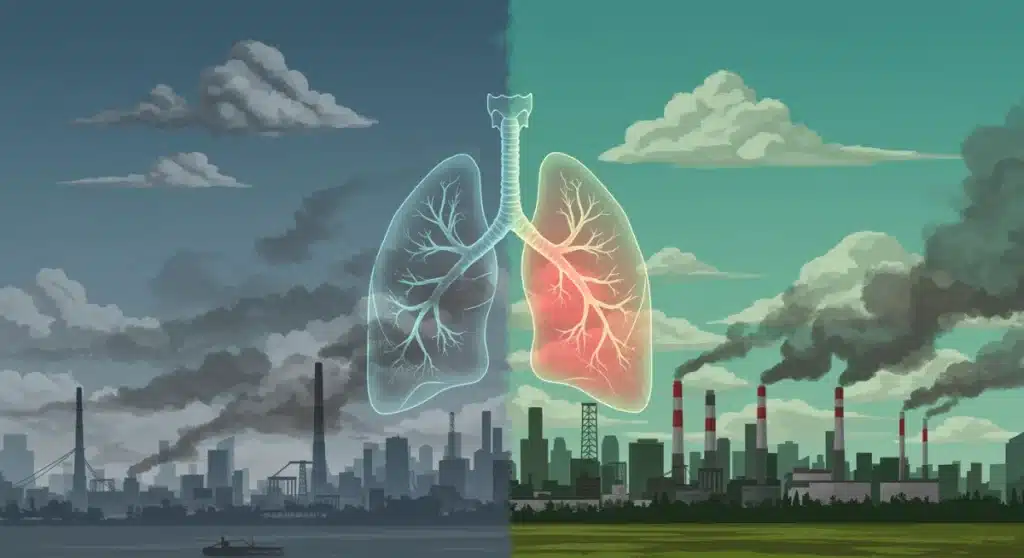
The 2026 outlook reveals significant environmental health risks in the United States, particularly concerning air quality and its direct impact on escalating respiratory conditions, demanding immediate attention and proactive public health strategies.
In the United States, the convergence of environmental shifts and public health presents a critical challenge, especially regarding air quality respiratory health. As we navigate 2026, understanding the intricate relationship between the air we breathe and our respiratory well-being becomes paramount. This article delves into the contemporary landscape of environmental health risks, offering insights into how air quality continues to shape respiratory conditions across the nation.
The evolving landscape of air quality in 2026
The year 2026 marks a pivotal point in our understanding and management of air quality. While some regions have seen improvements due to stricter regulations and technological advancements, others grapple with persistent or emerging pollutants. Climate change continues to play a significant role, exacerbating traditional air quality issues and introducing new complexities.
Wildfires, for instance, have become more frequent and intense, particularly in Western states, releasing vast quantities of particulate matter and toxic gases into the atmosphere. This not only affects local populations but also impacts air quality across vast distances, carried by prevailing winds. The health implications of these events are far-reaching and increasingly difficult to mitigate.
Key air pollutants and their sources
Understanding the primary culprits behind poor air quality is crucial for effective intervention. While the usual suspects remain, their prevalence and impact are shifting.
- Particulate Matter (PM2.5): Fine inhalable particles from industrial emissions, vehicle exhaust, and wildfires, posing significant health risks.
- Ground-level Ozone: Formed when pollutants from cars, power plants, and industrial boilers react chemically in the presence of sunlight, irritating airways.
- Nitrogen Dioxide (NO2): Primarily from burning fossil fuels, contributing to smog and acid rain.
- Sulfur Dioxide (SO2): Largely from fossil fuel combustion at power plants and industrial facilities, known to aggravate respiratory conditions.
The regulatory frameworks are constantly adapting to these challenges, but the dynamic nature of environmental factors often outpaces legislative responses. Public awareness and proactive community engagement are becoming increasingly vital in addressing these complex issues.
Overall, the air quality landscape in 2026 is a mixed bag of progress and persistent challenges. Continuous monitoring, research, and public health initiatives are essential to navigate these evolving environmental health risks effectively.
Respiratory conditions on the rise: A 2026 perspective
The connection between deteriorating air quality and the prevalence of respiratory conditions is undeniable. In 2026, we observe a concerning trend where chronic respiratory diseases continue to burden public health systems, with air pollution acting as a significant exacerbating factor. This impact is not uniform, affecting vulnerable populations disproportionately.
Asthma, Chronic Obstructive Pulmonary Disease (COPD), and bronchitis remain leading causes of morbidity and mortality. The chronic exposure to fine particulate matter and ground-level ozone specifically contributes to inflammation and damage in the airways, leading to increased hospitalizations and reduced quality of life for millions of Americans.
Vulnerable populations and disproportionate impact
Certain demographic groups bear a heavier burden of air pollution-related respiratory illnesses. Children, the elderly, individuals with pre-existing conditions, and low-income communities are particularly susceptible.
- Children: Developing lungs are more vulnerable to pollutants, leading to higher rates of asthma and impaired lung development.
- Elderly: Reduced lung function and weakened immune systems make them more prone to severe respiratory infections and exacerbations of chronic conditions.
- Low-income communities: Often reside near industrial zones or heavily trafficked areas, resulting in higher exposure to pollutants.
The social determinants of health play a crucial role in understanding these disparities. Access to healthcare, nutritional status, and housing quality all interact with environmental exposures to shape health outcomes. Addressing these inequities requires a multi-faceted approach that extends beyond simple pollution control.
The ongoing challenge in 2026 is to develop targeted interventions that protect these vulnerable groups while simultaneously working towards broader environmental improvements. This involves not only policy changes but also community-led initiatives and increased access to preventive care.
The scientific evidence: Linking air pollution to lung damage
Years of rigorous scientific research have firmly established the causal link between air pollution and various forms of lung damage. In 2026, our understanding of these mechanisms is more refined, highlighting specific pathways through which pollutants compromise respiratory health. This evidence forms the bedrock of public health advisories and regulatory actions.
Exposure to even low levels of certain pollutants over prolonged periods can lead to irreversible structural changes in the lungs. This includes thickening of airway walls, increased mucus production, and reduced elasticity, all of which impair lung function. The inflammatory response triggered by pollutants is a key driver of these pathological changes.
Mechanisms of lung injury
The way air pollutants harm the lungs is complex, involving several cellular and molecular processes.
- Oxidative Stress: Pollutants generate reactive oxygen species, leading to cellular damage and inflammation.
- Inflammation: Immune cells in the lungs react to foreign particles, causing chronic inflammation that can damage tissues.
- DNA Damage: Some pollutants are genotoxic, potentially leading to mutations and increasing cancer risk.
- Impaired Barrier Function: Damage to the epithelial lining of the airways makes the lungs more susceptible to infections and allergens.
New research in 2026 is exploring the epigenetics of air pollution, investigating how environmental exposures can alter gene expression without changing the underlying DNA sequence. This could explain why some individuals are more susceptible to the effects of pollution and how these effects might be passed down through generations.
The scientific community continues to gather data and refine models to predict the health impacts of different pollutant mixtures. This ongoing research is critical for informing public health policies and developing effective strategies to protect respiratory health from environmental hazards.
Mitigation strategies and policy responses in the US
Addressing the pervasive issue of air pollution and its impact on respiratory health requires a comprehensive suite of mitigation strategies and robust policy responses. In 2026, the United States is employing a multi-pronged approach, combining technological innovation, regulatory enforcement, and public awareness campaigns. The goal is to reduce emissions at their source while protecting communities already affected.
Federal agencies, such as the Environmental Protection Agency (EPA), continue to update and enforce standards under the Clean Air Act. These regulations target emissions from industrial facilities, vehicles, and power plants. States and local governments also play a crucial role, often implementing stricter local ordinances and promoting sustainable urban planning.
Technological advancements and green initiatives
Innovation is at the forefront of pollution control. Advances in renewable energy, electric vehicles, and cleaner industrial processes are steadily contributing to better air quality.
- Renewable Energy Transition: Shifting from fossil fuels to solar, wind, and hydro power dramatically reduces emissions.
- Electric Vehicle Adoption: Decreases tailpipe emissions, especially in urban centers.
- Carbon Capture Technologies: Emerging solutions to capture carbon dioxide from industrial sources.
- Sustainable Urban Planning: Designing cities with more green spaces, efficient public transport, and walkable neighborhoods.
Beyond large-scale policy, individual actions and community-level initiatives are also vital. Promoting public transportation, reducing energy consumption at home, and supporting local clean air campaigns all contribute to a healthier environment. The collective effort of individuals, industries, and governments is essential to achieve lasting improvements in air quality.
Ultimately, effective mitigation involves a dynamic interplay between policy, technology, and societal engagement. Continuous evaluation of these strategies is necessary to adapt to new challenges and ensure the long-term protection of public health.
Indoor air quality: An often overlooked risk factor
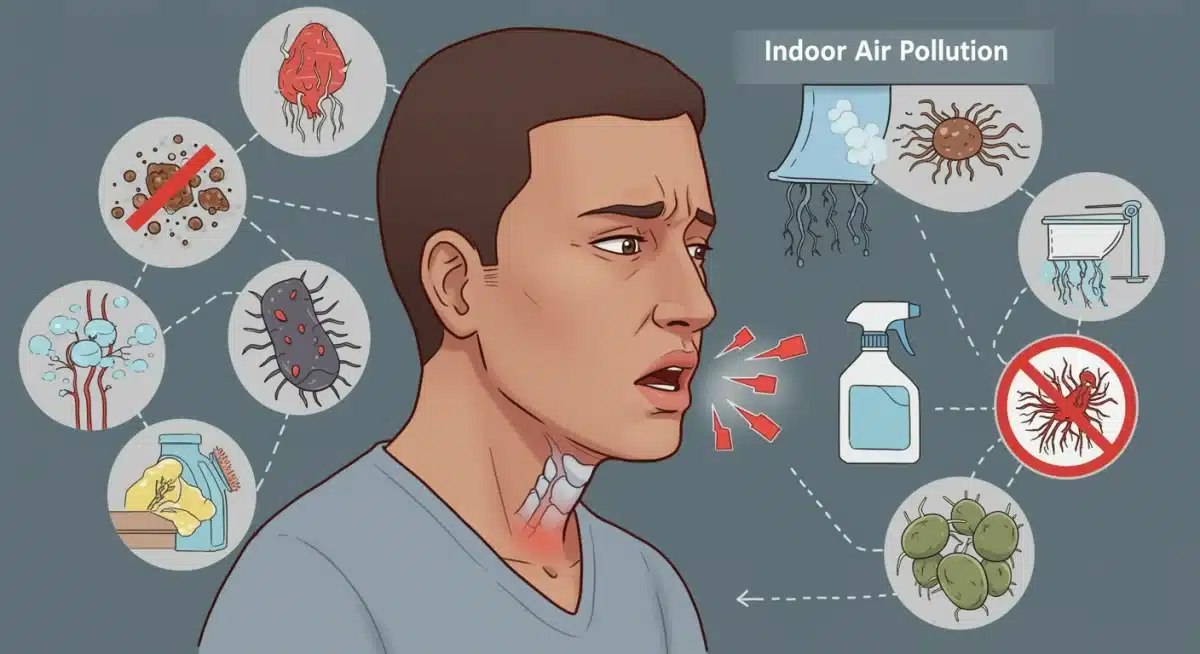
While much attention is rightly paid to outdoor air pollution, the quality of indoor air often goes unnoticed, despite its significant impact on respiratory health. Given that most Americans spend a substantial portion of their lives indoors, the air within homes, schools, and workplaces presents its own unique set of environmental health risks. In 2026, there’s growing recognition of this silent threat.
Indoor air can harbor a complex mixture of pollutants, including allergens, mold spores, volatile organic compounds (VOCs) from building materials and cleaning products, and particulate matter from cooking and heating. Poor ventilation can exacerbate these issues, trapping pollutants and increasing exposure levels. This is particularly concerning for individuals with pre-existing respiratory conditions.
Common indoor air pollutants and their health effects
Identifying and managing indoor pollutants is crucial for maintaining a healthy living environment.
- Mold and Mildew: Trigger allergic reactions, asthma attacks, and other respiratory symptoms.
- Dust Mites and Pet Dander: Common allergens that can provoke asthma and allergic rhinitis.
- Radon: A naturally occurring radioactive gas that can cause lung cancer.
- Formaldehyde: Found in building materials and furniture, causing eye, nose, and throat irritation, and potentially cancer.
- Combustion Byproducts: Carbon monoxide, nitrogen dioxide, and particulate matter from unvented heaters, stoves, and fireplaces.
Improving indoor air quality often involves a combination of source control, ventilation, and air cleaning. Regular cleaning, using low-VOC products, ensuring proper ventilation, and maintaining HVAC systems are simple yet effective measures. Public health campaigns are increasingly emphasizing the importance of these practices.
As we move forward, integrating indoor air quality considerations into public health initiatives and building codes will be essential to comprehensively address environmental health risks and protect respiratory well-being.
Future outlook: Innovations and challenges for 2026 and beyond
Looking ahead from 2026, the trajectory of air quality and its influence on respiratory health presents both promising innovations and formidable challenges. While technological advancements offer new tools for monitoring and mitigation, persistent environmental shifts and socioeconomic factors continue to demand vigilance and adaptive strategies. The future requires a dynamic approach to public health and environmental policy.
One area of significant promise is the development of advanced air quality monitoring systems. Miniaturized sensors and AI-driven predictive models are providing real-time, localized data, enabling more targeted interventions and personalized health advisories. This granular data allows communities and individuals to make informed decisions about their exposure risks.
Emerging challenges and research frontiers
Despite progress, new challenges are always on the horizon, requiring continuous research and development.
- Climate Change Feedback Loops: Warming temperatures can increase ground-level ozone formation and intensify wildfires, creating a vicious cycle.
- Microplastics in Air: A growing concern, with unknown long-term respiratory effects.
- E-waste Emissions: Improper disposal of electronic waste releases toxic chemicals into the air.
- Personalized Medicine: Tailoring treatments and preventive measures based on an individual’s genetic susceptibility to air pollution.
The social and economic dimensions of air quality will also remain critical. Ensuring equitable access to clean air and healthcare resources for all communities, particularly those disproportionately affected, will be a central challenge. This involves addressing systemic inequalities and promoting environmental justice.
The proactive engagement of the scientific community, policymakers, and the public will be indispensable in shaping a future where clean air is a universal right. Continuous innovation, robust policy frameworks, and a commitment to health equity will define our success in mitigating environmental health risks and safeguarding respiratory well-being.
| Key Aspect | Brief Description |
|---|---|
| Air Quality Trends 2026 | Mixed progress with persistent challenges, exacerbated by climate change and wildfires. |
| Respiratory Health Impact | Increased prevalence of asthma, COPD, and bronchitis, disproportionately affecting vulnerable groups. |
| Mitigation Strategies | Regulatory enforcement, technological innovations, and public awareness campaigns are key. |
| Indoor Air Quality | An often-overlooked risk factor, demanding improved ventilation and source control. |
Frequently asked questions about air quality and respiratory health
In 2026, key pollutants include particulate matter (PM2.5) from wildfires and industrial sources, ground-level ozone from vehicle emissions, and nitrogen/sulfur dioxides. These contribute significantly to respiratory conditions like asthma and COPD, especially in urban and industrial areas.
Climate change intensifies extreme weather events, such as wildfires and heatwaves, which directly worsen air quality by increasing particulate matter and ozone formation. This exacerbates existing respiratory conditions and can trigger new ones, particularly in sensitive populations.
Individuals can monitor local air quality reports, reduce outdoor activity on high pollution days, use air purifiers indoors, ensure good home ventilation, and consult healthcare providers for personalized advice, especially if they have pre-existing respiratory conditions.
Yes, children, the elderly, individuals with chronic respiratory diseases (like asthma or COPD), and residents of low-income communities or areas near industrial sites are often more vulnerable due to physiological factors or higher exposure levels.
Innovations include advanced real-time air quality monitoring with AI, renewable energy transitions, electric vehicle adoption, and carbon capture technologies. Research into personalized medicine for pollution susceptibility and sustainable urban planning also offers promising avenues for future improvement.
Conclusion
The year 2026 underscores the critical importance of understanding and addressing air quality respiratory health in the United States. While progress has been made in certain areas, the persistent challenges posed by climate change, industrial emissions, and overlooked indoor pollutants demand a concerted effort. Protecting the respiratory well-being of the population, particularly vulnerable groups, requires a dynamic interplay of robust policy, technological innovation, and heightened public awareness. Moving forward, a holistic approach that integrates environmental stewardship with public health initiatives will be essential to ensure cleaner air and healthier lives for all Americans.