AI in Healthcare: Boosting Diagnostics & Reducing Misdiagnosis by 10% by 2026

The landscape of healthcare is undergoing a profound transformation, driven by technological advancements that were once the stuff of science fiction. Among these, Artificial Intelligence (AI) stands out as a particularly potent force, poised to revolutionize every facet of medical practice. In the United States, healthcare providers are increasingly recognizing the immense potential of AI, particularly in the realm of diagnostics. The goal is ambitious yet critical: to significantly reduce misdiagnosis rates, with a tangible target of a 10% reduction by 2026. This article will explore the actionable steps US healthcare providers are taking to integrate AI for more accurate diagnostics, delve into the challenges and opportunities, and project the future impact of this technological revolution on patient care.
The Critical Imperative: Why AI in Healthcare Diagnostics Matters
Misdiagnosis is a persistent and pervasive problem in healthcare, with far-reaching consequences for patients and the healthcare system alike. Studies have shown that diagnostic errors contribute to a significant number of adverse events, leading to delayed or inappropriate treatment, increased healthcare costs, and, in severe cases, preventable disability or death. The complexity of modern medicine, coupled with the sheer volume of patient data, makes human diagnostic processes inherently susceptible to error. This is where AI healthcare diagnostics emerges as a game-changer.
AI’s ability to process and analyze vast datasets, identify subtle patterns, and learn from experience far surpasses human capabilities in many diagnostic scenarios. From interpreting medical images to analyzing genomic data and predicting disease progression, AI offers a new paradigm for precision and efficiency. The drive to achieve a 10% reduction in misdiagnosis rates by 2026 is not just a statistical goal; it represents a commitment to saving lives, improving patient outcomes, and enhancing the overall quality of care across the nation. This commitment underscores the urgent need for widespread adoption and strategic implementation of AI technologies within US healthcare institutions.
Understanding the Scope of Misdiagnosis in the US
Before delving into AI solutions, it’s crucial to understand the scale of the problem. Diagnostic errors are not rare events; they are a leading cause of medical malpractice claims and a significant contributor to patient harm. The National Academies of Sciences, Engineering, and Medicine (NASEM) report ‘Improving Diagnosis in Healthcare’ highlighted that most people will experience at least one diagnostic error in their lifetime. These errors can stem from various factors, including cognitive biases, communication breakdowns, system failures, and inadequate use of diagnostic tools. The financial burden is also substantial, with billions of dollars spent annually on unnecessary tests, treatments for incorrect diagnoses, and malpractice litigation.
The complexity of human physiology and pathology means that many diseases present with overlapping symptoms, making differential diagnosis a challenging task even for the most experienced clinicians. Furthermore, the rapid pace of medical discovery means that new diagnostic criteria and treatment protocols are constantly emerging, requiring continuous learning and adaptation from healthcare providers. AI, with its capacity for continuous learning and pattern recognition, offers a powerful tool to augment human expertise and mitigate these inherent challenges, thereby paving the way for more accurate and timely diagnoses.
Actionable Steps: Integrating AI for Enhanced Diagnostics
The journey towards integrating AI into healthcare diagnostics is multifaceted, requiring strategic planning, significant investment, and a collaborative approach. US healthcare providers are focusing on several key actionable steps to harness the power of AI healthcare diagnostics.
1. Investing in AI-Powered Imaging Analysis
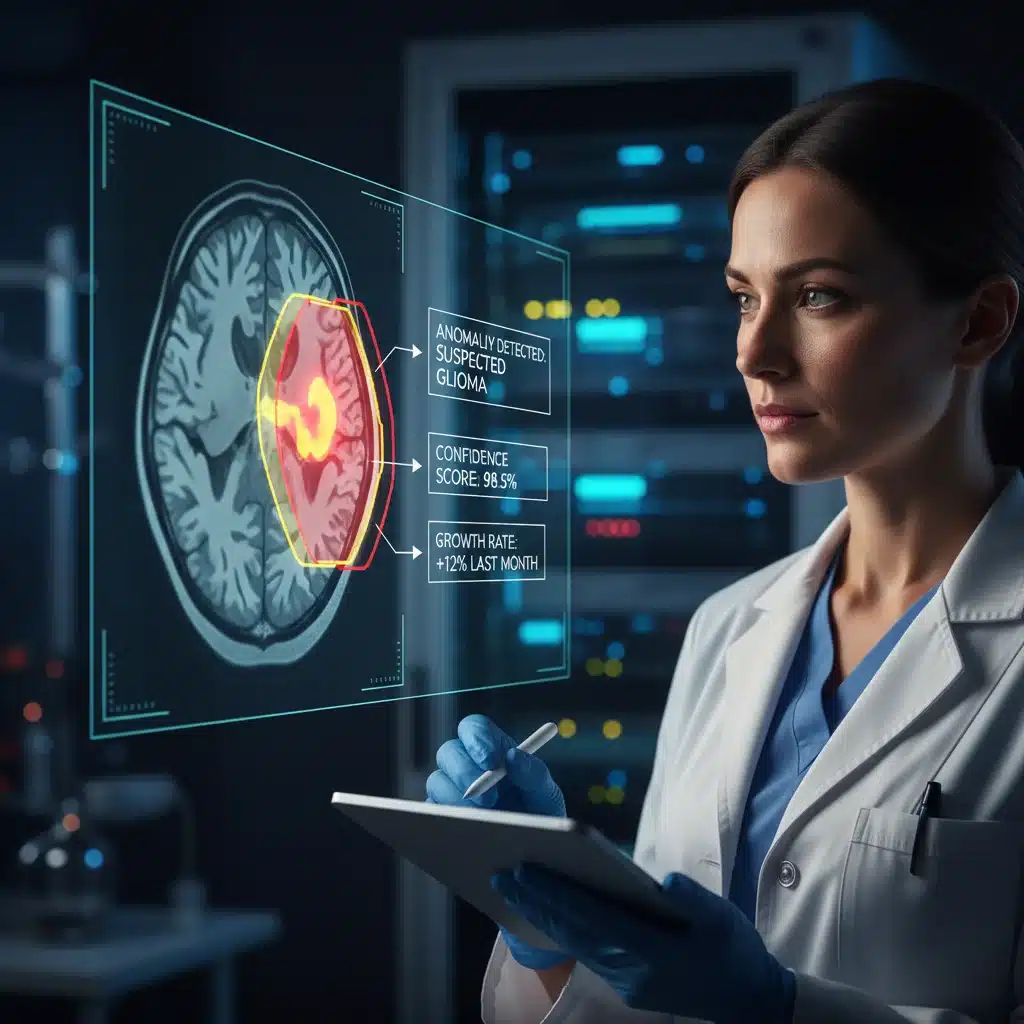
One of the most immediate and impactful applications of AI in diagnostics is in medical imaging. AI algorithms can analyze X-rays, CT scans, MRIs, and pathology slides with remarkable speed and accuracy, often identifying subtle abnormalities that might be missed by the human eye. This is particularly critical in areas like radiology and pathology, where the volume of images is immense and the demand for rapid interpretation is high.
- Early Disease Detection: AI models can detect early signs of diseases like cancer, Alzheimer’s, and cardiovascular conditions from imaging data, enabling earlier intervention and better patient outcomes. For instance, AI algorithms are showing promising results in identifying lung nodules on CT scans with higher sensitivity than human radiologists.
- Reducing False Positives/Negatives: By learning from vast datasets of correctly diagnosed and misdiagnosed cases, AI can help reduce both false positives (leading to unnecessary anxiety and procedures) and false negatives (leading to delayed treatment).
- Workflow Optimization: AI tools can triage urgent cases, prioritize studies for radiologists, and automate mundane tasks, freeing up clinicians to focus on complex cases and patient interaction.
Hospitals and imaging centers are investing in AI platforms that integrate directly with their Picture Archiving and Communication Systems (PACS), providing real-time analytical support to radiologists. This integration is crucial for seamless adoption and maximum impact on diagnostic workflows. The goal is not to replace human experts but to augment their capabilities, providing an intelligent second opinion that enhances confidence and accuracy.
2. Leveraging AI for Electronic Health Record (EHR) Analysis
EHRs contain a wealth of information, from patient demographics and medical history to lab results and physician notes. However, extracting meaningful insights from this unstructured and often disparate data is a significant challenge for humans. AI, particularly Natural Language Processing (NLP), is transforming how healthcare providers interact with EHRs.
- Identifying Risk Factors: AI algorithms can analyze EHR data to identify patients at high risk for certain diseases, predict potential complications, or flag patients who might benefit from preventive interventions.
- Diagnostic Decision Support: By cross-referencing patient symptoms, medical history, and lab results with vast medical knowledge bases, AI systems can generate differential diagnoses and suggest relevant diagnostic tests, aiding clinicians in making more informed decisions.
- Detecting Diagnostic Discrepancies: AI can flag inconsistencies in patient records or identify cases where current diagnoses don’t align with the presented symptoms or test results, prompting clinicians to re-evaluate.
The implementation of AI-powered EHR analysis tools requires robust data governance, interoperability standards, and a focus on data privacy and security. Healthcare organizations are working with technology partners to develop and deploy these solutions, ensuring they are integrated ethically and effectively into clinical practice. The ability to unlock the hidden potential within EHRs is a cornerstone of improving AI healthcare diagnostics.
3. Advancing Precision Medicine with AI and Genomics
Precision medicine, which tailors medical treatment to the individual characteristics of each patient, is a rapidly evolving field. AI plays a pivotal role in accelerating its adoption, particularly in genomics.
- Genomic Data Interpretation: AI can analyze complex genomic sequences to identify genetic mutations, predispositions to diseases, and predict individual responses to drugs, enabling personalized treatment plans.
- Biomarker Discovery: Machine learning algorithms can scour vast biological datasets to discover novel biomarkers for early disease detection and prognosis, leading to more targeted diagnostic tests.
- Drug Development: AI is being used to accelerate drug discovery and development by identifying potential drug candidates and predicting their efficacy and toxicity, which ultimately impacts the availability of precise treatments.
Leading academic medical centers and research institutions are at the forefront of integrating AI with genomic sequencing capabilities. This collaboration promises to unlock new avenues for diagnosing rare diseases, tailoring cancer therapies, and preventing chronic conditions, moving healthcare towards a more proactive and personalized model. The ethical implications of handling sensitive genomic data are also a key consideration, requiring stringent privacy protocols and patient consent.
4. Implementing AI for Predictive Analytics and Risk Stratification
Beyond current diagnostics, AI is instrumental in predicting future health events and stratifying patient risk, allowing for proactive interventions.
- Predicting Disease Onset: AI models can predict the likelihood of a patient developing conditions like diabetes, heart disease, or sepsis based on a combination of genetic factors, lifestyle data, and historical medical records.
- Early Warning Systems: In hospital settings, AI-powered early warning systems can monitor patient vital signs and other data points to predict deterioration or adverse events, allowing medical staff to intervene before a crisis occurs.
- Resource Allocation: By predicting patient needs and disease prevalence, AI can help healthcare systems optimize resource allocation, ensuring that diagnostic tools and specialists are available where and when they are most needed.
This predictive capability is transforming healthcare from a reactive to a proactive model, where interventions can be made earlier, often preventing the progression of diseases and reducing the need for more intensive and costly treatments down the line. The ethical considerations around predictive analytics, particularly concerning potential biases in algorithms and equitable access to care, are actively being addressed by providers and policymakers.
5. Enhancing Clinical Decision Support Systems with AI
Clinical Decision Support Systems (CDSS) have existed for some time, but AI is supercharging their capabilities. Modern AI-powered CDSS can provide clinicians with real-time, evidence-based recommendations at the point of care.
- Differential Diagnosis Engines: These systems can suggest a list of possible diagnoses based on a patient’s symptoms, test results, and medical history, along with the probability of each diagnosis.
- Treatment Recommendations: Based on the diagnosis and patient-specific factors, AI can recommend optimal treatment protocols, drug dosages, and potential drug interactions.
- Staying Current with Medical Knowledge: AI systems can continuously update their knowledge base with the latest medical research, guidelines, and clinical trials, ensuring that clinicians have access to the most current information.
The integration of AI into CDSS is helping to standardize care, reduce variations in practice, and ensure that every patient receives the highest quality of evidence-based medicine. This is particularly beneficial for less experienced clinicians or in complex cases where specialist input might not be immediately available. The ultimate goal is to empower clinicians with the best possible information to make accurate and timely diagnostic decisions.
Challenges and Considerations in AI Integration
While the promise of AI healthcare diagnostics is immense, its widespread adoption is not without challenges. Addressing these hurdles is crucial for successful integration and achieving the 10% misdiagnosis reduction target.
Data Quality and Accessibility
AI models are only as good as the data they are trained on. Healthcare data is often fragmented, incomplete, and stored in disparate systems. Ensuring high-quality, standardized, and accessible data is a foundational requirement for effective AI implementation. This involves significant investment in data infrastructure, data cleaning, and establishing interoperability standards across different healthcare IT systems.
Regulatory and Ethical Frameworks
The rapid evolution of AI technology often outpaces regulatory frameworks. Ensuring patient safety, data privacy (HIPAA compliance is paramount), and algorithmic transparency are critical. Healthcare providers must navigate complex ethical considerations, including potential biases in AI algorithms, accountability for AI-driven decisions, and informed consent for AI use in patient care. Clear guidelines and robust oversight are essential to build trust and ensure responsible AI deployment.
Integration with Existing Workflows
Introducing new technologies into established clinical workflows can be disruptive. Successful AI integration requires careful planning, user-friendly interfaces, and extensive training for healthcare professionals. AI tools must seamlessly fit into existing systems without adding significant burden to clinicians, otherwise, adoption will be slow. Collaborative design involving clinicians from the outset is vital.
Cost and Return on Investment
Implementing advanced AI solutions can be expensive, involving significant upfront investment in technology, infrastructure, and personnel. Healthcare providers need to carefully evaluate the return on investment (ROI), not just in terms of financial savings but also in improved patient outcomes, reduced readmissions, and enhanced operational efficiency. Demonstrating tangible benefits will be key to securing continued investment.
Workforce Training and Skill Development
The effective use of AI requires a workforce that is not only comfortable with technology but also understands its capabilities and limitations. Training programs for clinicians, radiologists, pathologists, and other healthcare professionals are essential to ensure they can effectively interact with AI tools, interpret their outputs, and integrate AI insights into their clinical decision-making. This also includes training data scientists and AI specialists who understand the nuances of healthcare data.
The Future Outlook: Towards a 10% Reduction in Misdiagnosis by 2026
The target of reducing misdiagnosis rates by 10% by 2026 is ambitious but achievable, given the accelerating pace of AI development and adoption. Several trends indicate a positive trajectory:
Increased Collaboration and Partnerships
Healthcare providers are increasingly partnering with AI developers, academic institutions, and other technology companies to co-create solutions tailored to specific clinical needs. These collaborations foster innovation and accelerate the deployment of effective AI healthcare diagnostics tools.
Advancements in Explainable AI (XAI)
One of the criticisms of AI has been its ‘black box’ nature. However, advancements in Explainable AI (XAI) are making AI models more transparent, allowing clinicians to understand how an AI system arrived at a particular conclusion. This transparency is crucial for building trust and facilitating clinical adoption.
Federated Learning and Data Sharing
To overcome data silos and improve the generalizability of AI models, healthcare organizations are exploring federated learning, a technique that allows AI models to be trained on decentralized datasets without the need to centralize the data. This approach respects data privacy while enabling the development of more robust AI solutions.

Focus on Patient-Centric AI
Future AI developments will increasingly focus on patient-centric applications, including AI-powered virtual assistants for symptom checking, personalized health coaching, and tools that empower patients to better understand their health conditions and diagnostic pathways. This empowers patients as active participants in their diagnostic journey.
Government Support and Funding
Recognizing the strategic importance of AI in healthcare, government agencies are likely to increase funding for AI research, development, and implementation initiatives. This support will be critical in accelerating the widespread adoption of AI technologies across the US healthcare system.
Conclusion
The integration of AI into US healthcare diagnostics is not merely an technological upgrade; it is a fundamental shift towards a more precise, efficient, and patient-centric healthcare system. By taking actionable steps in AI-powered imaging analysis, EHR interpretation, precision medicine, predictive analytics, and enhanced clinical decision support, healthcare providers are laying the groundwork for a future where diagnostic errors are significantly reduced. The ambitious goal of a 10% reduction in misdiagnosis rates by 2026 is a testament to the transformative power of AI healthcare diagnostics.
While challenges related to data, regulation, integration, and workforce training remain, the collaborative efforts of clinicians, technologists, policymakers, and patients are paving the way for overcoming these hurdles. The journey ahead will require continuous innovation, ethical considerations, and a steadfast commitment to improving patient outcomes. Ultimately, AI is not just a tool; it is a partner in the pursuit of healthier lives, promising a future where accurate and timely diagnoses are the norm, not the exception.