AI and Artistic Evolution: American Artists Embracing AI by 2026
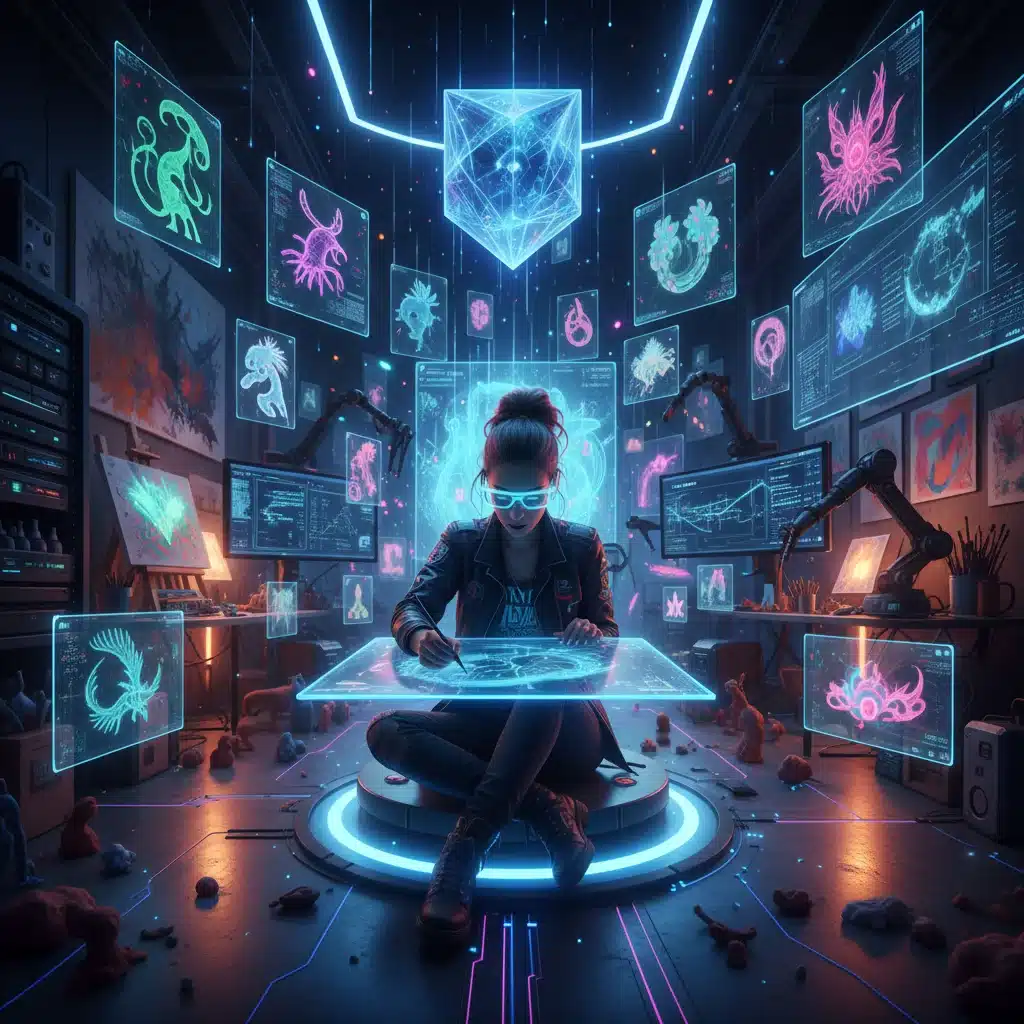
AI and Artistic Evolution: How 20% of American Artists are Adapting Their Craft by 2026
The landscape of art is continuously evolving, shaped by societal shifts, technological advancements, and the boundless human imagination. In recent years, no technological innovation has stirred as much discussion, excitement, and apprehension within the creative community as Artificial Intelligence (AI). This powerful technology is not merely a tool but a potential collaborator, a source of inspiration, and a catalyst for profound change. Projections indicate that by 2026, a significant 20% of American artists will have integrated AI into their creative processes, marking a pivotal moment in AI artistic evolution.
This statistic isn’t just a number; it represents a fundamental shift in how art is conceived, created, and consumed. It signals a future where human creativity is augmented, challenged, and perhaps even redefined by intelligent algorithms. For American artists, this means navigating a complex terrain of ethical considerations, technical learning curves, and philosophical debates about authorship and originality. Yet, it also promises unprecedented opportunities for innovation, efficiency, and the exploration of new aesthetic frontiers.
The embrace of AI by a substantial portion of the American art community is not a sudden phenomenon but the culmination of years of development in machine learning, generative adversarial networks (GANs), and other AI technologies. From generating unique visual styles to assisting with complex compositions, AI tools are becoming increasingly sophisticated and accessible. This article delves into the various facets of this transformation, exploring the reasons behind AI’s growing adoption, the types of applications artists are finding, the benefits and challenges they face, and what this trend portends for the future of art.
Understanding the Surge in AI Adoption Among Artists
Why are so many American artists turning to AI? The reasons are multifaceted, ranging from practical advantages to the allure of uncharted creative territories. One primary driver is the sheer efficiency and speed that AI tools offer. Tasks that once required countless hours – such as generating multiple iterations of a design, exploring color palettes, or even creating entire background elements – can now be accomplished in minutes. This allows artists to dedicate more time to conceptual development, refinement, and the truly unique aspects of their human touch.
Moreover, AI acts as a powerful ideation partner. For artists grappling with creative blocks or seeking fresh perspectives, AI can generate novel ideas, unexpected combinations, and diverse styles that might not have occurred to them otherwise. This generative capability is transforming the early stages of the creative process, making it more dynamic and expansive. It’s not about replacing the artist but providing a fertile ground for inspiration.
Accessibility and Democratization
The increasing accessibility of AI tools is another crucial factor. What once required specialized programming knowledge is now available through user-friendly interfaces, often cloud-based, making it easier for artists from various backgrounds to experiment. This democratization of advanced creative technology means that more artists, regardless of their technical expertise, can explore the potential of AI. This broadens the scope of AI artistic evolution, allowing for a wider range of voices and styles to emerge.
Pushing Creative Boundaries
Beyond practicalities, many artists are drawn to AI for its ability to push the boundaries of what’s possible. AI can create visuals that transcend traditional artistic limitations, exploring complex patterns, impossible geometries, and entirely new aesthetic languages. This resonates deeply with artists who are inherently driven to innovate and challenge conventional norms. The allure of creating something truly unprecedented, something that combines human intuition with algorithmic precision, is a powerful motivator.
Diverse Applications of AI in Art
The ways in which American artists are integrating AI are as diverse as the art forms themselves. From painting and sculpture to music and performance art, AI is finding its niche across the creative spectrum. This widespread adoption underscores the versatility and adaptability of AI as a creative tool, contributing significantly to AI artistic evolution.
Visual Arts: Painting, Illustration, and Digital Design
In visual arts, AI is being used to generate initial sketches, develop intricate textures, and create entirely new visual compositions. Artists can feed AI algorithms with existing images or textual prompts, and the AI can then produce unique artworks in a desired style. This is particularly useful for concept artists, illustrators, and digital painters who need to rapidly prototype ideas or generate variations.
For example, an artist might use an AI to generate a series of landscape backgrounds, which they then modify and integrate into a larger piece. Others are using AI to create abstract art, where the algorithm’s ability to identify and manipulate patterns leads to fascinating and complex designs. The collaboration often involves the artist guiding the AI, making selections, and refining the output, ensuring that the final piece still carries their personal vision.
Sculpture and 3D Art
AI is also making inroads into three-dimensional art. Artists are using AI to design complex sculptural forms that would be challenging or impossible to create by hand. AI can optimize designs for 3D printing, generate intricate patterns for surface textures, or even simulate how light will interact with a physical sculpture. This allows for the creation of innovative structures and forms, expanding the possibilities for physical art installations.
Music and Sound Art
Beyond visual arts, AI is revolutionizing music composition and sound design. AI can generate melodies, harmonies, and rhythms based on specific parameters or existing musical styles. Composers are using AI to explore new sonic textures, create dynamic soundtracks, or even develop interactive musical experiences. This opens up new avenues for experimentation in sound art, allowing artists to create pieces that respond to their environment or audience in real-time.
Performance and Interactive Art
In performance and interactive art, AI can drive dynamic visuals, create responsive environments, or even generate narratives. AI-powered systems can analyze audience reactions and adjust performances accordingly, leading to highly engaging and personalized artistic experiences. This intersection of AI and live art is creating entirely new forms of expression, challenging traditional notions of performance and audience participation.
The Benefits and Challenges of AI Integration
While the benefits of integrating AI into artistic practice are considerable, artists also face a unique set of challenges. Understanding both sides of this coin is crucial for a balanced perspective on AI artistic evolution.
Key Benefits
- Enhanced Efficiency: AI automates repetitive tasks, freeing up artists to focus on higher-level creative decisions and conceptualization. This significantly speeds up the artistic workflow.
- Expanded Creative Horizons: AI can generate novel ideas, styles, and forms that might be beyond human conception, pushing the boundaries of artistic expression. It acts as a brainstorming partner that never tires.
- Increased Accessibility: User-friendly AI tools make advanced creative technologies accessible to a broader range of artists, lowering the barrier to entry for complex techniques.
- Personalized Learning and Development: AI can analyze an artist’s style and suggest techniques or resources for improvement, acting as a personalized mentor.
- New Revenue Streams: Artists can leverage AI to create unique digital assets, generate variations of existing works, or develop interactive art experiences that open up new commercial opportunities.
Significant Challenges
- Ethical Concerns and Copyright: One of the most contentious issues is the ethical implications of AI-generated art, particularly regarding plagiarism and copyright. Questions arise about who owns the rights to AI-generated works, especially when trained on existing human-created art.
- Loss of Human Touch/Authenticity: Critics worry that over-reliance on AI could diminish the unique emotional depth and personal narrative inherent in human-created art. The debate about authenticity in AI artistic evolution is ongoing.
- Technical Learning Curve: While tools are becoming more user-friendly, mastering AI art generation still requires a significant investment of time and effort to understand prompts, parameters, and post-processing.
- Job Displacement Fears: Some artists fear that AI could automate certain artistic roles, potentially leading to job displacement in fields like illustration, graphic design, and concept art.
- Data Bias: AI models are trained on vast datasets, and if these datasets contain biases, the AI’s output can reflect and perpetuate those biases, leading to problematic or unrepresentative art.
- The ‘Black Box’ Problem: Understanding why an AI generates a particular artistic output can be challenging, making it difficult for artists to fully control or predict the creative process.
Navigating the Ethical and Philosophical Landscape
The integration of AI into art extends beyond technical considerations; it forces a re-evaluation of fundamental concepts like authorship, originality, and the very definition of art. As 20% of American artists embrace AI, these philosophical debates become increasingly central to the discourse on AI artistic evolution.
Authorship and Originality
When an AI generates an image based on an artist’s prompt, who is the author? Is it the artist who provided the initial idea, the programmer who developed the AI, or the AI itself? The legal and philosophical frameworks surrounding authorship are struggling to keep pace with these new realities. Many argue that the artist’s role shifts from direct creation to curation and direction, making them more of a ‘prompt engineer’ or ‘AI conductor.’
Originality is also being redefined. Can an AI create truly original work, or is it always a derivative recombination of its training data? Artists are exploring ways to imbue AI-generated pieces with their unique artistic voice, ensuring that even with algorithmic assistance, the final product remains distinctly theirs. This often involves extensive post-processing, layering, and conceptual framing.
The Role of Human Emotion and Experience
Art has historically been a profound reflection of the human condition, conveying emotions, experiences, and perspectives that resonate deeply with audiences. A key concern is whether AI, lacking consciousness and personal experience, can truly replicate this emotional depth. While AI can simulate human-like expressions and styles, the underlying intent and feeling may be absent. This leads to a crucial question: does art require a ‘soul’ to be truly impactful?
Many artists argue that AI is best utilized as a tool that enhances human creativity, rather than replacing it. The human element of intention, curation, and interpretation remains paramount, ensuring that the art continues to speak to the human experience. The collaboration between artist and AI can, in fact, open up new ways to explore and express complex emotions, making AI artistic evolution a collaborative rather than a competitive endeavor.
Education and Training: Preparing Artists for the AI Era
For the projected 20% of American artists to successfully integrate AI by 2026, robust educational frameworks and training opportunities are essential. Art schools, universities, and independent workshops are beginning to adapt their curricula to equip artists with the necessary skills to navigate this new technological landscape.
New Skill Sets for Artists
Artists moving into AI will need to develop a new set of skills beyond traditional art techniques. These include:
- Prompt Engineering: The ability to craft precise and effective textual prompts to guide AI models to generate desired outputs.
- Understanding AI Algorithms: A basic grasp of how AI models work, their limitations, and their capabilities.
- Data Curation: Knowledge of how to select and prepare data for training AI models, and an awareness of potential biases.
- Post-processing and Refinement: Skills in traditional digital art software (e.g., Photoshop, Illustrator) to refine and integrate AI-generated elements into finished artworks.
- Ethical AI Practices: An understanding of the ethical implications of AI art, including copyright, attribution, and responsible use.
Many institutions are now offering courses specifically designed to bridge the gap between traditional art education and AI technology. These programs often emphasize hands-on experimentation, critical thinking, and collaborative projects, preparing students not just to use AI, but to think creatively about its applications in art. This focus on education is vital for fostering a generation of artists who can lead the AI artistic evolution.
The Future of Art: A Collaborative Human-AI Endeavor
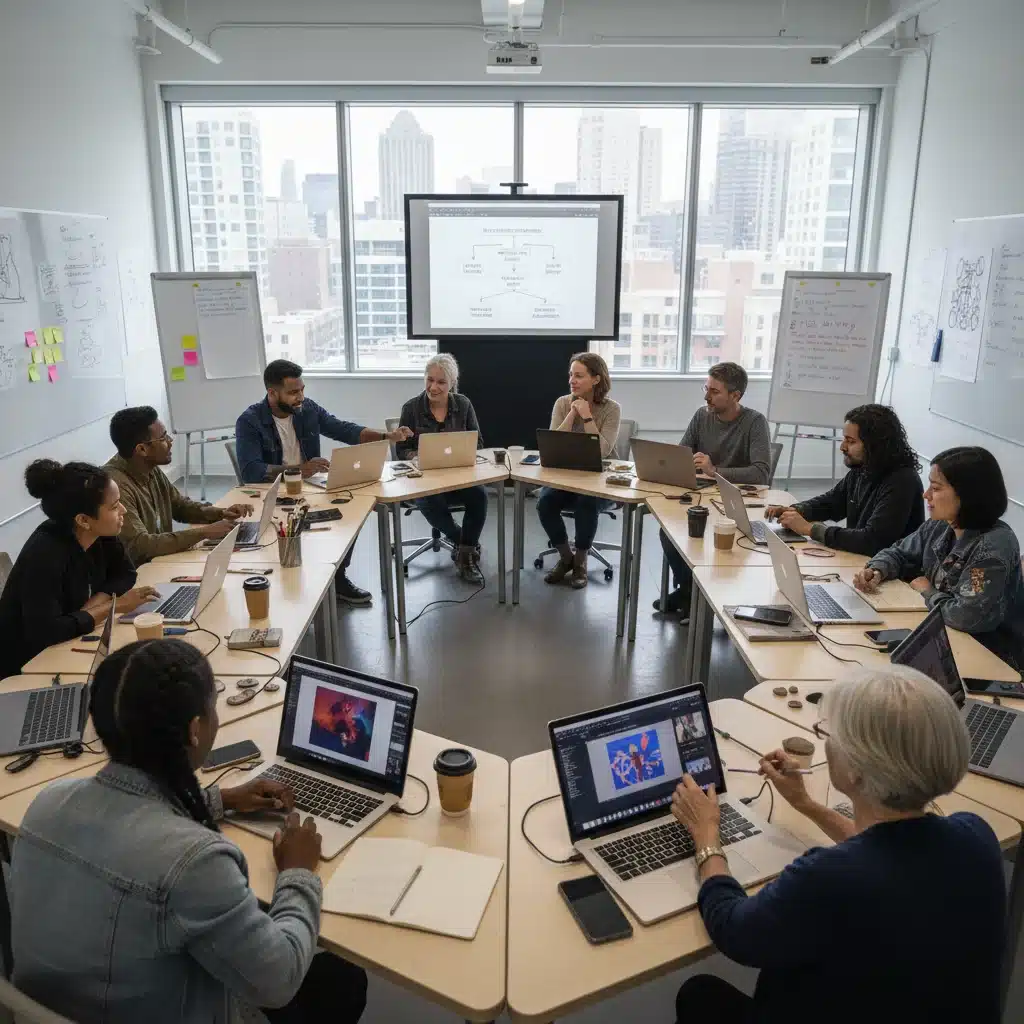
As we look towards 2026 and beyond, the trajectory of AI artistic evolution appears to be one of increasing collaboration between human and artificial intelligence. The vision is not one of AI replacing artists, but rather augmenting their capabilities and expanding their creative toolkit. This partnership could lead to entirely new art forms, unprecedented aesthetic experiences, and a deeper understanding of both human and machine creativity.
Emerging Trends and Predictions
- Hyper-Personalized Art: AI could enable the creation of art tailored to individual preferences, moods, or even biometric data, offering highly personalized aesthetic experiences.
- Dynamic and Evolving Artworks: Art pieces might no longer be static but could evolve and change over time, responding to external stimuli or audience interaction, driven by AI algorithms.
- AI as a Curatorial Tool: AI could assist in curating exhibitions, identifying emerging trends, or even predicting the impact and reception of artworks.
- New Artistic Professions: The rise of AI art will likely lead to new professional roles, such as AI art directors, prompt engineers, and ethical AI art consultants.
- Interdisciplinary Blending: AI will continue to blur the lines between different art forms and scientific disciplines, fostering innovative interdisciplinary projects.
The journey of AI artistic evolution is just beginning. While challenges persist, the overwhelming sentiment among many American artists is one of cautious optimism and excitement. The ability to harness the power of AI to explore new creative territories, to work more efficiently, and to connect with audiences in novel ways is a compelling prospect. The 20% adoption rate by 2026 is not merely a benchmark; it’s a testament to the resilience, adaptability, and boundless curiosity of the artistic spirit.
Conclusion
The integration of Artificial Intelligence into the creative practices of American artists is undeniably one of the most significant developments in the contemporary art world. The projection that 20% of American artists will be adapting their craft with AI by 2026 underscores a transformative period for creativity. This AI artistic evolution is characterized by both immense opportunity and complex challenges, from ethical dilemmas surrounding authorship and copyright to the exciting potential for unprecedented forms of expression.
Artists are increasingly viewing AI not as a threat to their individuality, but as a sophisticated tool and a collaborative partner that can amplify their vision, streamline their processes, and unlock new creative dimensions. The benefits of enhanced efficiency, expanded creative horizons, and increased accessibility are proving to be powerful motivators for adoption. However, the ongoing debates about authenticity, bias, and the human touch in art remain crucial conversations that will continue to shape the development and acceptance of AI in the artistic domain.
As education systems adapt to equip future artists with the necessary AI literacy and ethical frameworks, we can anticipate a vibrant future where human ingenuity and artificial intelligence converge to create art that is more diverse, dynamic, and thought-provoking than ever before. The 20% benchmark is just the beginning of a fascinating journey, promising a continuous redefinition of what it means to be an artist and what art itself can achieve in the 21st century.