U.S. Workforce Reskilling: Boost Productivity 15% by 2026

The landscape of work in the United States is undergoing a seismic transformation, driven by rapid technological advancements, evolving consumer demands, and global economic shifts. For businesses striving not just to survive but to thrive, the imperative to adapt and innovate has never been more critical. At the heart of this adaptation lies a pivotal strategy: workforce reskilling strategies. As we fast-forward to 2026, the urgency to equip employees with new, relevant skills to meet the demands of an increasingly automated and data-driven world is paramount. This article delves into comprehensive U.S. business strategies for adapting to these technological shifts, with a specific focus on how targeted workforce reskilling strategies can lead to a remarkable 15% productivity improvement.
The pace of technological change is relentless. Artificial Intelligence (AI), machine learning, automation, advanced robotics, and data analytics are no longer futuristic concepts but integral components of modern business operations. While these technologies promise unprecedented efficiencies and new opportunities, they also create a significant challenge: a growing skills gap. Traditional roles are being redefined, and entirely new job categories are emerging, requiring a workforce that is agile, adaptable, and continuously learning. U.S. businesses face the unique task of navigating this transition, ensuring their human capital remains their most valuable asset.
Achieving a 15% productivity improvement by 2026 through workforce reskilling strategies is not merely an ambitious goal; it’s a strategic necessity. Productivity gains directly translate into increased profitability, enhanced competitiveness, and a more resilient organization. This improvement isn’t just about doing more with less; it’s about doing smarter, leveraging technology effectively, and empowering employees to contribute at higher levels of value. The journey to this goal involves a multi-faceted approach, encompassing strategic planning, investment in human capital, and a cultural shift towards continuous learning.
The Evolving U.S. Workforce Landscape: Why Reskilling is Non-Negotiable
The U.S. labor market is a dynamic ecosystem, constantly reshaped by external forces. Understanding these forces is the first step in formulating effective workforce reskilling strategies.
Technological Disruption and the Skills Gap
The most prominent driver of change is technology. The proliferation of AI and automation is automating routine tasks, shifting the demand towards skills that machines cannot easily replicate: critical thinking, creativity, complex problem-solving, emotional intelligence, and advanced digital literacy. A recent report by the World Economic Forum highlighted that by 2025, 85 million jobs may be displaced by a shift in the division of labor between humans and machines, while 97 million new roles may emerge. This creates a significant skills mismatch, where available talent lacks the required competencies for new roles, and existing employees find their skills becoming obsolete. For U.S. businesses, this means proactively identifying future skill needs and implementing robust workforce reskilling strategies to bridge this gap.
Demographic Shifts and Generational Diversity
The U.S. workforce is also characterized by increasing generational diversity, with Baby Boomers, Generation X, Millennials, and Generation Z working side-by-side. Each generation brings unique perspectives, learning styles, and technological proficiencies. Effective workforce reskilling strategies must be inclusive and cater to these diverse needs, ensuring that all employees, regardless of age or background, have access to the training and development opportunities necessary to adapt. This intergenerational learning can actually be a powerful asset, with older workers sharing institutional knowledge and younger workers bringing digital native insights.
Global Competition and Economic Pressures
U.S. businesses operate in a highly competitive global marketplace. Companies that fail to innovate and optimize their operations risk falling behind. A skilled and adaptable workforce is a key differentiator, enabling companies to respond quickly to market changes, develop new products and services, and maintain a competitive edge. Investment in workforce reskilling strategies is an investment in long-term economic resilience and growth.
The Post-Pandemic Acceleration of Digital Transformation
The COVID-19 pandemic significantly accelerated digital transformation initiatives across industries. Remote work became the norm for many, necessitating a rapid upskilling in digital collaboration tools, cybersecurity, and virtual management. This acceleration has permanently altered work models and reinforced the need for continuous learning and adaptation. Businesses that embraced these changes swiftly were more resilient, demonstrating the direct link between digital proficiency and business continuity. Therefore, modern workforce reskilling strategies must prioritize digital fluency across all levels of an organization.
Core Pillars of Effective Workforce Reskilling Strategies for 2026
To achieve a 15% productivity boost, U.S. businesses must build their workforce reskilling strategies on several foundational pillars.
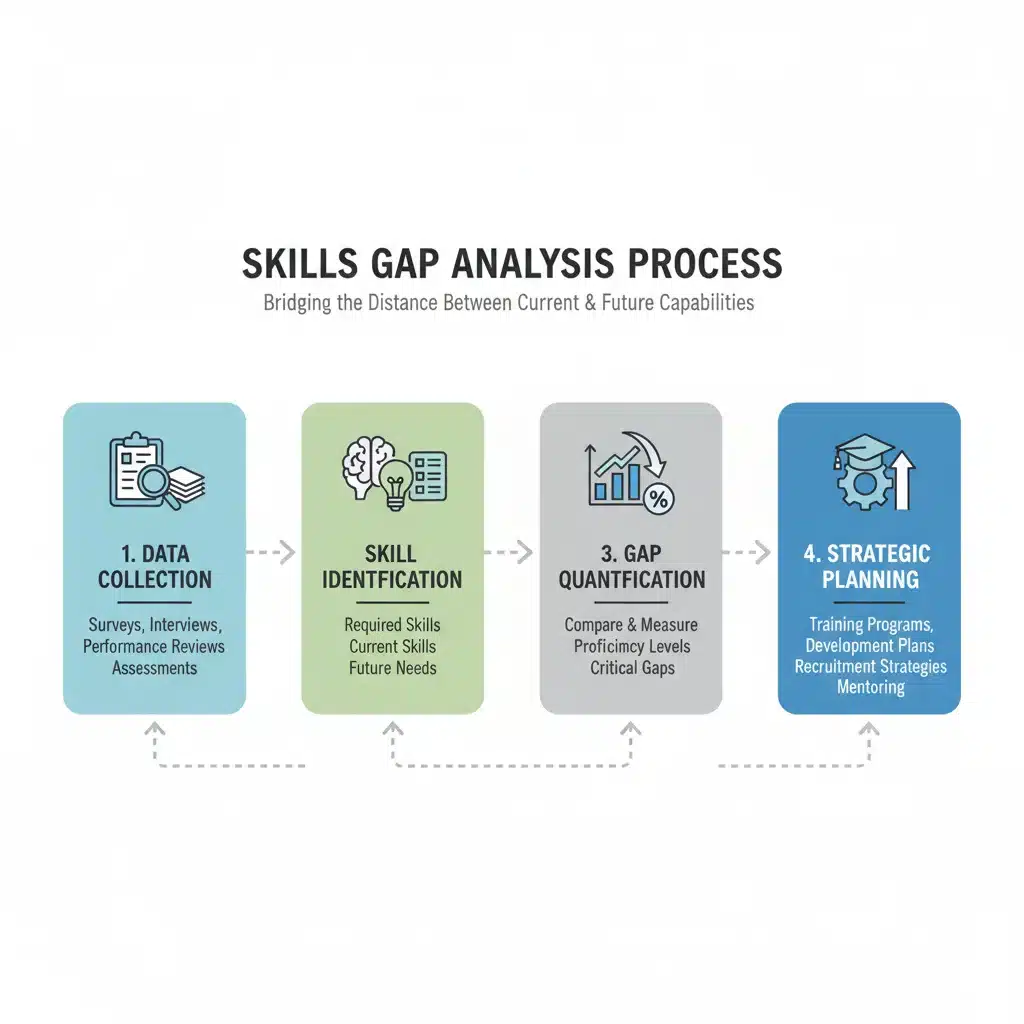
1. Comprehensive Skills Gap Analysis and Future-Proofing
The first step is to understand what skills are currently present within the organization and, more importantly, what skills will be needed in the future. This requires a robust skills gap analysis. This isn’t just about identifying what’s missing today, but predicting what will be essential for 2026 and beyond. This involves:
- Mapping Current Skills: Cataloging existing employee competencies through assessments, performance reviews, and self-declarations.
- Forecasting Future Needs: Collaborating with industry experts, technology foresight teams, and HR analytics to anticipate future skill demands driven by technological advancements, market trends, and strategic business goals.
- Identifying Gaps: Overlaying current skills with future needs to pinpoint specific areas where reskilling and upskilling efforts are most critical.
- Prioritizing Skills: Focusing on high-impact skills that align with strategic objectives and offer the greatest return on investment in terms of productivity and innovation. These often include advanced data analytics, AI literacy, cybersecurity, cloud computing, and human-centered design.
By systematically identifying these gaps, businesses can design targeted and efficient workforce reskilling strategies, ensuring resources are allocated effectively.
2. Tailored Learning Pathways and Personalized Development
One-size-fits-all training programs are largely ineffective in a diverse workforce. Personalized learning pathways are crucial for maximizing engagement and learning outcomes. This means:
- Modular Learning: Breaking down complex skills into smaller, manageable modules that employees can complete at their own pace.
- Blended Learning Approaches: Combining online courses, virtual reality (VR) simulations, in-person workshops, mentorship programs, and on-the-job training. This caters to different learning styles and preferences.
- Adaptive Learning Platforms: Utilizing AI-powered platforms that assess an employee’s current knowledge and adapt the learning content and pace accordingly, making the process more efficient and engaging.
- Micro-credentials and Certifications: Offering short, focused programs that lead to recognized certifications, providing employees with tangible evidence of their newly acquired skills and boosting morale.
These tailored approaches make workforce reskilling more accessible and relevant to individual career paths and organizational needs, directly contributing to the 15% productivity improvement goal.
3. Strategic Partnerships and Ecosystem Engagement
U.S. businesses don’t have to tackle the reskilling challenge alone. Collaborating with external partners can significantly enhance the effectiveness and reach of workforce reskilling strategies:
- Educational Institutions: Partnering with universities, community colleges, and vocational schools to design customized curricula, bootcamps, and apprenticeship programs that align with specific industry needs.
- Technology Providers: Working directly with software and hardware vendors to provide employees with hands-on training on the latest tools and platforms.
- Industry Consortia and Associations: Joining forces with other companies in the same sector to share best practices, pool resources, and develop industry-wide skill standards and training programs.
- Government Initiatives: Leveraging government grants, tax incentives, and workforce development programs designed to support reskilling efforts.
These partnerships can provide access to specialized expertise, state-of-the-art facilities, and funding that might be inaccessible to individual companies, making workforce reskilling strategies more scalable and sustainable.
4. Fostering a Culture of Continuous Learning
Reskilling is not a one-time event; it’s an ongoing process. To achieve sustained productivity improvements, businesses must cultivate a workplace culture that values and encourages continuous learning. This involves:
- Leadership Buy-in: Leaders must champion learning, model desired behaviors, and actively participate in development initiatives.
- Dedicated Learning Time: Allocating specific time for employees to engage in learning, recognizing it as a critical part of their job function, not an add-on.
- Incentives and Recognition: Rewarding employees for acquiring new skills and applying them in their roles. This could include promotions, bonuses, or public recognition.
- Psychological Safety: Creating an environment where employees feel safe to experiment, make mistakes, and learn from them without fear of reprisal. This is particularly important when adopting new technologies.
- Internal Mobility: Creating pathways for employees to transition into new roles within the company after completing reskilling programs, demonstrating a clear return on their learning investment.
A strong learning culture ensures that workforce reskilling strategies are deeply embedded in the organizational DNA, driving long-term adaptability and innovation.
Measuring the Impact: Achieving the 15% Productivity Improvement
Quantifying the success of workforce reskilling strategies is essential not only for demonstrating ROI but also for continuous refinement. The target of a 15% productivity improvement by 2026 requires robust measurement frameworks.
Key Performance Indicators (KPIs) for Reskilling Success
- Skill Acquisition Rate: Tracking the percentage of employees who successfully complete reskilling programs and attain new certifications.
- Application of New Skills: Measuring how frequently and effectively newly acquired skills are applied in daily tasks and projects. This can be assessed through performance reviews, project outcomes, and peer feedback.
- Operational Efficiency Metrics: Monitoring improvements in specific operational metrics directly impacted by reskilled employees, such as reduced error rates, faster project completion times, optimized resource utilization, and improved quality of output.
- Time to Market for New Products/Services: A skilled workforce can accelerate innovation and bring new offerings to market more quickly.
- Employee Engagement and Retention: Reskilling often leads to higher job satisfaction, engagement, and reduced turnover, as employees feel valued and see clear career progression.
- Cost Savings: Identifying areas where new skills have led to reduced operational costs, such as automating tasks or improving process efficiency.
- Revenue Growth: Ultimately, increased productivity should translate into tangible revenue growth, whether through new opportunities, enhanced customer satisfaction, or increased capacity.
Leveraging Data Analytics for Insights
Modern HR analytics tools are indispensable for tracking these KPIs. By collecting and analyzing data on training participation, skill application, and performance outcomes, businesses can gain deep insights into the effectiveness of their workforce reskilling strategies. This data-driven approach allows for agile adjustments to programs, ensuring they remain relevant and impactful, and directly contribute to the 15% productivity target.
Case Studies and Best Practices in U.S. Reskilling
Numerous U.S. companies are already making significant strides in workforce reskilling, offering valuable lessons for others.
Major Tech Companies Leading the Way
Tech giants, accustomed to rapid innovation, often lead in reskilling. Companies like Amazon, with its Upskilling 2025 initiative, have committed hundreds of millions of dollars to provide free training for its U.S. employees in high-demand areas like cloud computing, machine learning, and robotics. This investment not only ensures a future-ready workforce but also enhances employee loyalty and internal mobility.
Manufacturing Sector Transformation
The manufacturing sector, traditionally labor-intensive, is undergoing significant automation. Companies are reskilling factory workers to operate and maintain advanced robotics, utilize data analytics for predictive maintenance, and manage smart factory systems. This involves shifting from manual labor to supervisory and analytical roles, significantly increasing productivity per employee and reducing production costs.
Healthcare’s Digital Shift
In healthcare, the adoption of electronic health records (EHR), telehealth platforms, and AI-powered diagnostics requires extensive reskilling. Nurses, doctors, and administrative staff are being trained in digital literacy, data privacy, and the use of new medical technologies. This not only improves patient care but also streamlines administrative processes, leading to greater efficiency.
Financial Services and Fintech Integration
The financial sector is grappling with the rise of FinTech and digital banking. Employees are being reskilled in areas like blockchain technology, cybersecurity, data analysis for risk management, and digital customer service. This ensures that traditional financial institutions can compete with agile FinTech startups and meet evolving customer expectations for digital services.

Overcoming Challenges in Workforce Reskilling
While the benefits of workforce reskilling strategies are clear, businesses will encounter challenges. Proactive planning can mitigate these.
Resistance to Change
Employees may be resistant to learning new skills due to fear of failure, job insecurity, or simply comfort with the status quo. Businesses must address these concerns through transparent communication, emphasizing the benefits of reskilling for career growth, providing adequate support systems, and celebrating successes.
Resource Constraints
Implementing comprehensive workforce reskilling strategies requires significant investment in time, money, and personnel. Companies, especially small and medium-sized enterprises (SMEs), may face resource constraints. This is where strategic partnerships, government grants, and focusing on high-impact, scalable programs become crucial.
Keeping Pace with Rapid Technological Evolution
Technology evolves at an astonishing rate, making it challenging to keep reskilling programs current. Businesses must adopt an agile approach to learning and development, continuously updating curricula, integrating new tools, and fostering a mindset of perpetual learning.
Measuring ROI Effectively
Demonstrating the direct link between reskilling investments and a 15% productivity improvement can be complex. It requires robust data collection, sophisticated analytics, and clear attribution models to showcase the tangible benefits to stakeholders.
The Future is Now: Sustaining Reskilling Efforts Beyond 2026
The goal of achieving a 15% productivity improvement by 2026 through workforce reskilling strategies is a significant milestone, but it is not the endpoint. The future of work demands a continuous commitment to learning and development. Businesses that embed reskilling into their core strategy will be better positioned for long-term success.
Continuous Learning Ecosystems
Moving forward, organizations should aim to create self-sustaining continuous learning ecosystems. This involves fostering peer-to-peer learning, establishing internal academies, promoting knowledge sharing, and integrating learning into daily workflows. Tools such as learning experience platforms (LXPs) can help curate personalized learning paths and resources, making learning an organic part of an employee’s professional life.
AI-Powered Learning and Development
The very technologies driving the need for reskilling can also be leveraged to enhance learning. AI can personalize learning content, recommend relevant courses, provide real-time feedback, and even simulate complex work environments for practical training. By 2026 and beyond, AI will be an indispensable tool in optimizing workforce reskilling strategies.
Emphasizing Human-Centric Skills
As automation handles more routine tasks, the demand for uniquely human skills will only grow. Workforce reskilling strategies must increasingly focus on developing creativity, emotional intelligence, ethical reasoning, cross-cultural communication, and leadership. These are the skills that will differentiate human workers in an AI-driven world and drive innovation.
Adaptive Workforce Planning
Traditional static workforce planning models are no longer sufficient. Businesses need to adopt adaptive workforce planning, continuously forecasting future skill needs, assessing internal capabilities, and developing dynamic reskilling initiatives. This agile approach ensures the organization can pivot quickly in response to market changes and technological advancements.
Conclusion
The journey to achieving a 15% productivity improvement by 2026 through targeted workforce reskilling strategies is a challenging yet profoundly rewarding endeavor for U.S. businesses. It requires foresight, strategic investment, and a deep commitment to human capital development. By understanding the evolving landscape, implementing comprehensive skills gap analyses, offering tailored learning pathways, forging strategic partnerships, and cultivating a culture of continuous learning, organizations can not only navigate the technological shifts but also emerge stronger, more innovative, and significantly more productive.
The future belongs to those who are prepared to learn, adapt, and transform. For U.S. businesses, investing in robust workforce reskilling strategies today is not just about staying competitive; it’s about building a resilient, high-performing workforce ready to seize the opportunities of tomorrow.