On-Demand Manufacturing US: 15% Growth by 2026
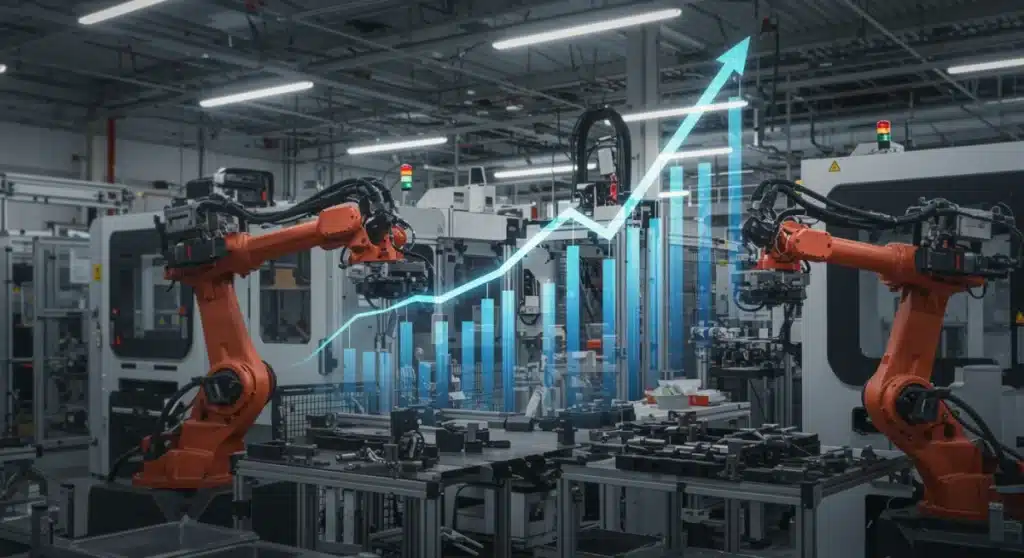
The Rise of On-Demand Manufacturing in the US: A 15% Growth Projection for 2026
The landscape of American industry is undergoing a profound transformation, driven by technological advancements and shifting market demands. At the forefront of this evolution is on-demand manufacturing US, a paradigm that promises unprecedented agility, efficiency, and customization. Recent projections indicate a remarkable 15% growth for on-demand manufacturing in the US by 2026, signaling a seismic shift from traditional production models to a more responsive, digitally-driven approach. This article will delve into the core principles of on-demand manufacturing, explore the key drivers behind its impressive growth, highlight the myriad benefits it offers to businesses and consumers alike, and examine the challenges and opportunities that lie ahead for this burgeoning sector.
Understanding On-Demand Manufacturing: A Paradigm Shift
To truly appreciate the significance of the projected 15% growth, it’s essential to grasp what on-demand manufacturing US entails. Unlike traditional manufacturing, which relies on mass production and economies of scale, on-demand manufacturing focuses on producing goods only when they are needed and in the exact quantities required. This approach leverages advanced technologies such as 3D printing (additive manufacturing), CNC machining, robotics, and sophisticated software platforms to create a highly flexible and responsive production system.
The fundamental shift lies in moving away from speculative production, where products are made in anticipation of demand, often leading to excess inventory and waste. Instead, on-demand manufacturing prioritizes responsiveness and customization. Imagine a scenario where a customer places an order for a highly personalized product. With on-demand capabilities, that product can be designed, manufactured, and shipped within a significantly shorter timeframe, bypassing the need for large-scale inventory or lengthy production runs. This is the essence of what is propelling on-demand manufacturing US into a new era of dominance.
Key Characteristics of On-Demand Manufacturing:
- Agility and Flexibility: The ability to quickly adapt to changing market conditions, product designs, and customer preferences.
- Reduced Inventory: Minimizing the need for warehousing large quantities of finished goods or raw materials, leading to significant cost savings.
- Customization and Personalization: Facilitating the production of unique, tailored products that cater to individual customer needs.
- Waste Reduction: Optimizing material usage and reducing overproduction, contributing to more sustainable practices.
- Faster Time-to-Market: Accelerating the product development cycle from concept to delivery.
- Decentralized Production: The potential for manufacturing to occur closer to the point of consumption, reducing transportation costs and lead times.
The Driving Forces Behind 15% Growth in US On-Demand Manufacturing by 2026
The projected 15% growth for on-demand manufacturing US is not an arbitrary figure; it’s a reflection of powerful macroeconomic trends and technological advancements converging to reshape the industrial landscape. Several key factors are fueling this robust expansion:
1. Technological Advancements: The Backbone of On-Demand
The rapid evolution of manufacturing technologies is arguably the most significant driver. 3D printing, once a niche technology, has matured significantly, offering a wider range of materials, improved speed, and enhanced precision. Similarly, advanced CNC machining, robotics, and automation have become more accessible and sophisticated, enabling complex parts to be produced with unparalleled accuracy and efficiency. Furthermore, the integration of artificial intelligence (AI) and machine learning (ML) into manufacturing processes allows for predictive maintenance, optimized production schedules, and improved quality control, all of which are crucial for the seamless operation of an on-demand system.
Cloud-based platforms and digital twins are also playing a pivotal role. These technologies enable seamless data flow from design to production, facilitate remote monitoring, and allow for virtual prototyping and testing, drastically reducing the time and cost associated with product development. The synergy of these technologies creates a powerful ecosystem that makes on-demand manufacturing US not just feasible, but highly competitive.
2. Supply Chain Resilience and Nearshoring/Reshoring Initiatives
The global supply chain disruptions experienced in recent years, particularly during the COVID-19 pandemic, exposed the vulnerabilities of overly reliant, distant manufacturing networks. Businesses are now prioritizing resilience and stability, leading to a strong push towards nearshoring and reshoring manufacturing operations. On-demand manufacturing US offers a compelling solution, allowing companies to produce goods domestically, reduce lead times, mitigate geopolitical risks, and gain greater control over their supply chains. This strategic shift is a major contributor to the projected growth within the US.
3. Increasing Demand for Customization and Personalization
Modern consumers and businesses increasingly demand customized and personalized products. From bespoke consumer goods to specialized industrial components, the ‘one-size-fits-all’ approach is rapidly becoming obsolete. On-demand manufacturing is uniquely positioned to meet this demand, enabling the efficient production of unique items without the prohibitive costs traditionally associated with customization. This shift in consumer preference creates a fertile ground for the expansion of on-demand manufacturing US.
4. Sustainability and Waste Reduction Goals
Environmental concerns and corporate sustainability initiatives are also driving the adoption of on-demand models. By producing only what is needed, on-demand manufacturing significantly reduces material waste, energy consumption, and the carbon footprint associated with transportation and warehousing. This aligns perfectly with growing pressures from consumers, investors, and regulators for more environmentally responsible business practices, making on-demand manufacturing US an attractive and responsible choice.
5. Entrepreneurial Spirit and Startup Innovation
The lower barrier to entry offered by on-demand manufacturing is empowering a new generation of entrepreneurs and startups. Without the need for massive capital investment in traditional production lines or large inventories, innovators can bring new products to market much faster and with less risk. This fosters a dynamic ecosystem of innovation, contributing significantly to the overall growth of on-demand manufacturing US.

Benefits of On-Demand Manufacturing for US Businesses
The 15% growth projection for on-demand manufacturing US is a testament to the tangible benefits it delivers to businesses across various sectors. These advantages extend beyond mere cost savings, impacting everything from market responsiveness to brand reputation.
1. Enhanced Agility and Market Responsiveness
In today’s fast-paced market, the ability to respond quickly to changes is paramount. On-demand manufacturing allows businesses to iterate on designs, test market demand with small batches, and scale production up or down rapidly without significant overhead. This agility means companies can capitalize on emerging trends, react to competitor moves, and adapt to unforeseen challenges with unprecedented speed, giving them a distinct competitive edge in the on-demand manufacturing US landscape.
2. Significant Cost Reductions
While the initial perception might be that custom, low-volume production is expensive, on-demand manufacturing often leads to substantial cost savings in the long run. These savings stem from:
- Reduced Inventory Costs: Eliminating the need for large warehouses, inventory management, and the risks associated with obsolescence.
- Minimized Waste: Producing only what is required reduces material waste and associated disposal costs.
- Lower Tooling Costs: For many applications, especially with 3D printing, complex tooling is significantly reduced or eliminated.
- Optimized Logistics: Shorter supply chains and localized production reduce shipping costs and associated complexities.
3. Superior Product Quality and Innovation
The precision and repeatability offered by advanced manufacturing technologies, coupled with the ability to rapidly prototype and test designs, often lead to higher quality products. Furthermore, the flexibility of on-demand manufacturing US encourages innovation, as companies can experiment with new materials, designs, and functionalities without the prohibitive costs and risks of traditional mass production.
4. Stronger Customer Relationships Through Customization
Offering personalized products fosters deeper customer engagement and loyalty. When customers can receive exactly what they want, tailored to their specific needs, it creates a more positive brand experience. This capability, inherent to on-demand manufacturing US, is a powerful differentiator in competitive markets.
5. Supply Chain De-risking and Greater Control
By bringing manufacturing closer to home and reducing reliance on complex global supply chains, businesses gain greater control over their production processes. This minimizes exposure to geopolitical instability, natural disasters, and other disruptions, ensuring a more stable and predictable flow of goods. This is a critical factor for many businesses considering the adoption of on-demand manufacturing US.
Challenges and Opportunities for On-Demand Manufacturing in the US
While the growth trajectory for on-demand manufacturing US is undeniably positive, it’s not without its challenges. Understanding these hurdles is crucial for businesses looking to embrace this new paradigm and for policymakers aiming to support its expansion.
Challenges:
- Initial Investment: While operational costs can be lower, the upfront investment in advanced machinery, software, and skilled labor can be substantial for some companies.
- Talent Gap: There is a growing demand for skilled professionals proficient in additive manufacturing, robotics, data analytics, and digital design. Bridging this talent gap is critical for sustained growth.
- Standardization and Quality Control: Ensuring consistent quality across diverse processes and materials in a highly customized environment can be complex. Developing industry standards and robust quality control protocols is essential.
- Data Security: As manufacturing becomes more digitized and interconnected, protecting intellectual property and sensitive production data from cyber threats becomes a paramount concern.
- Scalability for Mass Production: While excellent for customization and low-to-medium volume, scaling on-demand processes for truly mass-market products (millions of units) can still be a challenge compared to traditional methods.
Opportunities:
- Niche Market Domination: On-demand manufacturing enables businesses to serve highly specific, niche markets that were previously unprofitable with traditional methods.
- Prototyping and Product Development: Accelerating the design and prototyping phase, significantly reducing time-to-market for new products.
- Spare Parts and Maintenance: Producing spare parts on demand can drastically reduce inventory hold-ups and improve equipment uptime for various industries.
- Medical and Dental Applications: Custom prosthetics, implants, and dental devices are already benefiting immensely from on-demand production.
- Defense and Aerospace: Producing complex, lightweight components and specialized parts with high precision.
- Sustainable Manufacturing Leadership: The US has an opportunity to lead globally in sustainable manufacturing practices through widespread adoption of on-demand models.

The Future Outlook: Beyond 2026 for On-Demand Manufacturing US
The projected 15% growth by 2026 is just the beginning for on-demand manufacturing US. Looking further into the future, several trends suggest continued and even accelerated expansion:
1. Further Integration of AI and Machine Learning
AI and ML will become even more integral to optimizing every stage of the on-demand process, from generative design and material selection to predictive maintenance and automated quality inspection. This will lead to even greater efficiencies and reduced human intervention.
2. Advanced Materials and Multi-Material Printing
Research into new materials, including composites, smart materials, and bio-compatible substances, will expand the capabilities of on-demand manufacturing. The ability to print with multiple materials simultaneously will open doors to creating highly functional and complex integrated products in a single process.
3. Decentralization and Micro-Factories
The concept of localized micro-factories, equipped with on-demand capabilities, will likely gain traction. These smaller, agile production units could be strategically placed closer to urban centers or specific customer bases, further reducing transportation costs and environmental impact, and bolstering the localized strength of on-demand manufacturing US.
4. Blockchain for Supply Chain Transparency
Blockchain technology could enhance transparency and traceability within on-demand supply chains, providing immutable records of material sourcing, production processes, and product authenticity. This is particularly valuable for high-value goods or industries with strict regulatory requirements.
5. Workforce Transformation and Education
The manufacturing workforce will need to evolve. Emphasis will shift from repetitive manual tasks to roles requiring digital literacy, data analysis, robotics programming, and advanced troubleshooting. Educational institutions and industry will need to collaborate to develop curricula that prepare the next generation for these advanced manufacturing roles, ensuring the continued success of on-demand manufacturing US.
Conclusion: A New Era for American Industry
The projected 15% growth of on-demand manufacturing US by 2026 is a clear indicator of a fundamental shift in how products are designed, produced, and delivered. This transformative approach offers unparalleled agility, cost efficiency, customization capabilities, and sustainability benefits, positioning American businesses to thrive in an increasingly dynamic global market.
While challenges related to investment, talent, and standardization exist, the opportunities presented by on-demand manufacturing far outweigh them. By embracing advanced technologies, fostering innovation, and investing in a skilled workforce, the United States can solidify its position as a leader in advanced manufacturing. The future of American industry is not just about producing more; it’s about producing smarter, more sustainably, and with an unprecedented level of responsiveness to consumer needs. On-demand manufacturing is not merely a trend; it is the strategic imperative for competitive, resilient, and innovative manufacturing in the 21st century.