5G Integration: Revolutionizing US Supply Chain Logistics by 2026
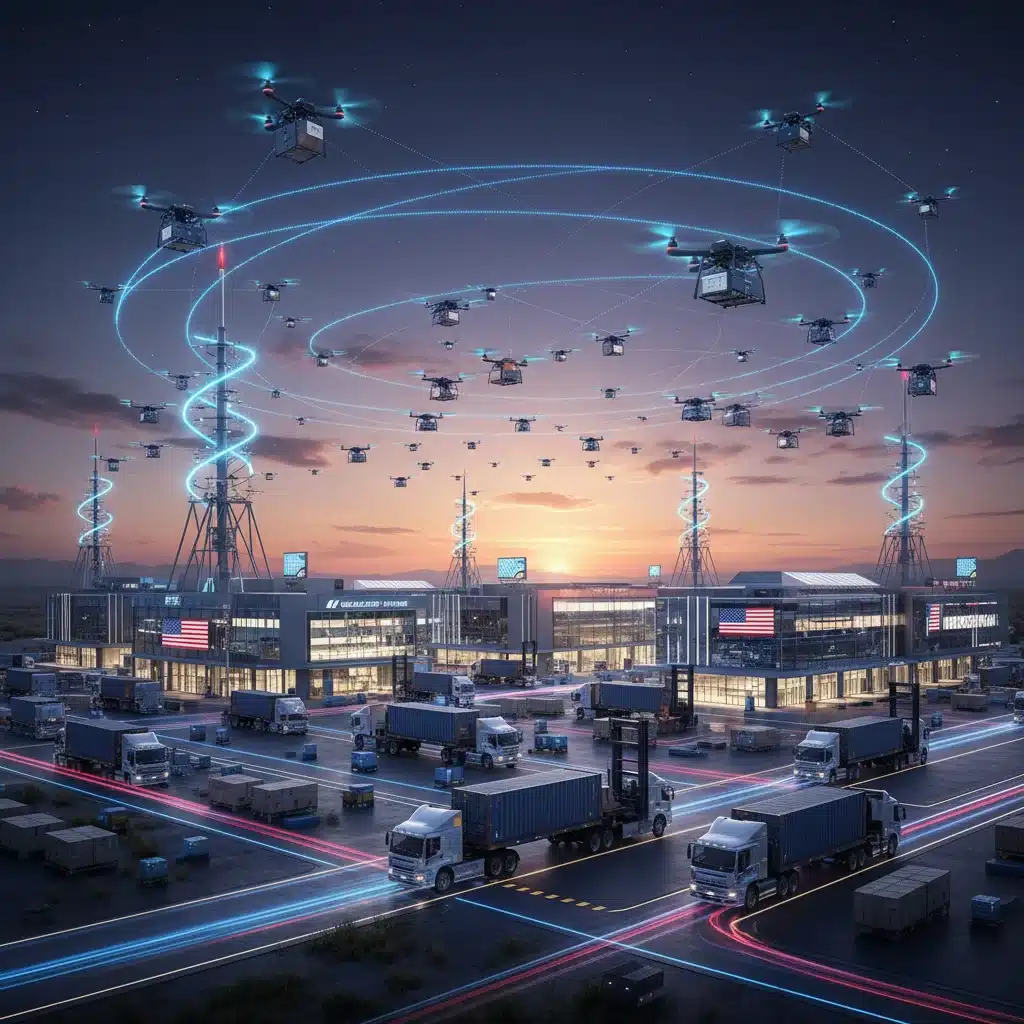
Navigating the 2026 Shift: How 5G Integration is Redefining Supply Chain Logistics Across the United States for a 15% Efficiency Gain
The global supply chain has always been a complex, intricate web, constantly evolving to meet the demands of a dynamic marketplace. In the United States, this complexity is further amplified by vast geographical distances, diverse industries, and an ever-growing consumer base. However, a seismic shift is on the horizon, promising to redefine the very fabric of how goods move from producer to consumer. By 2026, the widespread integration of 5G technology is poised to unlock unprecedented levels of efficiency, projected to yield at least a 15% gain across US supply chain logistics operations. This isn’t just an incremental improvement; it’s a fundamental transformation driven by speed, connectivity, and real-time intelligence.
The promise of 5G extends far beyond faster download speeds on our smartphones. For the supply chain, it represents a foundational layer supporting a new era of automation, hyper-connectivity, and data-driven decision-making. Imagine a world where every package, every pallet, every vehicle, and every piece of warehouse equipment is constantly communicating, sharing vital information in milliseconds. This is the future that 5G integration makes possible, a future where bottlenecks are anticipated and resolved before they occur, where routes are optimized in real-time, and where human intervention is focused on strategic oversight rather than reactive problem-solving.
This article will delve deep into the multifaceted ways 5G will revolutionize US supply chain logistics. We’ll explore the core technological capabilities of 5G, its specific applications within various segments of the supply chain, the tangible benefits it offers, and the challenges and opportunities that lie ahead for businesses looking to harness its power. The goal is to provide a comprehensive understanding of this impending shift and equip stakeholders with the knowledge needed to navigate the evolving landscape successfully. The race to adopt and leverage 5G supply chain logistics is not just about staying competitive; it’s about securing a position at the forefront of a more resilient, efficient, and intelligent global trade ecosystem.
The Foundations of Change: Understanding 5G’s Core Capabilities for Logistics
To truly grasp the impact of 5G on supply chain logistics, it’s crucial to understand its fundamental characteristics that set it apart from previous generations of wireless technology. Three key pillars define 5G’s transformative potential:
1. Ultra-High Bandwidth
5G offers significantly higher bandwidth than 4G LTE, meaning it can transmit much larger volumes of data simultaneously. In a logistics context, this translates to the ability to support a massive influx of data from countless IoT sensors, high-definition video feeds from security cameras and autonomous vehicles, and complex operational data from automated systems. This high capacity is essential for maintaining the flow of information without congestion, even in densely connected environments like smart warehouses or busy ports.
2. Low Latency
Perhaps the most revolutionary aspect of 5G for logistics is its ultra-low latency, which refers to the minimal delay between when a signal is sent and when it is received. With latency as low as 1 millisecond, 5G enables near real-time communication. This capability is critical for applications requiring immediate feedback and precise control, such as autonomous vehicles, robotic systems, and remote-controlled machinery. Imagine an autonomous forklift needing to stop instantly to avoid an obstacle; low latency ensures that command is executed without delay, enhancing safety and efficiency.
3. Massive Machine-Type Communications (mMTC)
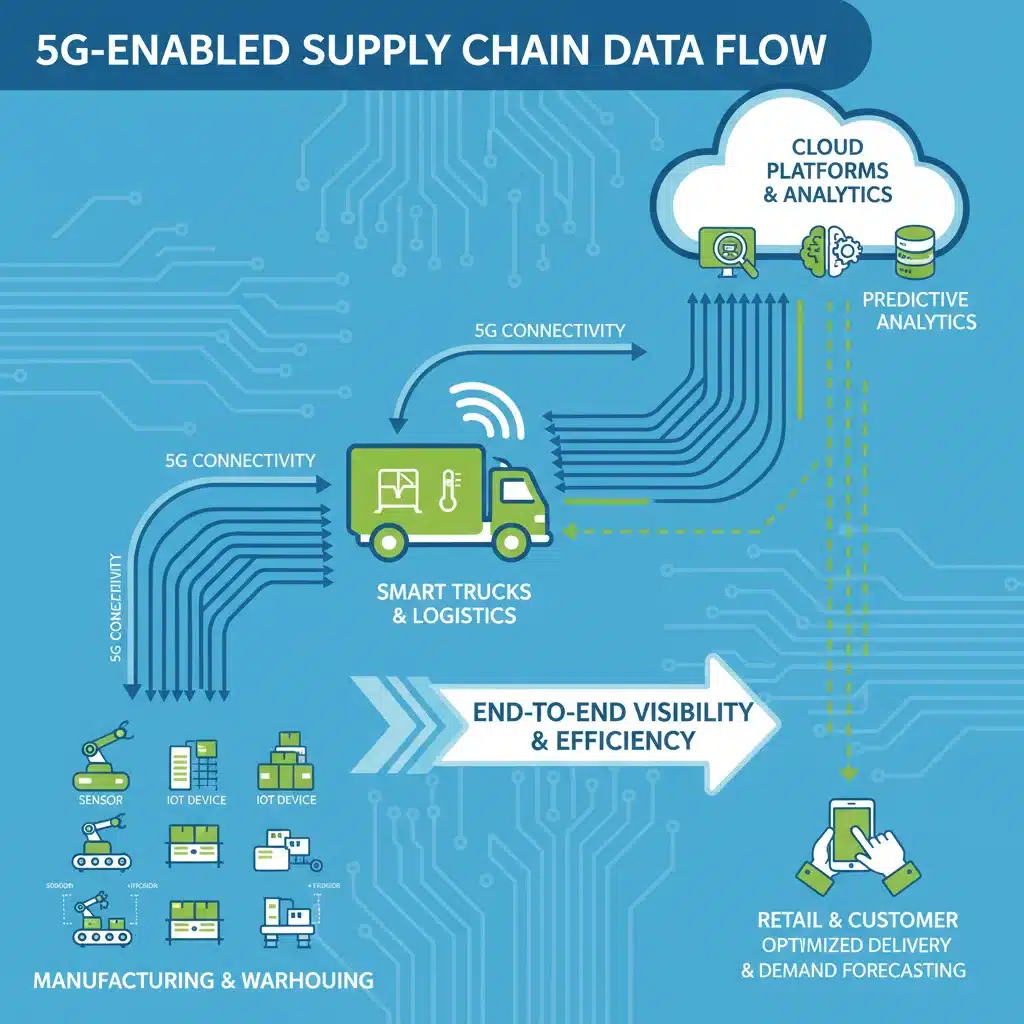
5G is designed to connect an unprecedented number of devices simultaneously, far exceeding the capabilities of 4G. This is vital for the Internet of Things (IoT) in logistics, where thousands, even millions, of sensors and devices will be deployed across warehouses, transportation fleets, and individual packages. From tracking temperature-sensitive goods to monitoring asset location and condition, mMTC allows for a pervasive network of connected devices, providing granular visibility across the entire supply chain.
These core capabilities collectively create an environment ripe for innovation in logistics. They enable the seamless integration of technologies that were previously limited by connectivity constraints, paving the way for truly intelligent and autonomous supply chain operations. The ability of 5G supply chain logistics to handle enormous data streams with minimal delay is the bedrock upon which future efficiencies will be built.
Revolutionizing Key Supply Chain Segments with 5G
The impact of 5G will be felt across every segment of the supply chain, from the first mile to the last. Here’s how specific areas will be transformed:
Warehousing and Inventory Management
Smart warehouses are already emerging, but 5G will propel them into a new dimension of automation and efficiency. Robots, drones, and automated guided vehicles (AGVs) will communicate seamlessly, coordinating tasks with pinpoint accuracy. Low latency will ensure that these machines can respond instantly to dynamic changes in the warehouse environment, such as unexpected obstacles or real-time inventory updates. High bandwidth will facilitate the streaming of high-definition video from surveillance systems and robot cameras, providing operators with detailed visual information. Predictive analytics, powered by the vast amounts of data collected from IoT sensors on inventory, shelves, and machinery, will optimize storage layouts, picking routes, and replenishment schedules, minimizing human error and maximizing throughput.
Consider the scenario of a large e-commerce fulfillment center. With 5G, autonomous picking robots could navigate complex aisles, identifying and retrieving items with unprecedented speed, while drones conduct rapid inventory counts, relaying data back to a central system in real-time. This level of connectivity and automation significantly reduces operational costs and improves order fulfillment accuracy and speed, directly impacting customer satisfaction.

Transportation and Fleet Management
The trucking industry, a cornerstone of US logistics, stands to gain immensely from 5G. Real-time tracking of vehicles, cargo, and driver behavior will become more precise and comprehensive. Sensors embedded in trucks and trailers will monitor everything from tire pressure and engine performance to cargo temperature and integrity, transmitting data instantly. This allows for proactive maintenance, preventing costly breakdowns and delays. Furthermore, 5G is a critical enabler for autonomous trucking, providing the reliable, low-latency communication necessary for vehicles to navigate roads, communicate with infrastructure, and coordinate with other autonomous units safely and efficiently. Even for human-driven fleets, 5G will enhance route optimization, allowing for dynamic adjustments based on real-time traffic, weather conditions, and delivery schedules, reducing fuel consumption and delivery times.
Last-Mile Delivery Optimization
The ‘last mile’ is often the most expensive and inefficient part of the supply chain. 5G will revolutionize this by enabling advanced delivery solutions. Drone delivery, currently in its nascent stages, will become more viable with 5G’s reliable, low-latency communication, allowing for precise navigation and safe operation in urban and rural environments. Autonomous delivery robots for sidewalks and localized areas will also benefit from 5G for real-time guidance and obstacle avoidance. Moreover, dynamic route optimization for human delivery drivers will be enhanced, with continuous updates based on real-time traffic, customer availability, and package volumes, leading to faster and more efficient deliveries. The ability to track packages with unprecedented accuracy, down to the exact moment of delivery, will also significantly improve customer experience and reduce instances of lost or misdelivered items.
Enhanced Supply Chain Visibility and Traceability
One of the most significant challenges in traditional supply chains is a lack of end-to-end visibility. With 5G, every product can be tagged with an IoT sensor, providing a digital twin that reports its location, condition, and environment throughout its journey. This hyper-connectivity enables real-time traceability, allowing businesses to monitor goods from their origin to their final destination. For industries dealing with perishable goods or high-value items, this level of granular detail is invaluable. Imagine knowing the precise temperature fluctuations a pharmaceutical product experienced during transit or instantly identifying the exact batch and location of a recalled item. This enhanced visibility not only improves quality control and reduces waste but also provides critical data for compliance and regulatory purposes, strengthening the integrity of the entire supply chain.
The Tangible Benefits: A 15% Efficiency Gain and Beyond
The projected 15% efficiency gain in US supply chain logistics by 2026 is a conservative estimate, encompassing a wide array of improvements:
Cost Reduction
Automation driven by 5G will significantly reduce labor costs in warehouses and transportation. Optimized routes and predictive maintenance will lower fuel consumption and vehicle repair expenses. Reduced spoilage and waste, particularly for perishable goods, will also contribute to substantial savings. Furthermore, the ability to rapidly identify and resolve issues will minimize costly delays and disruptions.
Increased Speed and Throughput
Faster data transfer and real-time communication enable quicker decision-making and more efficient operations. Automated processes can run continuously with minimal human intervention, leading to higher throughput in warehouses and faster delivery times. This directly translates to improved customer satisfaction and the ability to meet the growing demands of e-commerce.
Improved Accuracy and Reduced Errors
The precision offered by 5G-enabled IoT and robotics minimizes human error in inventory management, picking, packing, and loading. Real-time data validation ensures that the right products are in the right place at the right time, reducing mis-shipments and returns. This enhanced accuracy builds trust and reliability within the supply chain.
Enhanced Security and Safety
5G’s low latency and high bandwidth support advanced security systems, including high-resolution video surveillance and drone monitoring, providing comprehensive oversight of facilities and cargo. For autonomous vehicles, the reliable, instantaneous communication reduces the risk of accidents. Furthermore, real-time monitoring of environmental conditions can prevent damage to sensitive goods, improving overall cargo safety.
Greater Resilience and Agility
A 5G-enabled supply chain is inherently more resilient. The real-time visibility and predictive analytics allow businesses to anticipate disruptions (e.g., weather events, traffic jams, equipment failures) and dynamically reroute or reallocate resources. This agility is crucial in today’s unpredictable global environment, enabling supply chains to adapt quickly to unforeseen challenges and maintain continuous operations.
Challenges and Opportunities in 5G Supply Chain Logistics Adoption
While the benefits are compelling, the journey to full 5G integration in US supply chain logistics is not without its hurdles. Businesses must strategically navigate these challenges to fully capitalize on the opportunities.
Infrastructure Development
The widespread deployment of 5G infrastructure, particularly in rural areas and within large industrial complexes, is still ongoing. Ensuring ubiquitous coverage and dedicated private 5G networks for critical logistics operations will require significant investment and collaboration between telecom providers and logistics companies. The digital divide in connectivity can create disparities in the adoption rate and benefits across different regions of the US.
Capital Investment and ROI
Implementing 5G-enabled solutions, including new IoT sensors, robotics, autonomous vehicles, and network upgrades, requires substantial upfront capital investment. Businesses need to carefully assess the return on investment (ROI) and develop clear strategies for phased adoption to manage costs and demonstrate value. This involves understanding not just the direct cost savings but also the indirect benefits such as improved customer satisfaction, reduced risk, and enhanced competitive advantage.
Data Security and Privacy
With an explosion of connected devices and real-time data flow, ensuring the security and privacy of sensitive logistics data becomes paramount. Robust cybersecurity measures, encryption protocols, and compliance with data protection regulations will be essential to prevent breaches and maintain trust. The sheer volume of data generated by 5G supply chain logistics also necessitates advanced analytics capabilities to extract meaningful insights while safeguarding proprietary information.
Skill Gap and Workforce Training
The shift to a 5G-enabled, automated supply chain will require a workforce with new skills. Employees will need training in managing and maintaining advanced robotic systems, interpreting complex data analytics, and overseeing AI-driven operations. Bridging this skill gap through education and upskilling programs will be critical for a smooth transition and to ensure that human capital remains a valuable asset in the new logistics paradigm.
Interoperability and Standardization
For a truly seamless 5G supply chain, different systems, devices, and platforms must be able to communicate and share data effectively. This requires establishing common standards and ensuring interoperability between various vendors and technologies. Without this, organizations risk creating isolated data silos and inefficient operations, undermining the potential of 5G.
Strategies for Successful 5G Integration in US Supply Chain Logistics
To successfully navigate the complexities and capitalize on the opportunities presented by 5G, businesses in the US supply chain sector should consider the following strategies:
1. Develop a Clear 5G Strategy and Roadmap
Start with a comprehensive assessment of current operations and identify specific pain points that 5G can address. Develop a clear vision for how 5G will be integrated, outlining measurable goals and a phased implementation roadmap. This includes identifying key use cases, prioritizing investments, and establishing KPIs to track progress and ROI.
2. Invest in Pilot Programs and Proofs of Concept
Before a full-scale rollout, conduct pilot programs to test 5G-enabled solutions in controlled environments. This allows organizations to validate the technology’s effectiveness, identify potential challenges, and refine their implementation strategy without committing extensive resources. Learning from these early trials is crucial for a successful broader deployment.
3. Foster Partnerships and Collaboration
Collaboration is key. Logistics companies should partner with telecom providers to ensure adequate 5G coverage and potentially explore private 5G networks for their facilities. Collaborating with technology vendors, robotics companies, and AI specialists will also be vital to integrate best-of-breed solutions. Furthermore, engaging with industry consortiums can help drive standardization and share best practices.
4. Focus on Data Management and Analytics
The sheer volume of data generated by 5G-enabled IoT devices will be immense. Investing in robust data management platforms, advanced analytics tools, and AI/machine learning capabilities will be essential to process this data, extract actionable insights, and drive intelligent decision-making. This includes ensuring data quality, security, and accessibility across the organization.
5. Prioritize Workforce Development and Training
Proactively address the skill gap by investing in training programs for existing employees and attracting new talent with expertise in areas like robotics, AI, data science, and network management. Creating a culture of continuous learning and adaptation within the organization will be crucial for embracing new technologies and maximizing their benefits.
6. Emphasize Cybersecurity from the Outset
Integrate cybersecurity considerations into every stage of 5G deployment. Adopt a ‘security-by-design’ approach, ensuring that all connected devices, networks, and data platforms are protected against potential threats. Regular security audits, threat intelligence, and incident response plans are non-negotiable in a hyper-connected environment.
The Future is Now: Preparing for the 2026 5G Logistics Landscape
The year 2026 is not a distant future; it’s just around the corner. The convergence of 5G with other transformative technologies like Artificial Intelligence (AI), Machine Learning (ML), and the Internet of Things (IoT) will create a powerful synergy, propelling US supply chain logistics into an era of unprecedented efficiency and resilience. The projected 15% efficiency gain is merely a starting point; the long-term benefits of a truly intelligent and adaptive supply chain powered by 5G are likely to far exceed initial expectations.
Businesses that embrace this technological shift early will gain a significant competitive advantage, not only in terms of operational costs and speed but also in their ability to meet evolving customer demands and navigate global disruptions. Those who hesitate risk being left behind in a rapidly accelerating landscape. The integration of 5G supply chain logistics is not just an upgrade; it’s a strategic imperative for any organization looking to thrive in the modern economy.
The transformation will touch every aspect of the supply chain, creating new job roles, demanding new skill sets, and fostering innovative business models. It will require a collaborative effort across industries, government, and academia to build the necessary infrastructure, develop the talent, and establish the regulatory frameworks. The journey will be complex, but the destination – a hyper-efficient, resilient, and intelligent US supply chain – is well worth the effort.
As we move towards 2026, the focus must be on proactive planning, strategic investment, and a willingness to embrace change. The future of logistics is connected, automated, and intelligent, and 5G is the key that unlocks this transformative potential for the United States.