
The Gig Economy’s Impact: 3 Strategic Shifts US Businesses Must Make by Mid-2026
The landscape of work in the United States is undergoing a seismic transformation, largely driven by the relentless expansion of the gig economy. What was once a niche segment has blossomed into a dominant force, reshaping how businesses operate, how talent is acquired, and how value is created. For US businesses, this isn’t merely a trend to observe; it’s a fundamental shift demanding immediate and strategic adaptation. By mid-2026, companies that fail to implement proactive changes risk being outmaneuvered by more agile and forward-thinking competitors. This article delves into the three critical strategic shifts that US businesses must embrace to not only survive but thrive in this dynamic new era of work, focusing on the profound Gig Economy Shifts.
The gig economy, characterized by short-term contracts, freelance work, and independent contractors, has experienced exponential growth. Driven by technological advancements that facilitate seamless connections between workers and opportunities, and by a generational desire for flexibility and autonomy, it has become an indispensable component of the modern workforce. From ride-sharing services and food delivery platforms to highly specialized consulting and project-based roles, the gig model permeates nearly every industry. Estimates suggest that a significant portion of the US workforce already engages in some form of gig work, a figure projected to rise substantially in the coming years. This necessitates a re-evaluation of traditional business models and a strategic pivot towards embracing the inherent flexibility and innovation that the gig economy offers.
Shift 1: Embracing Agile Workforce Management and Talent Ecosystems
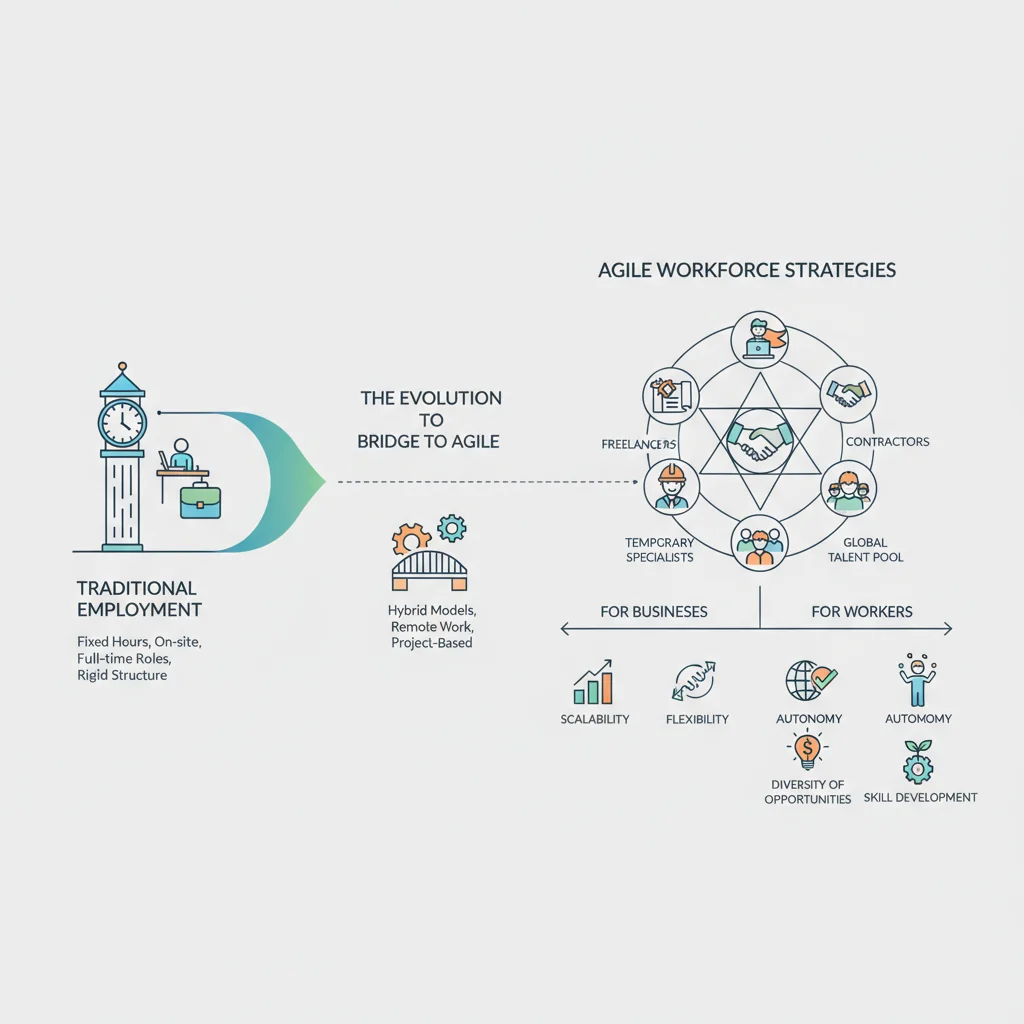
The first and perhaps most crucial strategic shift revolves around a fundamental re-evaluation of workforce management. Traditional models, built on full-time, in-house employees, are increasingly proving to be rigid and inefficient in a rapidly changing market. The gig economy offers an alternative: an agile workforce that can scale up or down based on demand, bringing specialized skills precisely when needed. US businesses must move beyond seeing gig workers as temporary fixes and instead integrate them into a comprehensive talent ecosystem.
Rethinking Talent Acquisition and Retention
This shift requires a proactive approach to talent acquisition. Instead of solely focusing on permanent hires, companies need to develop robust strategies for identifying, vetting, and onboarding high-quality gig talent. This includes leveraging specialized platforms, building strong professional networks, and even creating internal ‘gig marketplaces’ for project-based work. Furthermore, retaining top gig talent is just as important as attracting it. Businesses must cultivate environments that appeal to independent contractors, offering competitive compensation, interesting projects, clear communication, and opportunities for professional growth, even if on a project-by-project basis. The focus shifts from a ‘job for life’ mentality to a ‘project for purpose’ approach, where individuals contribute their expertise to diverse initiatives across multiple organizations.
Implementing Flexible Staffing Models
Agile workforce management also means adopting flexible staffing models. This could involve a core team of permanent employees complemented by a fluid layer of gig workers for specific projects, peak periods, or specialized tasks. For instance, a marketing agency might have a core team for strategy and client management, but bring in freelance graphic designers, copywriters, and SEO specialists on a project-by-project basis. This hybrid model allows businesses to optimize operational costs, access a broader pool of diverse skills, and respond quickly to market fluctuations. It fosters innovation by bringing fresh perspectives and expertise without the long-term commitments associated with traditional employment.
The implementation of such models requires sophisticated planning and management tools. Companies need systems to track project progress, manage contracts, process payments, and ensure seamless collaboration between in-house and external teams. This is where technology plays a pivotal role, enabling the efficient orchestration of a distributed workforce. The ability to quickly assemble and disassemble project teams based on evolving business needs is a hallmark of successful adaptation to these significant Gig Economy Shifts.
Building a Culture of Collaboration and Trust
Successfully integrating gig workers into the corporate fabric also necessitates a cultural shift. Businesses must foster an inclusive environment where gig workers feel valued and connected, even if they are not traditional employees. This means establishing clear communication channels, providing necessary resources, and recognizing their contributions. Trust is paramount; independent contractors thrive on autonomy and respect for their expertise. Companies that empower their gig workforce and treat them as true partners will reap the benefits of increased engagement, higher quality work, and greater loyalty. This cultural integration is a subtle yet powerful aspect of managing these Gig Economy Shifts effectively.
Shift 2: Leveraging Technology for Seamless Operations and Analytics
The gig economy is inherently digital, and its continued growth is inextricably linked to technological innovation. For US businesses, the second strategic shift involves not just adopting new technologies, but strategically leveraging them to optimize operations, enhance collaboration, and gain actionable insights from their distributed workforce. By mid-2026, companies without a robust technological infrastructure for managing gig workers will face significant operational hurdles.
Integrated Platforms for Workforce Management
The days of managing freelancers through ad-hoc emails and spreadsheets are quickly fading. Businesses need integrated platforms that can handle the entire lifecycle of gig worker engagement, from sourcing and onboarding to project management, payment processing, and performance evaluation. These platforms can automate administrative tasks, reduce human error, and ensure compliance with various regulations. Features like automated contract generation, time tracking, expense management, and invoicing become critical for efficiency. Furthermore, these platforms can provide a centralized hub for communication and collaboration, ensuring that all team members, regardless of their employment status, are aligned and informed. The sophistication of these tools is rapidly advancing, offering predictive analytics on workforce needs and talent availability, which is key to navigating the Gig Economy Shifts.
Data Analytics for Performance and Strategy
Beyond operational efficiency, technology empowers businesses to collect and analyze data related to their gig workforce. This data can provide invaluable insights into worker performance, project success rates, cost efficiencies, and even identify skill gaps within the organization. By understanding which types of gig engagements yield the best results, businesses can refine their strategies, optimize their spend, and make more informed decisions about future projects. Predictive analytics can help forecast talent needs, allowing companies to proactively source specialized skills before demand becomes critical. This data-driven approach is essential for maximizing the benefits of the gig economy and for adapting to the continuous Gig Economy Shifts.
Enhancing Communication and Collaboration Tools
Effective communication is the bedrock of any successful team, and it becomes even more critical with a dispersed gig workforce. Businesses must invest in and standardize their use of advanced communication and collaboration tools. This includes project management software, video conferencing solutions, instant messaging platforms, and shared document repositories. The goal is to create a virtual workspace where gig workers can seamlessly interact with in-house teams, share ideas, provide updates, and access necessary resources. These tools bridge geographical distances and time zone differences, fostering a sense of team cohesion despite physical separation. The right technological stack ensures that the benefits of an agile workforce are not undermined by communication breakdowns.
Shift 3: Navigating the Evolving Legal and Regulatory Landscape
The rapid expansion of the gig economy has outpaced existing labor laws, creating a complex and often ambiguous legal environment. For US businesses, the third strategic shift is to proactively navigate this evolving legal and regulatory landscape. Misclassification of workers, compliance with new state and federal regulations, and understanding tax implications are paramount. By mid-2026, ignorance of these legal nuances will not be an excuse and could lead to significant financial penalties and reputational damage.
Understanding Worker Classification
The distinction between an independent contractor and an employee is at the heart of many legal challenges in the gig economy. Misclassifying a worker can lead to substantial liabilities, including unpaid overtime, benefits, taxes, and penalties. Businesses must thoroughly understand the criteria used by federal and state agencies (such as the IRS and Department of Labor) to determine worker status. These criteria often involve factors like the degree of control the company has over the worker, how the worker is paid, and the permanency of the relationship. It’s not a one-size-fits-all situation, and different roles may require different classifications. Regular legal audits and consultations are essential to ensure compliance and mitigate risks associated with these significant Gig Economy Shifts.
Adapting to New State and Federal Regulations
The legal framework governing the gig economy is constantly in flux. States like California have introduced stringent laws (e.g., AB5) aimed at reclassifying many gig workers as employees, while other states are exploring different models. Federal agencies are also weighing in, providing guidance and sometimes initiating enforcement actions. US businesses must stay abreast of these developments, anticipate changes, and proactively adapt their contracting practices, compensation structures, and operational procedures. This might involve re-evaluating the terms of engagement with all independent contractors, investing in legal counsel specialized in gig economy law, and participating in industry discussions to help shape future policies. Proactive adaptation is far more cost-effective than reactive damage control.

Ensuring Tax Compliance and Benefits Management
Tax implications for gig workers and the businesses that engage them are distinct from traditional employment. Businesses need clear processes for tracking payments to independent contractors and issuing appropriate tax forms (e.g., 1099-NEC). Furthermore, while gig workers typically don’t receive traditional employee benefits, the legal landscape is evolving, with some jurisdictions exploring portable benefits models or other forms of protection for independent contractors. Companies must monitor these trends and be prepared to adjust their practices if new mandates emerge. Transparency with gig workers regarding their tax obligations and potential benefits is also crucial for fostering trust and avoiding misunderstandings. Staying ahead of these changes is a critical component of managing the ongoing Gig Economy Shifts.
The Interconnectedness of These Shifts
It is crucial to recognize that these three strategic shifts are not isolated initiatives; they are deeply interconnected. An agile workforce strategy (Shift 1) cannot be effectively implemented without robust technological platforms (Shift 2) to manage and optimize it. Similarly, both an agile workforce and the technology supporting it must operate within the confines of a complex and evolving legal framework (Shift 3). A holistic approach is essential for long-term success. Businesses that attempt to tackle these challenges piecemeal will find themselves constantly playing catch-up, missing out on opportunities, and exposing themselves to unnecessary risks.
Consider a scenario: A US business decides to embrace more gig workers to enhance flexibility. Without the right technology, managing contracts, payments, and communication for a large, distributed team becomes chaotic. Moreover, if they fail to correctly classify these workers, they could face significant legal repercussions. Conversely, a company that invests heavily in compliance but lacks the technological tools to efficiently integrate gig workers might find itself legally sound but operationally inefficient. The synergy between these shifts is what will ultimately define success in the gig economy.
Preparing for Mid-2026 and Beyond
The deadline of mid-2026 might seem distant, but the complexities involved in implementing these strategic shifts require immediate attention. Reforming workforce management, integrating new technologies, and adapting to legal changes are not overnight processes. They demand careful planning, significant investment, and often, a cultural transformation within the organization.
- Start with an Audit: Begin by assessing your current workforce composition, technological capabilities, and existing compliance frameworks. Identify gaps and areas for improvement.
- Develop a Roadmap: Create a phased plan for implementing changes, setting clear objectives, timelines, and resource allocation.
- Invest in Training: Ensure that HR, legal, and management teams are well-versed in gig economy dynamics, technology, and legal requirements.
- Foster Partnerships: Collaborate with legal experts, technology providers, and industry associations to stay informed and leverage best practices.
- Embrace Experimentation: The gig economy is still evolving. Be open to pilot programs, learn from successes and failures, and iterate your strategies.
The future of work is here, and it’s largely gig-driven. For US businesses, the challenge and opportunity lie in proactively adapting to these profound Gig Economy Shifts. By embracing agile workforce management, leveraging cutting-edge technology, and meticulously navigating the legal landscape, companies can position themselves for sustained growth, innovation, and resilience in the years to come. Those that hesitate risk being left behind in an increasingly competitive and dynamic global marketplace.
The strategic imperative is clear: transform now, or face obsolescence. The gig economy is not just changing how work is done; it’s redefining the very essence of business agility and competitive advantage. US businesses have a critical window of opportunity to make these fundamental shifts, securing their future in a world where flexibility, efficiency, and adaptability are paramount.