Automation in Operations: 30% Cost Reduction for US Manufacturers

Automation in Operations: Achieving 30% Cost Reduction for US Manufacturers in the Next 12 Months
In an increasingly competitive global market, US manufacturers face constant pressure to optimize operations and reduce costs without compromising quality or innovation. The promise of a 30% cost reduction within the next 12 months might sound ambitious, but with strategic automation and a commitment to operational excellence, it’s an entirely achievable goal. This comprehensive guide will delve into the critical areas where automation can deliver significant savings, offering actionable insights for American manufacturing leaders.
The Imperative for Manufacturing Cost Reduction
The landscape of US manufacturing is evolving rapidly. Labor shortages, rising material costs, and the need for greater agility demand innovative solutions. Traditional cost-cutting measures often yield marginal returns and can sometimes negatively impact product quality or employee morale. This is where automation steps in as a game-changer. By automating repetitive, labor-intensive, or error-prone tasks, companies can not only reduce direct labor costs but also improve efficiency, reduce waste, and enhance overall productivity. The goal of a 30% manufacturing cost reduction is not merely about survival; it’s about thriving, innovating, and securing a competitive edge in the global arena.
Understanding the Pillars of Cost in Manufacturing
Before diving into automation strategies, it’s crucial to understand where costs typically reside in a manufacturing operation. These generally fall into several categories:
- Labor Costs: Wages, benefits, training, and overtime.
- Material Costs: Raw materials, components, and consumables.
- Overhead Costs: Utilities, rent, insurance, administrative expenses.
- Maintenance Costs: Equipment repair, preventive maintenance, spare parts.
- Quality Costs: Rework, scrap, warranty claims, inspection.
- Inventory Costs: Storage, obsolescence, handling.
Automation primarily targets labor, quality, and inventory costs directly, while indirectly impacting maintenance and overhead through improved efficiency and predictive capabilities. Achieving a 30% manufacturing cost reduction requires a holistic approach that touches upon multiple facets of the business.
Strategic Automation: A Roadmap to 30% Savings
Achieving substantial cost reductions through automation isn’t about haphazardly implementing new technologies. It requires a strategic, phased approach. Here’s how US manufacturers can plan and execute for maximum impact.
1. Process Analysis and Identification of Automation Opportunities
The first step towards significant manufacturing cost reduction is a thorough analysis of existing processes. Identify bottlenecks, areas with high error rates, repetitive tasks, and processes that consume significant labor or material resources. Tools like value stream mapping and process simulation can be invaluable here.
Key Questions to Ask:
- Which tasks are highly repetitive and low-skill, making them ideal for robotic process automation (RPA) or collaborative robots (cobots)?
- Where do quality issues frequently arise, indicating a need for automated inspection or precision assembly?
- Are there material handling or logistics processes that could benefit from automated guided vehicles (AGVs) or autonomous mobile robots (AMRs)?
- Can data collection and analysis be automated to provide real-time insights into performance and potential issues?
Focus on processes that, when automated, will have a cascading positive effect across the entire operation. This initial analysis is foundational for targeting your manufacturing cost reduction efforts effectively.
2. Embracing Robotics and Collaborative Automation
Robotics is at the forefront of operational automation. From large industrial robots handling heavy loads to flexible cobots working alongside human operators, the applications are vast. Investing in the right robotic solutions can drastically reduce labor costs, increase throughput, and improve consistency.
- Industrial Robots: Ideal for high-volume, repetitive tasks like welding, painting, material handling, and assembly. They offer speed, precision, and the ability to operate 24/7.
- Collaborative Robots (Cobots): Designed to work safely with humans, cobots are excellent for tasks requiring flexibility, such as pick-and-place, quality inspection, and machine tending. Their ease of programming and deployment makes them accessible even for SMEs.
- Automated Guided Vehicles (AGVs) & Autonomous Mobile Robots (AMRs): Revolutionize internal logistics by automating material transport, reducing human effort, and optimizing floor space.
The direct impact on labor costs and increased production capacity from robotics are major drivers for achieving a 30% manufacturing cost reduction.
3. Implementing Advanced Manufacturing Technologies (AMT)
Beyond robotics, a suite of advanced technologies can contribute significantly to cost savings:
- Additive Manufacturing (3D Printing): Can reduce material waste, simplify complex assemblies, and enable on-demand part production, cutting inventory costs.
- Computer Numerical Control (CNC) Machining: Already widespread, but continuous optimization and integration with CAD/CAM systems can further enhance precision and reduce scrap.
- Vision Systems: Automated optical inspection (AOI) systems drastically improve quality control, catching defects early and preventing costly rework or recalls.
These technologies contribute to a higher quality output, less waste, and more efficient use of materials, all vital components of manufacturing cost reduction.
Operational Excellence: Beyond Automation for Cost Reduction
While automation is a powerful catalyst, achieving a 30% manufacturing cost reduction also hinges on a culture of continuous improvement and data-driven decision-making.
4. Leveraging Data Analytics and AI for Predictive Maintenance and Optimization
The modern manufacturing floor generates vast amounts of data. Harnessing this data through advanced analytics and artificial intelligence (AI) can unlock unparalleled insights for cost savings.
- Predictive Maintenance: AI algorithms can analyze sensor data from machinery to predict equipment failures before they occur. This shifts maintenance from reactive (costly breakdowns) to proactive (scheduled, less expensive interventions), significantly reducing downtime and repair costs.
- Process Optimization: AI can identify inefficiencies in production lines, suggest optimal machine settings, and even predict optimal inventory levels based on demand forecasts, directly impacting material and inventory costs.
- Quality Control: Machine learning models can analyze product quality data to identify root causes of defects faster, enabling quicker corrective actions and reducing scrap and rework.
Real-time data and AI-driven insights empower manufacturers to make smarter decisions, leading to sustained manufacturing cost reduction.
5. Implementing Lean Manufacturing Principles
Automation and lean manufacturing are not mutually exclusive; they are synergistic. Lean principles focus on eliminating waste (Muda) in all its forms: overproduction, waiting, unnecessary transport, over-processing, excess inventory, unnecessary motion, and defects. Automation can be a powerful tool to achieve lean objectives.
- Just-In-Time (JIT) Inventory: Automated inventory management systems and AGVs/AMRs can facilitate JIT delivery of materials, drastically reducing storage costs and the risk of obsolescence.
- Reduced Defects: Precision automation and automated inspection reduce human error, leading to fewer defects and less rework, a direct hit on quality costs.
- Optimized Workflow: Robotics can streamline production flow, eliminating waiting times and unnecessary motion, thus enhancing overall efficiency and throughput.
By integrating automation within a lean framework, US manufacturers can amplify their manufacturing cost reduction efforts.
6. Supply Chain Integration and Automation
Costs don’t just exist within the four walls of the factory; they extend throughout the supply chain. Automating aspects of supply chain management can lead to significant savings.
- Automated Procurement: Using AI-powered systems to manage supplier relationships, negotiate prices, and automate purchase orders can reduce administrative overhead and secure better deals.
- Demand Forecasting: Advanced analytics can improve the accuracy of demand forecasts, leading to optimized inventory levels and reduced carrying costs.
- Logistics Automation: From automated warehousing to route optimization software, automating logistics can cut transportation costs and improve delivery times.
A more efficient and integrated supply chain directly contributes to the ambitious goal of 30% manufacturing cost reduction.
Overcoming Challenges and Ensuring Success
While the benefits are clear, implementing automation and achieving such significant cost reductions comes with its own set of challenges. Addressing these proactively is key to success.
Workforce Training and Reskilling
One of the primary concerns with automation is its impact on the workforce. Rather than viewing automation as job displacement, it should be seen as job transformation. Invest in training and reskilling programs to prepare your existing workforce for new roles that involve overseeing, maintaining, and programming automated systems. A skilled workforce that understands and supports automation is crucial for smooth implementation and sustained success.
Initial Investment and ROI Calculation
The upfront cost of automation can be substantial. However, a detailed return on investment (ROI) analysis is critical. Factor in not just direct labor savings but also improvements in quality, increased throughput, reduced waste, and enhanced safety. Many automation solutions offer rapid ROI, often within 1-3 years, making the 30% manufacturing cost reduction a highly attractive proposition.
Scalability and Flexibility
Choose automation solutions that are scalable and flexible enough to adapt to changing production needs and market demands. Modular systems, easily programmable robots, and cloud-based platforms offer greater agility and future-proofing for your investments.
Cybersecurity for Automated Systems
As operations become more connected and automated, cybersecurity becomes paramount. Protect your operational technology (OT) systems from cyber threats to prevent costly disruptions, data breaches, and intellectual property theft. Integrating robust cybersecurity measures from the outset is non-negotiable.

Case Studies and Real-World Impact on Manufacturing Cost Reduction
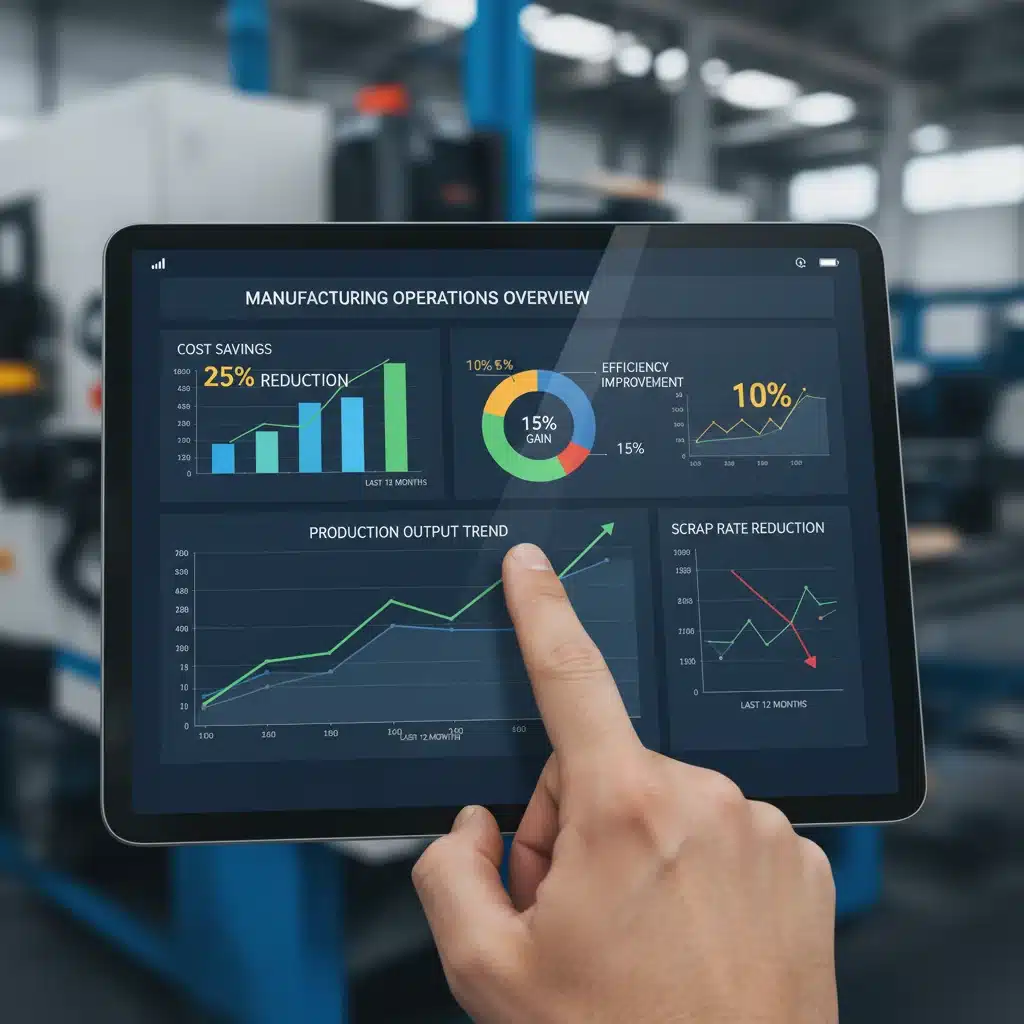
Numerous US manufacturers have already demonstrated the power of automation in achieving significant cost reductions. For instance, a medium-sized automotive parts supplier implemented cobots for machine tending and assembly, leading to a 25% reduction in direct labor costs for those specific processes and a 15% increase in overall production efficiency within 18 months. Another example involves a food processing plant that deployed AGVs for internal logistics, cutting material handling labor by 40% and reducing product damage by 10%.
These examples underscore that the 30% manufacturing cost reduction target is not a pipe dream but a tangible outcome for those who strategically embrace automation and operational excellence.
The Future of US Manufacturing: Automated and Cost-Efficient
The next 12 months present a critical window of opportunity for US manufacturers to redefine their operational capabilities and financial health. By strategically integrating automation across various aspects of their operations – from the factory floor to the supply chain – companies can unlock unprecedented levels of efficiency and achieve substantial manufacturing cost reduction. This isn’t just about cutting expenses; it’s about building more resilient, agile, and competitive manufacturing enterprises that are well-positioned for future growth and innovation.
The journey to a 30% cost reduction begins with a clear vision, a thorough analysis of current processes, a commitment to embracing new technologies, and an investment in your workforce. Embrace automation, optimize your operations, and secure a prosperous future for your manufacturing business.
Conclusion
Achieving a 30% manufacturing cost reduction for US manufacturers within the next 12 months is an ambitious yet entirely attainable goal. It requires a strategic blend of advanced automation technologies, data-driven decision-making, and a steadfast commitment to lean principles. By focusing on process analysis, robotics, advanced manufacturing technologies, AI-powered analytics, and supply chain integration, businesses can systematically eliminate waste, boost efficiency, and significantly reduce operational expenses. The initial investment in automation is quickly recouped through enhanced productivity, improved quality, and substantial long-term savings. The future of US manufacturing is automated, efficient, and highly competitive, and the time to act is now.