The Gig Economy’s Evolution: Impact on US Labor and Business Flexibility in 2026
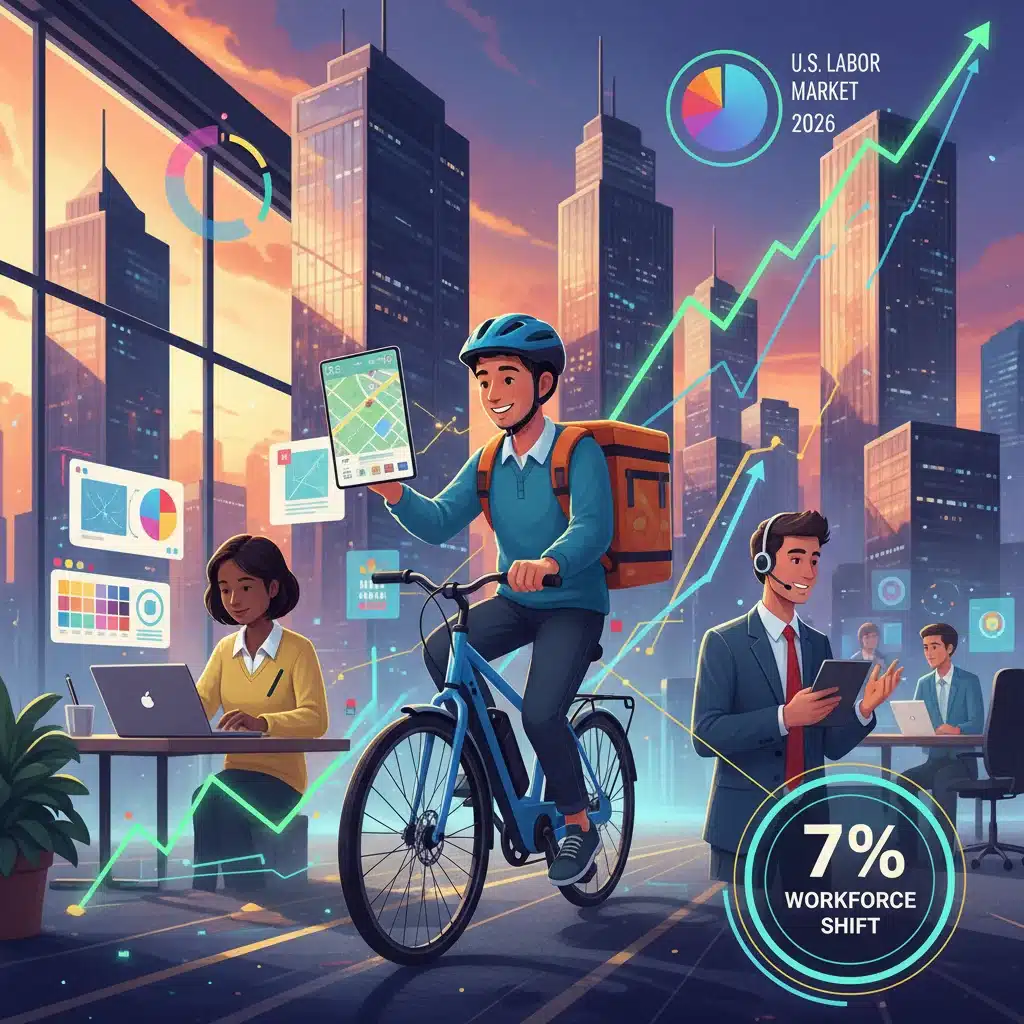
The landscape of work is undergoing a profound transformation, and at the heart of this shift lies the Gig Economy Evolution. What was once considered a fringe phenomenon has rapidly become a central pillar of the U.S. labor market, influencing everything from employment models to business strategies. As we approach 2026, the gig economy is not just growing; it’s evolving in complex ways, demanding a deeper understanding of its pervasive impact on both individual workers and the broader economic ecosystem. This article delves into the multifaceted nature of this evolution, exploring its historical trajectory, current implications, and future outlook, particularly regarding a projected 7% shift in the workforce towards gig-based arrangements.
Understanding the Gig Economy’s Foundation and Early Growth
To truly grasp the magnitude of the Gig Economy Evolution, it’s essential to look back at its origins and initial growth spurts. The concept of “gig work” itself isn’t new; musicians have played “gigs” for decades, and freelancers have been a part of the professional landscape for centuries. However, the modern gig economy, as we understand it today, is inextricably linked to the advent of digital platforms. Companies like Uber, Airbnb, and TaskRabbit emerged in the late 2000s and early 2010s, acting as intermediaries that efficiently connected service providers with consumers, often bypassing traditional employment structures.
Initially, the gig economy was celebrated for its promise of flexibility and supplemental income. It offered individuals the opportunity to work on their own terms, setting their hours and choosing their assignments. For businesses, it presented a novel way to scale operations, access specialized talent without the overhead of full-time employment, and respond quickly to market demands. This mutual benefit fueled rapid expansion, drawing in millions of workers seeking autonomy and an alternative to conventional 9-to-5 jobs. Early adopters were often those looking for secondary income streams, students, or individuals with specific skills who preferred project-based work.
However, even in its nascent stages, the gig economy began to reveal its complexities. Questions arose about worker classification, benefits, and job security. The initial enthusiasm was tempered by growing concerns about the lack of a social safety net for gig workers and the potential for exploitation. These early debates laid the groundwork for the more extensive discussions and regulatory challenges that would define the gig economy’s trajectory in the years to come. The initial growth was organic, driven by technological innovation and a desire for more agile work arrangements, setting the stage for the significant Gig Economy Evolution we observe today.
The Accelerating Pace of the Gig Economy Evolution Post-2020
The period following 2020 served as a significant catalyst for the Gig Economy Evolution. The global pandemic, with its unprecedented disruptions, forced businesses and workers alike to re-evaluate traditional work models. Lockdowns, remote work mandates, and economic uncertainties pushed millions into gig work, either out of necessity or as a preferred way of earning. This period not only accelerated the adoption of gig models but also diversified the types of work performed within this framework.
Suddenly, the gig economy wasn’t just about ride-sharing or food delivery. It expanded into professional services, creative industries, and even highly specialized technical fields. Businesses, facing rapid changes in consumer behavior and supply chains, increasingly turned to freelancers and independent contractors for agility and cost-effectiveness. This shift wasn’t merely a temporary response to a crisis; it cemented the gig economy’s role as a permanent fixture in the U.S. labor market.
Data from various sources indicates a sustained upward trend. Reports from organizations like the Freelancers Union and Upwork consistently show an increasing percentage of the workforce engaging in freelance or contract work. This acceleration has brought with it both opportunities and renewed challenges. While more individuals are embracing the flexibility and autonomy, the discussions around worker rights, fair compensation, and access to benefits have intensified. The rapid growth also highlighted the digital divide, as access to reliable internet and appropriate technology became crucial for participation. This accelerated evolution has set a clear path towards the projected 7% workforce shift by 2026, making the Gig Economy Evolution a critical area of study and policy-making.
Projected Workforce Shift: A 7% Movement by 2026
One of the most compelling aspects of the ongoing Gig Economy Evolution is the projected 7% shift in the U.S. workforce towards gig-based arrangements by 2026. This isn’t just a marginal increase; it represents millions of individuals transitioning from traditional employment or entering the workforce directly into independent contractor roles. This projection, based on various economic analyses and labor market trends, signals a fundamental restructuring of how work is performed and managed across industries.
What drives this significant shift? Several factors contribute. On the supply side, workers are increasingly prioritizing flexibility, work-life balance, and autonomy – attributes often more readily available in gig work. The desire to escape rigid corporate structures, commute times, and fixed schedules is a powerful motivator. Furthermore, the accessibility of online platforms lowers the barrier to entry for many, allowing them to leverage their skills in a global marketplace.
From the demand side, businesses are recognizing the strategic advantages of a flexible workforce. The ability to scale up or down quickly, access specialized skills on demand, and reduce overhead costs are powerful incentives. In an increasingly volatile economic environment, the agility offered by gig workers allows companies to remain competitive and adapt to rapid changes. This 7% shift is not uniform across all sectors; industries like technology, creative services, logistics, and caregiving are expected to see some of the most pronounced movements. Understanding the nuances of this projected shift is crucial for policymakers, businesses, and individuals preparing for the future of work, as it underscores the transformative power of the Gig Economy Evolution.
Impact on U.S. Labor Markets: Opportunities and Challenges
The Gig Economy Evolution has fundamentally reshaped U.S. labor markets, presenting a complex tapestry of opportunities and challenges. For workers, the opportunities are clear: increased flexibility, autonomy, and the potential for diversified income streams. Individuals can often tailor their work to their personal lives, pursue multiple passions, and gain experience across various sectors without being tied to a single employer. This can be particularly beneficial for those seeking supplemental income, individuals with caregiving responsibilities, or those looking to transition careers.
However, these opportunities come with significant challenges. The most prominent concerns revolve around income stability, lack of traditional employee benefits (such as health insurance, retirement plans, and paid time off), and limited job security. Gig workers often bear the full burden of self-employment taxes and operational costs, which can significantly reduce their net earnings. The absence of a clear career progression path and the potential for isolation can also be drawbacks for some. 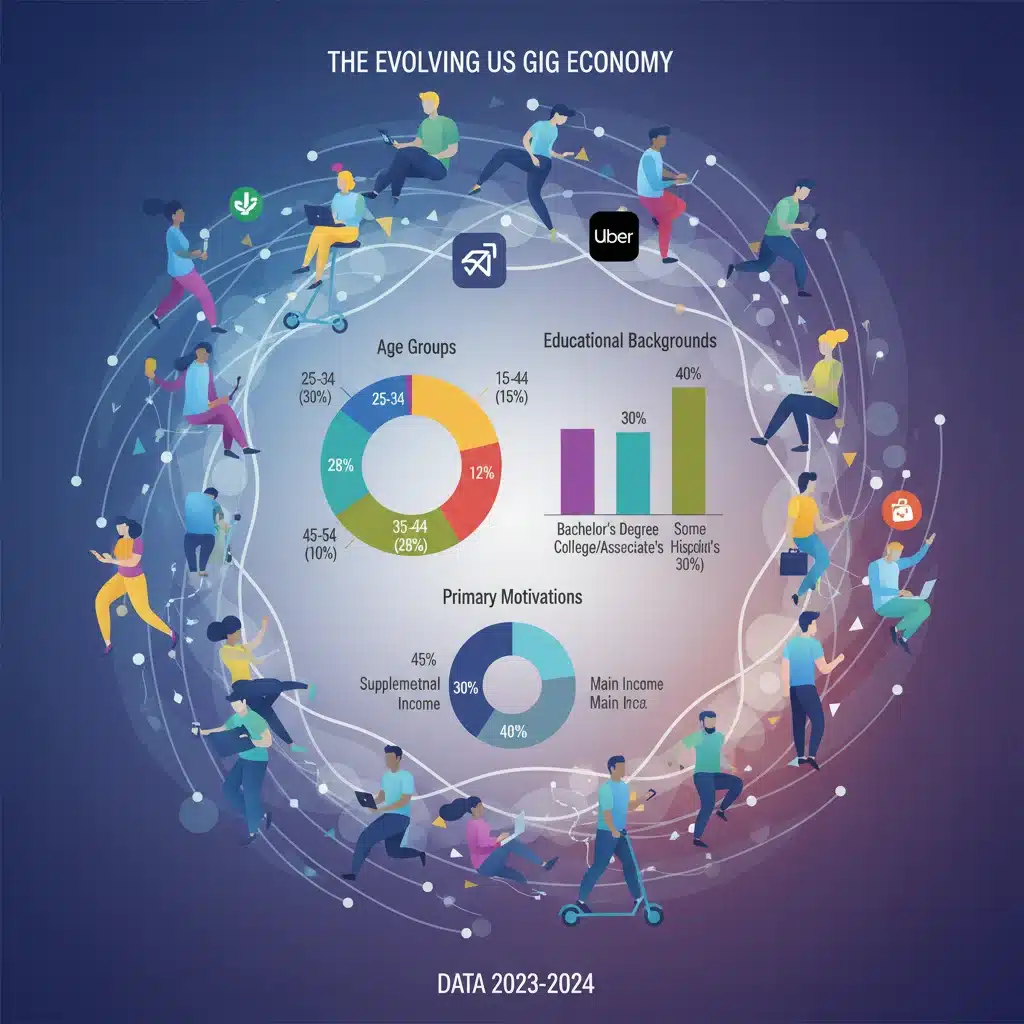 Moreover, the power imbalance between individual gig workers and large platforms raises questions about fair labor practices and dispute resolution mechanisms.
For the broader labor market, the gig economy introduces new dynamics. It can lower unemployment rates by creating accessible work opportunities, but it also blur the lines between employment and self-employment, complicating labor statistics and policy-making. Unions and labor advocates are grappling with how to represent and protect gig workers, leading to calls for new models of collective bargaining or portable benefits. The impact on wages is also a point of contention; while some gig workers earn high rates for specialized skills, others face downward pressure on earnings due to intense competition. Navigating these complex dynamics is paramount as the Gig Economy Evolution continues to mature and integrate further into the national economic fabric.
Business Flexibility: A Key Driver and Beneficiary
One of the primary drivers and beneficiaries of the Gig Economy Evolution is enhanced business flexibility. In today’s rapidly changing economic environment, businesses need to be agile, responsive, and efficient. The gig economy offers a powerful toolkit to achieve these goals, enabling companies to adapt swiftly to market fluctuations, project demands, and technological advancements.
For businesses, the ability to tap into a vast pool of on-demand talent means they can scale their workforce up or down as needed, reducing labor costs associated with full-time employees, such as benefits, training, and office space. This is particularly advantageous for startups, small and medium-sized enterprises (SMEs), and companies operating in highly seasonal or project-based industries. Instead of hiring permanent staff for short-term needs, businesses can engage independent contractors for specific tasks or projects, ensuring they have the right skills at the right time without long-term commitments.
Furthermore, the gig economy provides access to a diverse range of specialized skills that might be difficult or cost-prohibitive to maintain in-house. A company might need a branding expert for a three-month campaign, a data scientist for a specific analytical project, or a multilingual translator for an international launch. The gig economy connects them with these experts globally, fostering innovation and competitiveness. This increased flexibility also extends to geographical boundaries, as remote gig work allows businesses to recruit talent irrespective of location, opening up new talent pools and reducing geographical constraints. As the Gig Economy Evolution progresses towards 2026, this strategic advantage will become even more critical for businesses striving for resilience and growth.
Regulatory Landscape and Policy Responses
The rapid Gig Economy Evolution has inevitably led to a complex and often contentious regulatory landscape. Governments worldwide, and particularly in the U.S., are grappling with how to classify and regulate gig work to ensure fairness for workers while preserving the innovation and flexibility that the model offers. The core of the debate often hinges on worker classification: are gig workers independent contractors or employees?
If classified as employees, gig workers would be entitled to minimum wage, overtime pay, unemployment insurance, workers’ compensation, and other benefits typically associated with traditional employment. This would significantly increase costs for gig platforms and potentially reduce the flexibility they offer. California’s AB5 law, which sought to reclassify many gig workers as employees, became a landmark example of this struggle, leading to intense lobbying and a subsequent ballot initiative (Proposition 22) that carved out specific exceptions for ride-share and delivery drivers.
Other states and cities are exploring different approaches, including portable benefits models, where benefits like health insurance and retirement savings could be accrued and carried by workers from gig to gig, irrespective of the platform. Some proposals suggest creating a “third category” of worker that blends aspects of both employee and independent contractor status. The federal government is also weighing in, with various administrations proposing different guidelines and enforcement priorities regarding worker classification. The outcome of these regulatory battles will profoundly shape the future direction of the Gig Economy Evolution, influencing everything from the profitability of platforms to the economic security of millions of workers. Finding a balance that fosters innovation while protecting workers remains a central policy challenge.
Technological Innovations Fueling the Gig Economy
At the very core of the Gig Economy Evolution are continuous technological innovations. Without the advancements in digital platforms, mobile technology, and data analytics, the gig economy as we know it would not exist. These technologies act as the connective tissue, enabling seamless interactions between service providers and consumers, managing logistics, and facilitating payments on an unprecedented scale.
Mobile applications have been revolutionary, turning smartphones into portable workplaces and access points for gig opportunities. GPS technology optimizes routing for delivery and ride-sharing services, while sophisticated algorithms match workers with tasks, predict demand, and manage pricing dynamically. Cloud computing provides the scalable infrastructure necessary to support millions of transactions and user profiles simultaneously. Artificial intelligence and machine learning are increasingly being used to personalize user experiences, enhance security, and even automate certain aspects of task management and quality control.
Looking ahead, emerging technologies promise to further accelerate the Gig Economy Evolution. Blockchain could offer more transparent payment systems and verifiable credentials for gig workers, enhancing trust and reducing intermediaries. Virtual and augmented reality might open up new forms of remote gig work, allowing for immersive collaboration and specialized services delivered remotely. The continued integration of IoT devices could create new categories of on-demand services, from smart home maintenance to predictive equipment repairs. These technological leaps not only expand the scope of gig work but also refine its efficiency and accessibility, ensuring its continued prominence in the global economy. 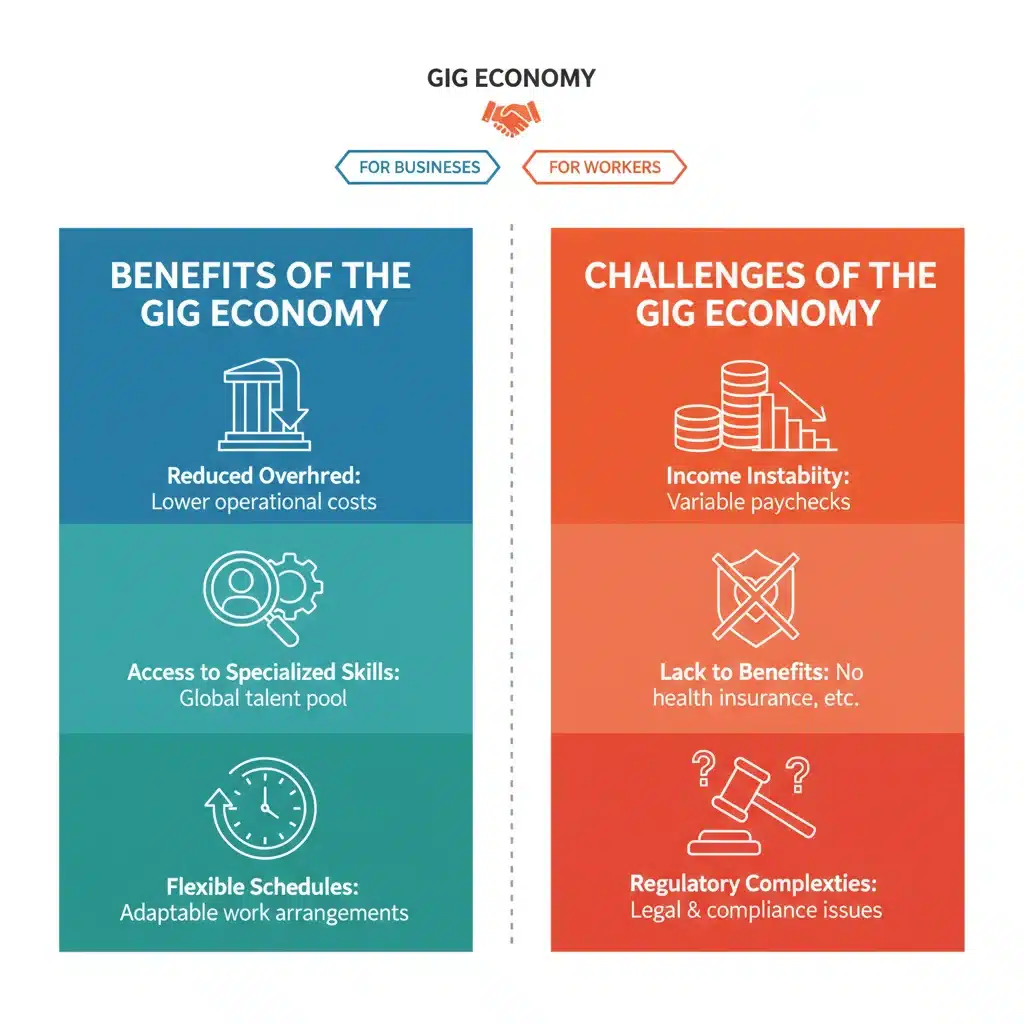
The Future Outlook: Beyond 2026
As we project beyond 2026, the Gig Economy Evolution is expected to continue its dynamic trajectory, becoming even more integrated into the fabric of the U.S. and global economies. The 7% workforce shift is likely just one milestone in a longer, ongoing transformation. Several key trends will define this future outlook.
Firstly, the professionalization of gig work is anticipated to accelerate. As more highly skilled individuals and specialized professionals enter the gig economy, the distinction between traditional consulting and gig work will blur further. Platforms catering to these higher-value services will likely see significant growth, offering more structured project management tools and robust client-worker matching algorithms.
Secondly, the regulatory environment will likely mature. As governments gain more experience and data, we can expect more nuanced and potentially standardized policies regarding worker classification, benefits, and protections. This could lead to a more stable and predictable operating environment for both platforms and workers, potentially alleviating some of the current uncertainties. Hybrid models, combining elements of traditional employment with gig flexibility, might also become more prevalent.
Thirdly, the gig economy will likely play an even more crucial role in addressing labor shortages and skill gaps. As demographics shift and industries evolve, the ability to quickly deploy skilled gig workers will be invaluable. Education and training systems may also adapt to better prepare individuals for portfolio careers and the entrepreneurial mindset required for sustained success in the gig economy.
Finally, the ethical considerations surrounding AI and automation in gig work will become more pressing. Questions about algorithmic management, data privacy, and the potential for displacement will require careful consideration and innovative solutions. The future of the Gig Economy Evolution is not just about economic growth; it’s about building a sustainable, equitable, and adaptable system of work that benefits all stakeholders.
Conclusion: Adapting to a Flexible Future
The Gig Economy Evolution is not merely a passing trend but a fundamental reshaping of how work is conceptualized, organized, and executed in the United States and beyond. The projected 7% shift in the workforce by 2026 underscores its growing permanence and influence. This evolving landscape presents a dual narrative: one of unprecedented flexibility, autonomy, and economic opportunity for millions, and another of significant challenges related to worker protection, income stability, and regulatory clarity.
For individuals, adapting means cultivating a portfolio of skills, embracing continuous learning, and understanding the nuances of self-employment. It requires a proactive approach to managing finances, seeking out portable benefits solutions, and advocating for fair working conditions. For businesses, the gig economy offers a powerful tool for agility, innovation, and cost-effectiveness, but it also necessitates a responsible approach to engaging independent contractors, ensuring ethical practices, and contributing to a sustainable ecosystem.
Policymakers, too, have a critical role to play in fostering an environment that maximizes the benefits of the gig economy while mitigating its risks. This involves crafting forward-thinking legislation that addresses worker classification, social safety nets, and fair competition, without stifling innovation. The ongoing dialogue between workers, businesses, platforms, and governments will be essential in shaping a future where the gig economy is not just large, but also equitable and resilient.
As we move further into the 21st century, the Gig Economy Evolution will undoubtedly continue to redefine the very essence of work. Understanding its complexities, embracing its opportunities, and collectively addressing its challenges will be key to unlocking its full potential for a more flexible, dynamic, and inclusive labor market.