Edge AI Deployment: Boost US Manufacturing Efficiency by 15% in 2026
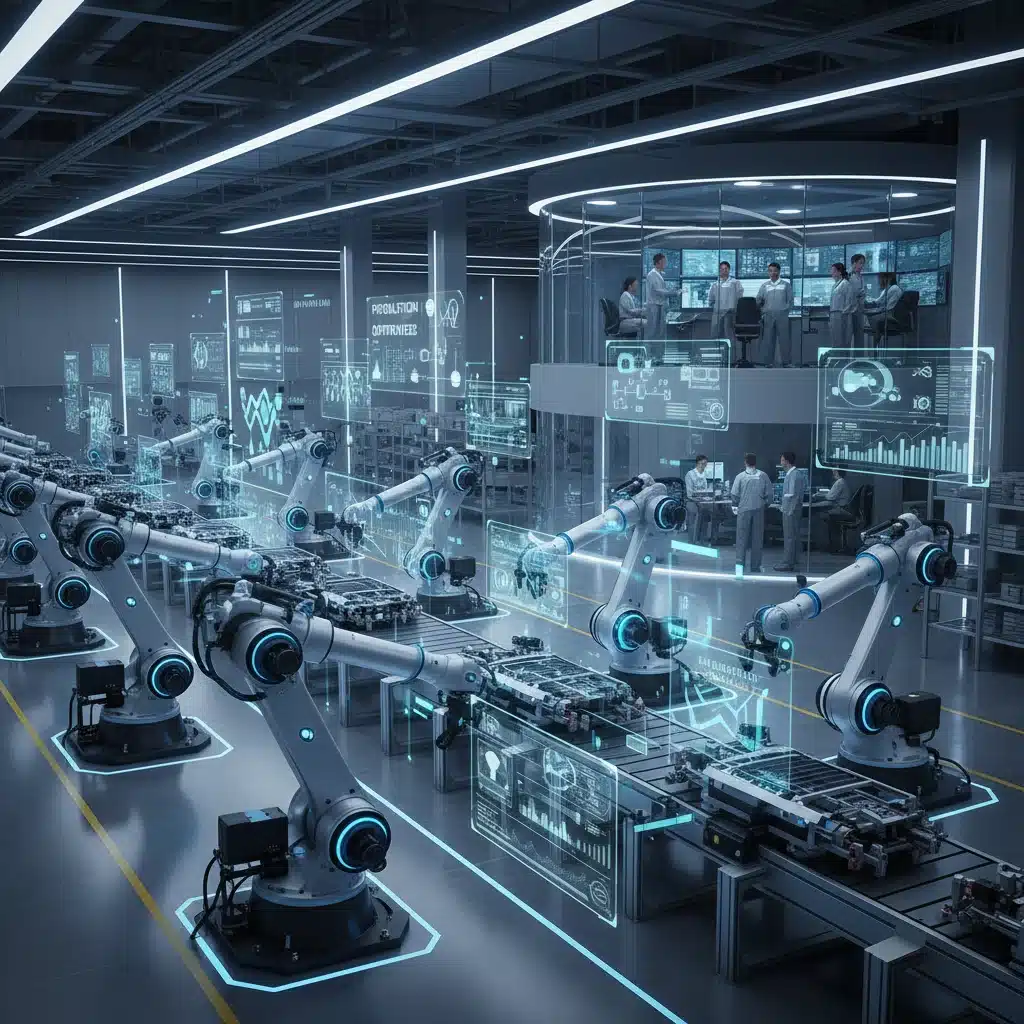
The landscape of US manufacturing is undergoing a profound transformation, driven by the relentless pursuit of efficiency, quality, and competitiveness. In this era of rapid technological advancement, Edge AI Manufacturing stands out as a pivotal innovation, promising to redefine operational paradigms. The goal for many forward-thinking US manufacturers is not just incremental improvement, but a significant leap – an ambitious target of boosting efficiency by 15% by 2026. This isn’t merely an aspiration; it’s an achievable reality through strategic Edge AI deployment.
Edge AI, at its core, involves deploying artificial intelligence capabilities directly onto devices at the ‘edge’ of a network, close to where data is generated, rather than relying solely on centralized cloud infrastructure. For manufacturing, this means AI models running on factory floor machines, sensors, and industrial robots, enabling real-time decision-making, predictive analytics, and autonomous operations without the latency and bandwidth constraints associated with cloud-only solutions. This article serves as a comprehensive, step-by-step guide for US manufacturers looking to harness the power of Edge AI Manufacturing to achieve unprecedented levels of operational excellence and secure a competitive edge in the global market.
Understanding the Imperative: Why Edge AI for US Manufacturing?
The US manufacturing sector faces unique challenges and opportunities. Global competition, rising labor costs, supply chain complexities, and the constant demand for higher quality and faster production cycles necessitate innovative solutions. Traditional manufacturing processes, often reliant on manual oversight and periodic data analysis, are no longer sufficient to meet these demands. This is where Edge AI Manufacturing becomes not just an advantage, but a necessity.
Real-time Decision Making at the Source
One of the most compelling benefits of Edge AI is its ability to process data and make decisions in real-time, right where the action happens. Imagine a production line where a machine detects a subtle anomaly in its vibration patterns. With Edge AI, this anomaly can be analyzed instantly, and a predictive maintenance alert triggered before a catastrophic failure occurs. This immediate response minimizes downtime, reduces waste, and optimizes resource allocation – all critical factors in boosting efficiency.
Reduced Latency and Bandwidth Demands
Sending all sensor data from a vast manufacturing floor to a central cloud for processing can introduce significant latency and consume enormous bandwidth. Edge AI alleviates this by performing computations locally. This is particularly crucial for time-sensitive operations, such as robotics control, quality inspection, and process optimization, where even milliseconds of delay can impact performance and safety. By keeping data processing localized, manufacturers can ensure rapid responses and maintain operational continuity even with intermittent network connectivity.
Enhanced Data Security and Privacy
Processing sensitive operational data on-site, rather than transmitting it all to the cloud, significantly enhances data security and privacy. For industries handling proprietary processes or sensitive product designs, this localized processing capability offers an added layer of protection against cyber threats and data breaches. Compliance with various data regulations also becomes more manageable when data is processed closer to its origin.
Cost Savings and Operational Efficiency
The cumulative effect of real-time decision-making, reduced latency, and enhanced security translates directly into substantial cost savings and improved operational efficiency. Fewer unexpected downtimes, optimized energy consumption, reduced scrap rates, and more efficient resource utilization all contribute to a healthier bottom line. The 15% efficiency boost by 2026 is a conservative estimate when the full potential of Edge AI Manufacturing is realized across various aspects of production.
The Step-by-Step Guide to Edge AI Deployment in US Manufacturing
Implementing Edge AI is a strategic journey that requires careful planning, execution, and continuous optimization. Here’s a detailed roadmap for US manufacturers:
Step 1: Define Clear Objectives and Use Cases
Before embarking on any technological deployment, it’s crucial to identify specific business objectives and the problems Edge AI is intended to solve. Vague goals lead to unfocused efforts. For US manufacturers, common high-impact use cases include:
- Predictive Maintenance: Using AI to analyze sensor data from machinery (vibration, temperature, current) to predict potential failures before they occur, scheduling maintenance proactively, and minimizing unplanned downtime.
- Quality Control and Anomaly Detection: Employing computer vision and machine learning on the edge to inspect products in real-time, identify defects, and flag anomalies with high precision, reducing rework and scrap.
- Process Optimization: Analyzing real-time operational data to adjust machine parameters, optimize production flows, and improve throughput.
- Energy Management: Monitoring and optimizing energy consumption of individual machines or entire production lines.
- Worker Safety: Using AI-powered cameras to detect unsafe conditions or practices, ensuring compliance with safety protocols.
- Inventory Management: Real-time tracking of parts and finished goods to optimize stock levels and reduce carrying costs.
Start with a pilot project focusing on one or two high-value use cases that offer a clear return on investment. This allows for learning and refinement before scaling.
Step 2: Assess Existing Infrastructure and Data Readiness
A successful Edge AI deployment hinges on understanding your current technological landscape. This involves:
- Network Infrastructure: Evaluate the robustness and reliability of your factory floor network. Is it capable of handling increased data traffic from edge devices? Consider upgrading to industrial Ethernet or 5G where necessary.
- Data Collection Capabilities: Do your machines and sensors already collect relevant data? If not, identify the necessary sensors (e.g., vibration, temperature, acoustic, vision) and data acquisition systems.
- Data Quality: Assess the quality, consistency, and completeness of your existing data. “Garbage in, garbage out” applies universally to AI. Data cleansing and preprocessing will be critical.
- Legacy Systems Integration: Plan how Edge AI solutions will integrate with existing SCADA, MES, ERP, and other operational technology (OT) and information technology (IT) systems.
Step 3: Select the Right Edge Hardware and Software Stack
The choice of hardware and software is paramount for Edge AI Manufacturing. This decision will depend on the specific use cases, computational demands, and environmental conditions.
Hardware Considerations:
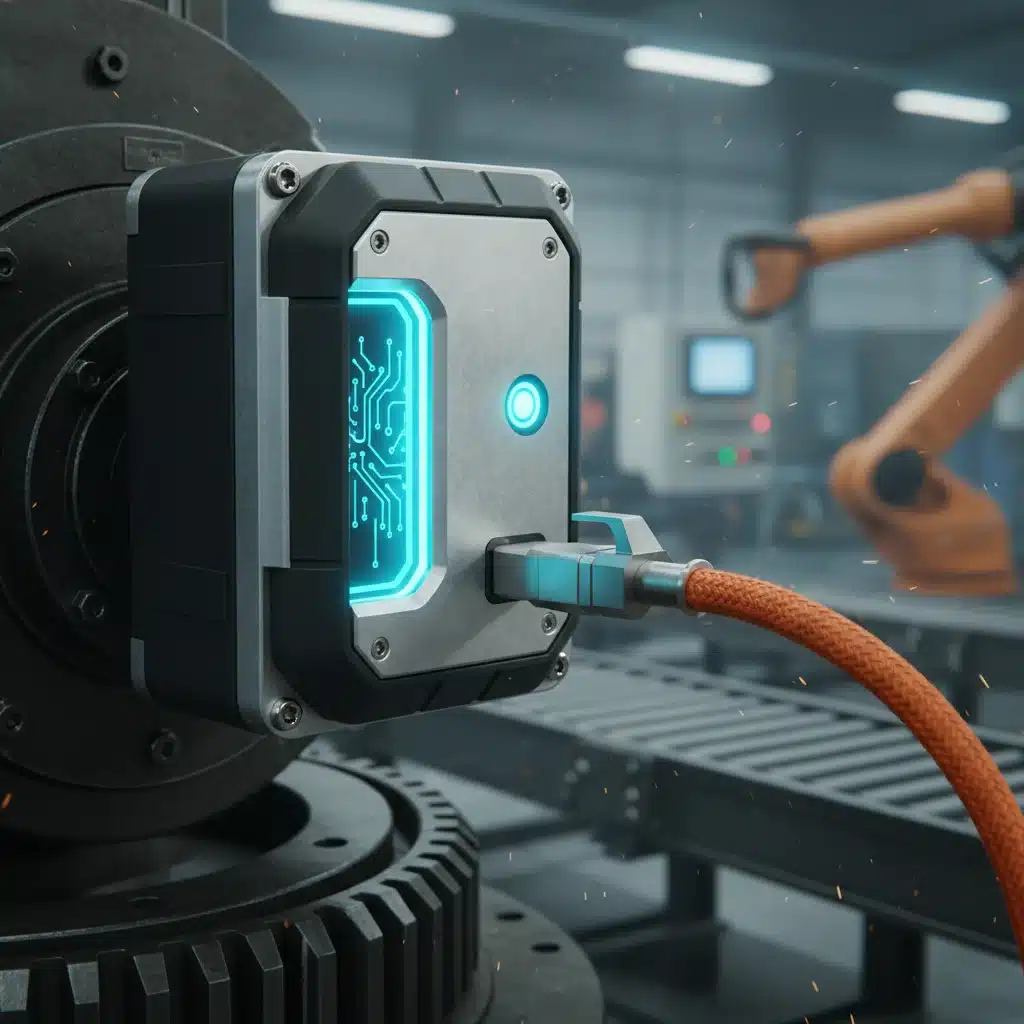
- Edge Devices: These can range from powerful industrial PCs and gateways to embedded systems, microcontrollers, and application-specific integrated circuits (ASICs) designed for AI inference.
- Processing Power: Depending on the complexity of your AI models (e.g., simple anomaly detection vs. real-time high-resolution video analytics), you’ll need varying levels of CPU, GPU, or FPGA power.
- Ruggedization: Factory environments are often harsh. Ensure chosen hardware can withstand dust, vibration, extreme temperatures, and electromagnetic interference.
- Connectivity: Support for various industrial protocols (e.g., OPC UA, Modbus, Ethernet/IP) and wireless technologies (Wi-Fi 6, 5G, LoRaWAN) is crucial.
Software Considerations:
- Edge AI Frameworks: Utilize frameworks like TensorFlow Lite, OpenVINO, or PyTorch Mobile for deploying optimized AI models on edge devices.
- Operating Systems: Industrial-grade Linux distributions or real-time operating systems (RTOS) are common choices.
- Device Management Platform: A platform to remotely manage, update, and monitor your fleet of edge devices.
- Cloud Integration: While processing occurs at the edge, some data aggregation, model retraining, and higher-level analytics might still occur in the cloud. Ensure seamless integration.
Step 4: Develop and Optimize AI Models for the Edge
This step involves the core AI work:
- Data Collection and Labeling: Gather and meticulously label relevant data from your manufacturing processes. This is often the most time-consuming part.
- Model Training: Train machine learning models (e.g., neural networks for computer vision, time-series models for predictive maintenance) using historical and real-time data. This often happens in the cloud or on powerful servers.
- Model Optimization: Edge devices have limited computational resources. Models must be optimized for size, speed, and efficiency. Techniques include quantization, pruning, and knowledge distillation.
- Validation and Testing: Rigorously test the models in simulated and real-world factory environments to ensure accuracy, reliability, and robustness.
Step 5: Deploy, Monitor, and Maintain Edge AI Solutions
Deployment is not a one-time event but an ongoing process:
- Staged Rollout: Begin with a pilot deployment in a controlled environment or on a non-critical production line. Gather feedback and refine.
- Configuration and Integration: Configure edge devices, connect them to machinery, and integrate with existing OT/IT systems.
- Monitoring and Performance Tracking: Continuously monitor the performance of your Edge AI models and devices. Track key metrics like inference speed, accuracy, and resource utilization.
- Model Retraining and Updates: AI models can drift over time as operational conditions change. Establish a process for periodic model retraining with new data and deploying updated models to the edge. Over-the-air (OTA) updates are crucial here.
- Security Updates: Regular security patches for edge devices and software are non-negotiable to protect against evolving cyber threats.
Key Considerations for Successful Edge AI Manufacturing Implementation
Beyond the technical steps, several strategic considerations will dictate the success of your Edge AI Manufacturing initiative.
Talent and Skill Development
The successful adoption of Edge AI requires a workforce with new skills. This includes data scientists, AI engineers, industrial IoT specialists, and technicians trained in managing and maintaining edge devices. US manufacturers should invest in upskilling existing employees and attracting new talent with relevant expertise. Partnerships with academic institutions or specialized training providers can be invaluable.
Cybersecurity Strategy
While Edge AI can enhance security by localizing data, it also introduces new attack vectors if not properly secured. A robust cybersecurity strategy is essential, including:
- Endpoint security for all edge devices.
- Secure boot and trusted execution environments.
- Network segmentation and firewalls.
- Regular vulnerability assessments and penetration testing.
- Identity and access management for edge systems.
Scalability and Interoperability
Plan for scalability from the outset. Your Edge AI solution should be designed to expand across different production lines, factories, and even geographies. Interoperability with existing and future systems is also critical to avoid creating new data silos. Adopting open standards and APIs can facilitate this.
Return on Investment (ROI) Measurement
Clearly define how you will measure the ROI of your Edge AI deployment. This includes tracking improvements in metrics such as OEE (Overall Equipment Effectiveness), defect rates, energy consumption, unscheduled downtime, and labor efficiency. Quantifying these benefits will justify further investment and demonstrate the value of Edge AI Manufacturing.
Realizing the 15% Efficiency Boost by 2026
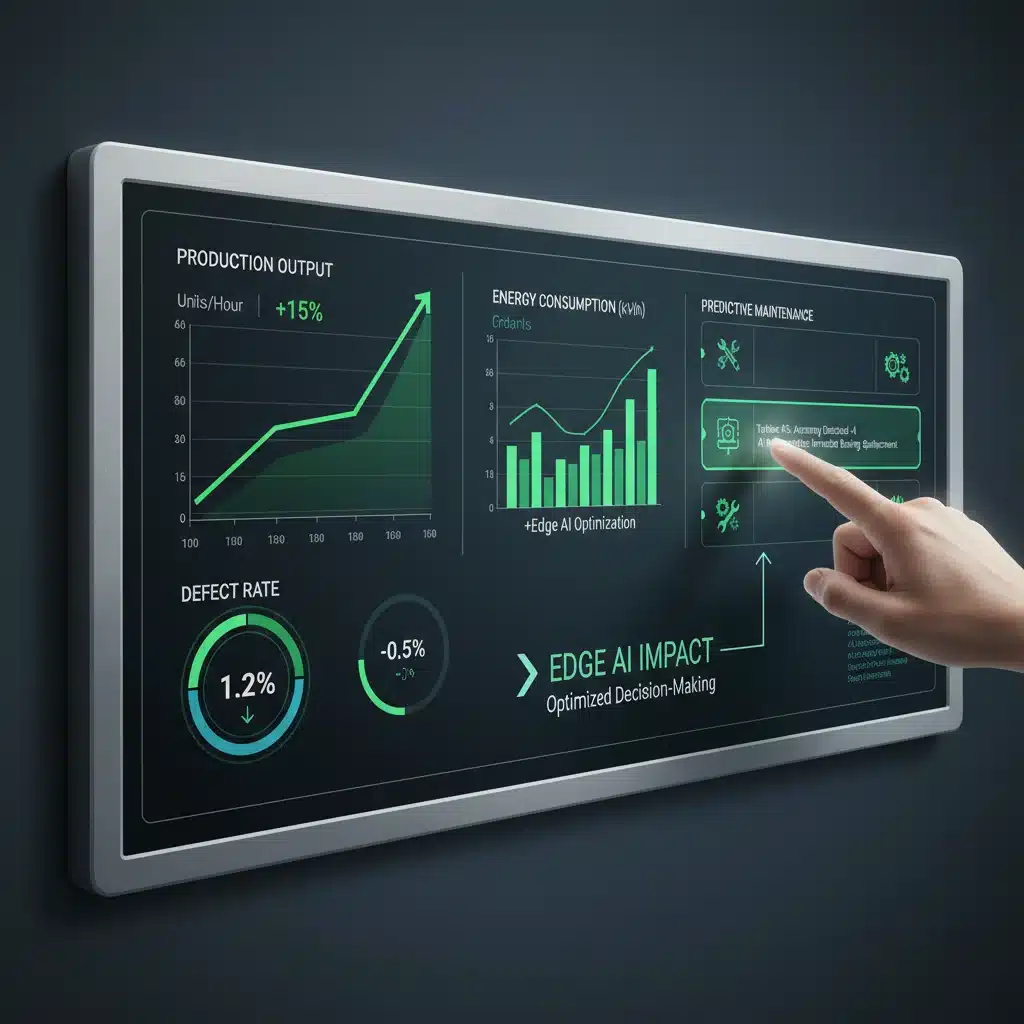
Achieving a 15% boost in manufacturing efficiency by 2026 through Edge AI is an ambitious yet entirely attainable goal for US manufacturers. This level of improvement doesn’t come from a single change but from the cumulative impact of multiple, interconnected Edge AI applications. Consider these synergistic effects:
- Predictive Maintenance reducing downtime: By eliminating unexpected breakdowns, production lines operate more consistently, directly increasing uptime and throughput.
- Real-time Quality Control minimizing waste: Detecting defects immediately prevents further processing of faulty products, saving materials, energy, and labor.
- Process Optimization enhancing throughput: AI-driven adjustments to machine settings lead to faster cycle times and better utilization of equipment.
- Energy Management lowering operational costs: Optimized energy use reduces the overall cost of production per unit.
When these benefits are combined, the impact on Overall Equipment Effectiveness (OEE) and the bottom line can be transformative. The key is a holistic approach, where Edge AI is integrated across the entire value chain, from raw material intake to final product shipment.
Overcoming Challenges
While the benefits are clear, challenges exist. These often include:
- Initial Investment: The upfront cost of hardware, software, and talent can be significant. However, the ROI often justifies this investment within a short period.
- Data Silos and Integration: Bridging the gap between disparate legacy systems and new Edge AI platforms requires careful planning and robust integration strategies.
- Complexity of Deployment: Managing a large fleet of edge devices and AI models can be complex. Choosing the right device management platforms and embracing MLOps (Machine Learning Operations) practices are crucial.
- Organizational Change Management: Introducing new technologies often requires changes in workflows and roles, necessitating strong leadership and clear communication to ensure employee adoption and buy-in.
US manufacturers that proactively address these challenges and commit to a strategic Edge AI Manufacturing roadmap will be well-positioned to achieve significant efficiency gains and maintain a competitive edge.
The Future of Manufacturing: Smart, Autonomous, and Efficient
The journey towards a 15% efficiency boost by 2026 is just the beginning. Edge AI is a foundational technology for the next generation of smart factories. As AI models become more sophisticated and edge hardware more powerful and energy-efficient, we will see:
- Increased Autonomy: Factories where machines and robots make increasingly complex decisions independently, optimizing entire production cycles.
- Hyper-Personalization: The ability to produce highly customized products at scale and efficiently, responding rapidly to market demands.
- Resilient Supply Chains: Real-time visibility and AI-driven insights to predict and mitigate supply chain disruptions.
- Sustainable Manufacturing: Optimized resource use, waste reduction, and energy efficiency contributing to greener production processes.
US manufacturers have a unique opportunity to lead this transformation. By embracing Edge AI Manufacturing now, they are not just improving current operations but building the intelligent, agile, and resilient factories of the future.
Conclusion: A Call to Action for US Manufacturers
The target of a 15% efficiency improvement by 2026 is a bold statement about the potential of Edge AI Manufacturing. It signifies a future where US factories are not only productive but also intelligent, adaptive, and highly competitive on a global scale. The steps outlined in this guide – from defining clear objectives to developing robust models and ensuring continuous monitoring – provide a clear path forward.
For US manufacturers, the time to act is now. The early adopters of Edge AI will be the ones who reap the greatest rewards, setting new benchmarks for operational excellence and securing their position as leaders in the next industrial revolution. Embrace Edge AI, empower your factory floor, and pave the way for a more efficient, innovative, and prosperous manufacturing future.