Green Economy 2026: Untapped US Business Opportunities
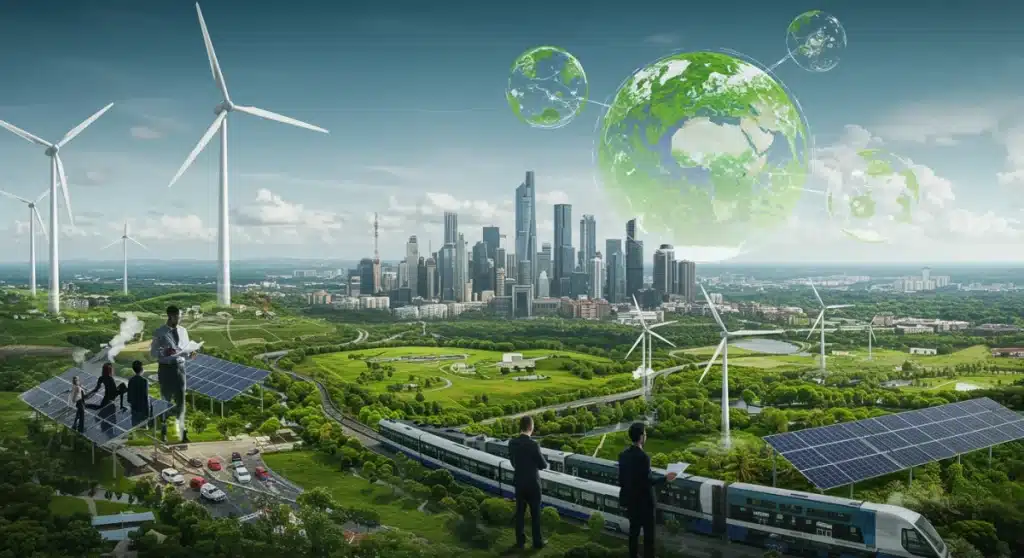
The landscape of global commerce is undergoing a profound transformation, driven by an escalating awareness of environmental challenges and a concerted push towards sustainable practices. In the United States, this shift is particularly pronounced, with new environmental regulations and evolving consumer preferences creating a fertile ground for innovation and investment within the burgeoning green economy. For shrewd entrepreneurs and forward-thinking enterprises, 2026 is poised to be a pivotal year, presenting an array of green economy opportunities that remain largely untapped. This comprehensive guide delves into four such promising avenues, offering insider knowledge and highlighting the significant financial impact they are expected to generate.
Understanding the impetus behind these opportunities requires a look at the dual forces shaping the market: government mandates and consumer demand. On the regulatory front, the US government, at both federal and state levels, is increasingly enacting policies aimed at reducing carbon emissions, promoting renewable energy, and fostering a circular economy. These policies, ranging from tax incentives for green technologies to stricter waste management protocols, are not merely compliance burdens but powerful catalysts for new business models. Simultaneously, consumers are becoming more environmentally conscious, demanding products and services that align with their values. This growing cohort of ‘green consumers’ is willing to pay a premium for sustainable options, creating a robust market for eco-friendly solutions.
The convergence of these forces creates a unique window for businesses to not only contribute to a more sustainable future but also to secure substantial financial returns. The green economy opportunities we will explore are not speculative ventures but areas with demonstrable market demand and regulatory tailwinds. They represent the next frontier of economic growth, offering a chance for US enterprises to lead the charge in environmental stewardship while simultaneously bolstering their bottom lines.
Opportunity 1: Advanced Waste-to-Energy and Resource Recovery
The concept of waste management is rapidly evolving beyond simple landfilling and recycling. The future lies in advanced waste-to-energy (WTE) and resource recovery systems that transform waste into valuable resources, including energy, fuels, and raw materials. This sector is ripe with green economy opportunities, especially as landfill space diminishes and the need for diversified energy sources grows.
Traditional WTE methods, often involving incineration, have faced environmental scrutiny due to emissions. However, new technologies are dramatically cleaner and more efficient. These include gasification and pyrolysis, which convert waste into syngas or bio-oil that can be used to generate electricity or produce chemicals. Anaerobic digestion, another promising technology, breaks down organic waste to produce biogas, a renewable natural gas. These advanced methods offer a significantly reduced environmental footprint compared to conventional approaches.
Financial Impact and Market Potential
The financial incentives in this sector are compelling. With tipping fees for landfills on the rise and a growing market for renewable energy credits, businesses investing in advanced WTE can generate multiple revenue streams. Furthermore, the recovery of valuable materials from waste streams, such as plastics, metals, and rare earth elements, adds another layer of profitability. The market for recycled content is expanding, driven by corporate sustainability goals and consumer demand for products with a lower environmental impact.
Insider knowledge suggests that states with aggressive renewable energy portfolios and limited landfill capacity will be prime markets for these technologies. Partnerships with municipalities and waste management companies will be crucial for securing a consistent feedstock supply. Moreover, the development of smaller, modular WTE facilities can address localized waste challenges and provide distributed energy solutions, reducing transmission losses and increasing energy resilience.
For example, a company specializing in pyrolysis technology could partner with a municipality to process mixed plastic waste, converting it into a valuable bio-oil that can be sold to refineries. This not only diverts waste from landfills but also creates a new revenue stream for the municipality and the WTE operator. The financial models for such ventures often demonstrate attractive returns on investment, particularly when considering the long-term contracts for waste intake and energy/material off-take.
Opportunity 2: Sustainable Urban Infrastructure and Smart Grids
As urban populations continue to grow, the demand for resilient, efficient, and environmentally friendly infrastructure intensifies. This presents significant green economy opportunities in the realms of sustainable urban development and the deployment of smart grid technologies. The focus here is on creating cities that are not only livable but also environmentally responsible and economically viable.
Sustainable urban infrastructure encompasses a wide range of innovations, from green building materials and designs to efficient public transportation systems and advanced water management solutions. The emphasis is on reducing resource consumption, minimizing pollution, and enhancing the overall quality of life for urban dwellers. This includes the integration of green spaces, urban farming initiatives, and pedestrian-friendly designs that reduce reliance on fossil fuel-powered transportation.
The Role of Smart Grids
A critical component of sustainable urban infrastructure is the development of smart grids. These advanced electricity networks use digital technology to monitor, control, and optimize energy delivery, enabling greater integration of renewable energy sources, improving energy efficiency, and enhancing grid reliability. Smart grids facilitate two-way communication between utilities and consumers, allowing for demand-side management and dynamic pricing, which can incentivize energy conservation.
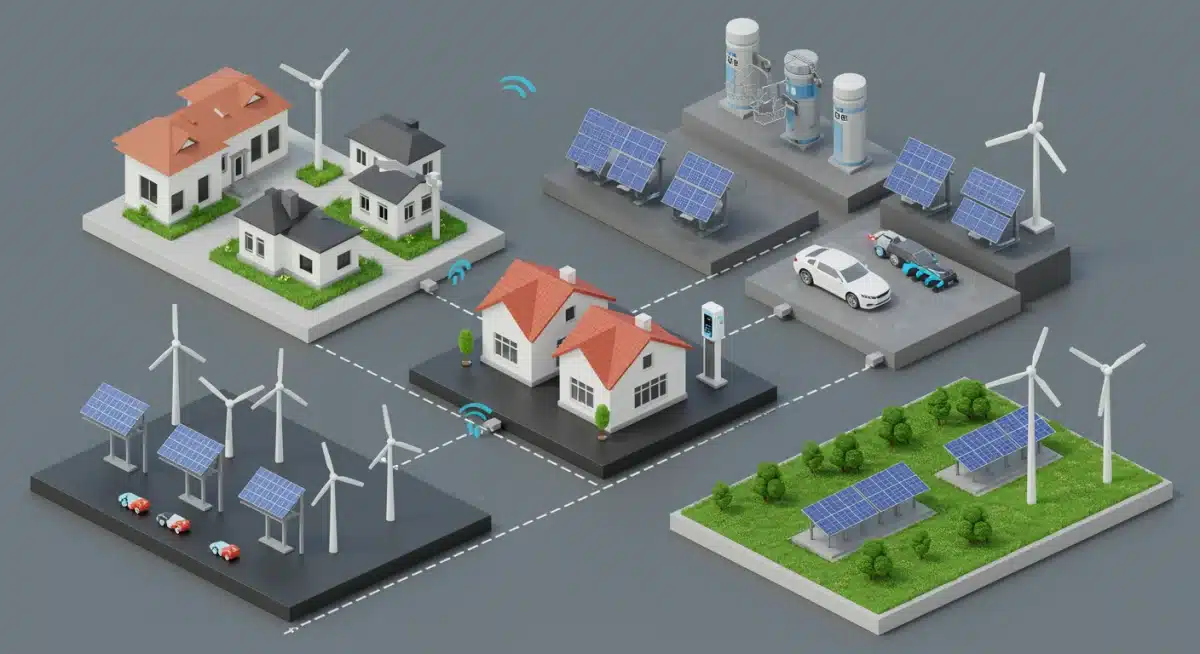
The financial implications of investing in smart grid technologies are substantial. Utilities can reduce operational costs through improved efficiency and predictive maintenance, while consumers benefit from lower energy bills and greater control over their energy consumption. Furthermore, the ability of smart grids to seamlessly integrate distributed renewable energy sources, such as rooftop solar and community wind projects, creates new revenue streams for energy producers and accelerates the transition to a clean energy economy.
Insider knowledge suggests that federal and state funding for infrastructure projects, coupled with incentives for renewable energy adoption, will drive significant investment in this area. Companies specializing in smart grid software, energy storage solutions, and microgrid development are particularly well-positioned. Consider the market for smart charging infrastructure for electric vehicles. As EV adoption accelerates, the demand for intelligent charging solutions that can optimize charging times based on grid conditions and electricity prices will skyrocket. This is a prime example of an untapped green economy opportunities within the broader smart grid revolution.
Opportunity 3: Circular Economy Solutions and Product-as-a-Service Models
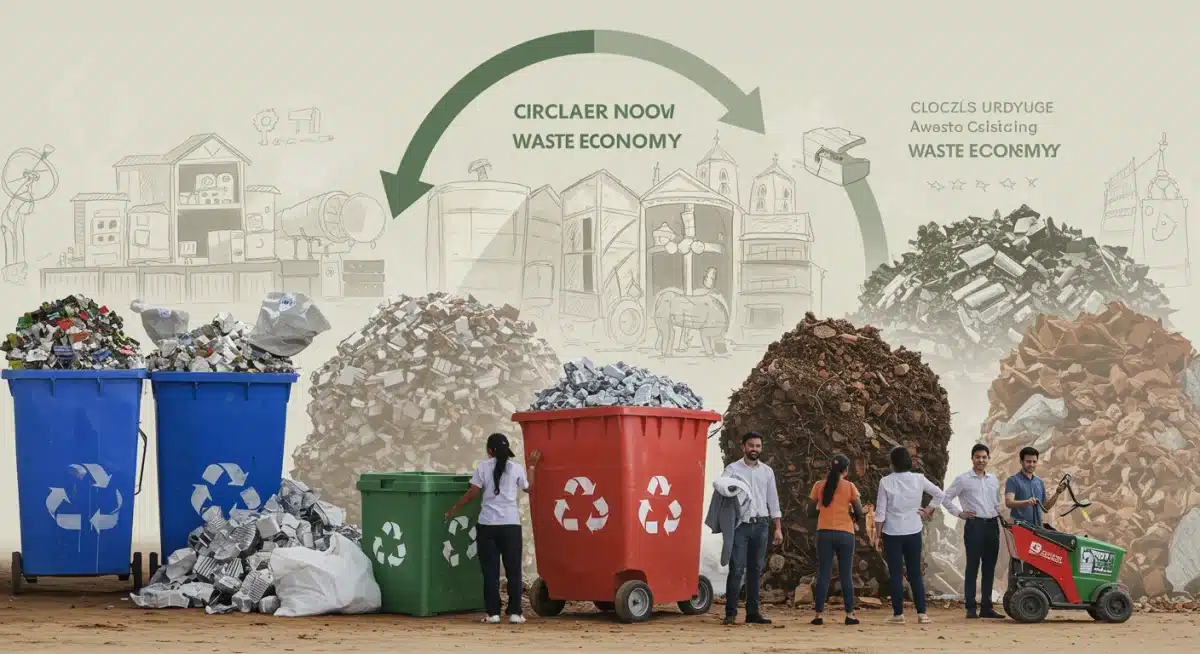
The linear ‘take-make-dispose’ economic model is increasingly unsustainable. The concept of the circular economy, which aims to keep resources in use for as long as possible, extract the maximum value from them whilst in use, then recover and regenerate products and materials at the end of each service life, is gaining significant traction. This shift opens up vast green economy opportunities for businesses willing to rethink product design, manufacturing, and consumption.
Circular economy solutions involve several key strategies: designing for durability, repairability, and recyclability; using renewable and recycled inputs; extending product lifecycles through maintenance and repair services; and establishing robust collection and reverse logistics systems for end-of-life products. Beyond these, innovative business models are emerging, such as ‘product-as-a-service’ (PaaS).
Product-as-a-Service (PaaS)
PaaS models involve companies retaining ownership of their products and offering them to customers for a fee, rather than selling them outright. This incentivizes manufacturers to design more durable, repairable, and upgradeable products, as they are responsible for their maintenance and eventual recovery. Examples include subscription services for clothing, tools, or even lighting systems, where customers pay for the use of the product rather than owning it. This creates a powerful alignment between environmental sustainability and business profitability.
The financial benefits of embracing circular economy principles and PaaS models are multifaceted. Businesses can reduce raw material costs by using recycled inputs and extending product lifecycles. They can also build stronger customer relationships through ongoing service and maintenance, leading to more predictable revenue streams. Furthermore, the ability to recapture valuable materials at the end of a product’s life reduces waste disposal costs and creates new revenue opportunities through resale or reprocessing.
Insider knowledge suggests that consumer preferences for sustainable and affordable options are driving the adoption of PaaS models, particularly among younger demographics. Companies that can offer high-quality, durable products through flexible subscription models will find a receptive market. Consider the furniture industry: instead of buying new furniture every few years, consumers could subscribe to a furniture service, allowing them to upgrade or swap pieces as their needs change, with the provider responsible for refurbishing and re-leasing the items. This is a significant area of green economy opportunities waiting to be fully explored.
Opportunity 4: Carbon Capture, Utilization, and Storage (CCUS) Technologies
Addressing climate change necessitates not only reducing emissions but also removing existing carbon dioxide from the atmosphere. Carbon Capture, Utilization, and Storage (CCUS) technologies represent a critical set of green economy opportunities aimed at achieving this goal. While CCUS has historically been associated with large industrial emitters, advancements are making it more viable for a wider range of applications.
CCUS involves capturing CO2 emissions from industrial processes or directly from the air (Direct Air Capture – DAC), transporting it, and then either storing it permanently underground or utilizing it to create valuable products. The ‘utilization’ aspect is particularly exciting, as it transforms CO2 from a waste product into a feedstock for new industries.
Utilization of Captured Carbon
Innovations in carbon utilization are creating entirely new markets. Captured CO2 can be used to produce sustainable aviation fuels, building materials (e.g., carbon-negative concrete), polymers, and even food products. This not only helps to sequester carbon but also creates economic value, making CCUS projects more financially attractive. The market for carbon-negative products is growing, driven by corporate sustainability commitments and regulatory incentives.
The financial impact of CCUS is expected to be significant. Government incentives, such as the 45Q tax credit in the US, provide substantial financial support for CCUS projects. Furthermore, as carbon pricing mechanisms become more widespread, the economic value of capturing and storing or utilizing CO2 will increase. Companies that can develop cost-effective and scalable CCUS solutions will be at the forefront of the decarbonization effort.
Insider knowledge suggests that partnerships between technology developers, industrial emitters, and end-users of captured carbon will be key to success. The development of regional carbon capture hubs, which can share infrastructure for transportation and storage, will also reduce costs and accelerate deployment. Consider the potential for enhanced oil recovery (EOR) using captured CO2, which not only sequesters carbon but also boosts oil production, offering a dual benefit. While controversial, it represents a significant market for captured CO2 and a near-term revenue stream for CCUS providers. Moreover, the development of direct air capture technologies, though currently expensive, holds immense long-term potential and is attracting significant investment, presenting future green economy opportunities.
Navigating the Green Transition: Strategies for Success
Capitalizing on these green economy opportunities requires more than just identifying them; it demands strategic planning, innovation, and a deep understanding of the evolving market landscape. Here are some key strategies for US enterprises looking to thrive in the green economy of 2026 and beyond:
Embrace Innovation and R&D
The green economy is inherently driven by technological advancements. Investing in research and development (R&D) is paramount to staying competitive and discovering new solutions. This can involve developing proprietary technologies, adapting existing ones for green applications, or collaborating with academic institutions and startups. The pace of innovation in areas like renewable energy, sustainable materials, and digital solutions for resource management is rapid, and continuous R&D ensures businesses remain at the cutting edge.
Strategic Partnerships and Collaborations
Few companies can tackle the complexities of the green economy alone. Forming strategic partnerships with other businesses, government agencies, non-profits, and communities can unlock new markets, share risks, and leverage diverse expertise. For instance, a waste-to-energy company might partner with a local municipality for feedstock and a utility company for energy off-take. Similarly, a smart grid solution provider could collaborate with construction firms for urban development projects. These collaborations are essential for creating integrated, scalable solutions.
Understand and Influence Policy
Environmental regulations and government incentives play a critical role in shaping the green economy. Businesses must stay abreast of evolving policies at local, state, and federal levels. Furthermore, actively engaging in policy discussions and advocating for supportive regulations can create a more favorable operating environment. Understanding the nuances of tax credits, grants, and procurement policies can provide a significant competitive advantage when pursuing green economy opportunities.
Focus on Life Cycle Assessment and Transparency
Green consumers and investors are increasingly demanding transparency regarding the environmental impact of products and services. Conducting life cycle assessments (LCAs) to evaluate the environmental footprint of products from raw material extraction to disposal can help businesses identify areas for improvement and communicate their sustainability efforts credibly. Transparency builds trust and can be a powerful differentiator in a crowded market.
Talent Development and Green Skills
The green economy requires a new set of skills, from renewable energy engineers and sustainable urban planners to circular economy specialists and carbon capture technologists. Investing in talent development, whether through internal training programs or by partnering with educational institutions, is crucial for building a workforce capable of capitalizing on these new green economy opportunities. Attracting and retaining skilled personnel will be a key competitive factor.
The Broader Impact and Future Outlook
The pursuit of these green economy opportunities extends beyond individual business success; it contributes to a more resilient, equitable, and sustainable future for all. By investing in clean energy, efficient infrastructure, circular production models, and carbon reduction technologies, US enterprises can help mitigate climate change, reduce pollution, conserve natural resources, and create high-quality green jobs.
Looking towards 2026 and beyond, the trend towards a green economy is irreversible. The combination of urgent environmental imperatives, technological innovation, and shifting societal values ensures that sustainability will remain at the forefront of economic development. Early movers in these untapped sectors will not only reap significant financial rewards but will also establish themselves as leaders in the global transition to a sustainable future. The time to act is now, transforming environmental challenges into unparalleled economic prosperity.
The financial projections for these sectors are robust. For instance, the global market for waste-to-energy is expected to grow significantly, driven by increasing waste generation and the demand for renewable energy. Similarly, the smart grid market is projected to expand exponentially due to urbanization and the integration of distributed energy resources. The circular economy, with its emphasis on resource efficiency, is estimated to unlock trillions in economic value globally. And while CCUS is still growing, government support and the increasing need for deep decarbonization are solidifying its long-term market potential.
In conclusion, the US green economy in 2026 offers a compelling array of business opportunities for those willing to innovate and adapt. By focusing on advanced waste-to-energy, sustainable urban infrastructure, circular economy solutions, and carbon capture technologies, enterprises can position themselves for substantial financial growth while simultaneously contributing to a healthier planet. These are not merely niche markets but integral components of the next wave of economic evolution, offering a blueprint for sustainable success.