Future of Work 2025: Remote & Hybrid US Corporate Models

The future of work in 2025 is profoundly shaped by evolving remote and hybrid models, fundamentally altering US corporate structures and demanding adaptive strategies for sustained success.
The landscape of employment is undergoing a transformative shift, with the year 2025 poised to solidify new paradigms. Understanding how the future of work in 2025, particularly through remote and hybrid models, is reshaping US corporate structures is crucial for businesses aiming to thrive.
The Evolution of Remote and Hybrid Work Models
The dramatic shift towards remote and hybrid work models, accelerated by recent global events, is no longer a temporary measure but a fundamental evolution in how US corporations operate. These models are not merely logistical changes; they represent a deep re-evaluation of productivity, employee well-being, and organizational culture.
Initially, many companies adopted remote work out of necessity, navigating challenges from technology integration to maintaining team cohesion. As we approach 2025, these ad-hoc solutions have matured into sophisticated strategies, recognizing the long-term benefits and inherent complexities of a distributed workforce. The conversation has moved beyond ‘if’ to ‘how’ these models can be optimized for sustainable growth and employee satisfaction.
Defining the New Work Landscape
Understanding the nuances between remote and hybrid work is essential for effective implementation. Remote work typically implies employees operate outside a traditional office setting full-time, while hybrid models involve a mix of in-office and remote days, offering greater flexibility.
- Fully Remote: Employees work entirely from non-office locations, often across different time zones.
- Hybrid: A flexible arrangement where employees split their time between the office and remote locations, often on a structured or flexible schedule.
- Remote-First: Companies prioritize remote work, with offices serving as optional collaboration hubs.
- Office-First Hybrid: The default is in-office, but remote work is permitted for specific roles or circumstances.
The choice between these models often depends on industry, company culture, and specific job functions. However, the overarching trend is clear: rigid 9-to-5, in-office mandates are increasingly becoming a relic of the past, replaced by more adaptable and employee-centric approaches.
This evolution demands continuous learning and adaptation from both employers and employees. Companies are investing heavily in new technologies, training programs, and communication strategies to ensure these models are not just functional, but genuinely enhance performance and engagement. The success of these models hinges on strong leadership and a willingness to experiment and refine approaches based on real-world feedback.
Impact on US Corporate Structures and Operations
The broad adoption of remote and hybrid models is fundamentally altering the internal architecture and operational strategies of US corporations. This isn’t just about where people work, but how teams are structured, how decisions are made, and how resources are allocated. Traditional hierarchical structures are often proving less effective in distributed environments, leading to more agile and decentralized approaches.
Companies are rethinking their real estate footprints, with many downsizing offices or redesigning them as collaborative hubs rather than individual workspaces. This shift has significant financial implications, freeing up capital that can be reinvested in technology, employee development, or other strategic initiatives. Furthermore, the talent pool has expanded dramatically, as geographical barriers become less relevant, allowing companies to recruit from a national or even global talent base.
Redefining Office Space and Culture
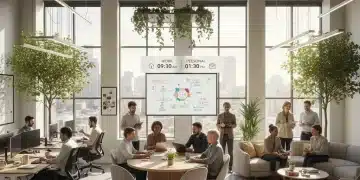
The physical office, once the central pillar of corporate identity, is being reimagined. It’s becoming a destination for collaboration, innovation, and social connection, rather than a place for routine individual tasks. This transformation requires thoughtful design and a clear purpose for in-person interactions.
- Collaboration Hubs: Spaces designed for team meetings, brainstorming sessions, and project work.
- Social Spaces: Areas fostering informal interactions, networking, and cultural bonding.
- Flexible Workstations: “Hot desking” or reservable desks replacing assigned cubicles.
- Technology Integration: Seamless video conferencing and digital collaboration tools in all meeting rooms.
Corporate culture is also evolving, with a greater emphasis on trust, autonomy, and results-oriented management. Leaders are learning to manage by outcomes rather than by observation, fostering a more empowered workforce. This cultural shift is critical for preventing isolation among remote employees and ensuring equitable opportunities for career growth.
The operational impact extends to processes like onboarding, performance management, and internal communication. New tools and strategies are being deployed to ensure that these essential functions remain effective, regardless of an employee’s physical location. This ongoing adaptation is key to maximizing the benefits of flexible work arrangements.
Technological Innovations Driving the Shift
The rapid advancements in technology have been a primary enabler of the remote and hybrid work revolution. Without robust digital infrastructure and innovative software solutions, these models would be far less efficient, if not impossible. By 2025, the integration of AI, enhanced collaboration platforms, and sophisticated cybersecurity measures will be paramount.
Companies are heavily investing in tools that facilitate seamless communication, project management, and virtual collaboration. These technologies aim to replicate, and often surpass, the effectiveness of in-person interactions, ensuring that distributed teams can work together cohesively and productively. The focus is on creating an integrated digital workspace that supports all aspects of business operations.
Essential Tools for a Distributed Workforce
A suite of technological solutions underpins successful remote and hybrid operations. These tools address various needs, from daily communication to complex project execution.
- Advanced Communication Platforms: Video conferencing (Zoom, Microsoft Teams), instant messaging (Slack, Google Chat), and unified communication systems.
- Project Management Software: Tools like Asana, Trello, and Monday.com for task tracking and workflow management.
- Cloud Computing & Data Security: Secure access to company data and applications from any location, with robust cybersecurity protocols.
- Virtual Reality (VR) & Augmented Reality (AR): Emerging technologies for immersive virtual meetings and training simulations.
The continuous development of these technologies means that the capabilities of remote and hybrid work are constantly expanding. As AI becomes more integrated, it will automate routine tasks, provide deeper insights into team dynamics, and personalize learning experiences for employees. This technological backbone is not just about convenience; it’s a strategic asset for competitive advantage.
Furthermore, cybersecurity remains a top priority. With a distributed workforce, the attack surface expands, requiring advanced solutions for data protection, identity management, and threat detection. Companies must ensure their digital environments are secure to maintain trust and protect sensitive information.
Challenges and Practical Solutions for 2025
While the benefits of remote and hybrid models are significant, they also present a unique set of challenges that US corporations must proactively address. From maintaining employee engagement to ensuring equitable career progression, these issues require thoughtful strategies and continuous refinement.
One of the primary concerns is preventing burnout and isolation among remote workers. The blurring lines between work and personal life can lead to extended hours and mental fatigue. Another challenge is fostering a strong, cohesive company culture when employees are not regularly in the same physical space. Addressing these issues requires a holistic approach that combines policy, technology, and leadership.
Overcoming Common Hurdles
Companies are developing innovative solutions to mitigate the drawbacks of flexible work arrangements, focusing on employee well-being and operational efficiency.
- Maintaining Connection: Regular virtual team-building activities, informal check-ins, and dedicated social channels.
- Ensuring Equity: Standardized performance reviews, equitable access to professional development, and fair promotion processes regardless of location.
- Combating Burnout: Encouraging digital detoxes, promoting mental health resources, and setting clear boundaries for work hours.
- Effective Communication: Clear guidelines for communication channels, asynchronous communication strategies, and regular feedback loops.
Practical solutions also involve investing in leadership training that specifically addresses managing distributed teams. Leaders need to develop skills in virtual communication, empathy, and empowering autonomy. This cultural shift is as important as any technological investment.
The journey towards an optimal remote and hybrid model is iterative. Companies must be willing to experiment, gather feedback, and adapt their strategies. What works for one team or department may not work for another, necessitating a flexible and responsive approach to policy development and implementation.
Talent Acquisition and Retention in the New Era
The shift to remote and hybrid work has dramatically reshaped the landscape of talent acquisition and retention for US corporations. Geographic limitations have diminished, opening up a vast, diverse talent pool that was previously inaccessible. This expanded reach offers significant advantages, but also introduces new complexities in attracting, onboarding, and retaining top talent.
Companies are now competing not just locally, but globally, for skilled professionals. This necessitates a re-evaluation of compensation strategies, benefits packages, and overall employer branding. The emphasis has shifted from traditional perks to benefits that support flexible work, such as home office stipends, mental health support, and flexible schedules.
Attracting and Keeping Top Talent
To succeed in this evolving talent market, organizations must adapt their strategies to align with the expectations of a modern workforce that values flexibility and work-life balance.
- Expanded Talent Pool: Recruiting from anywhere, focusing on skills rather than location.
- Competitive Compensation: Offering salaries and benefits competitive with a broader market.
- Flexible Benefits: Providing stipends for home office setups, wellness programs, and flexible working hours.
- Strong Employer Brand: Highlighting a commitment to flexibility, diversity, and employee well-being.
Effective onboarding processes are also critical for remote hires, ensuring they feel connected and integrated into the company culture from day one. This often involves structured virtual introductions, mentorship programs, and clear communication about expectations and resources.
Retention strategies must focus on career development, continuous learning opportunities, and fostering a sense of belonging. Employees in remote and hybrid settings need clear pathways for advancement and regular feedback to stay engaged and motivated. Companies that prioritize these aspects will be better positioned to retain their most valuable assets.
Legal and Regulatory Considerations for 2025
As remote and hybrid work models become entrenched, US corporations face an increasingly complex web of legal and regulatory considerations. These issues span across tax implications, labor laws, data privacy, and compliance, particularly when employees work across state lines or even internationally. Navigating this landscape requires careful planning and expert legal guidance to avoid potential pitfalls.
The traditional legal frameworks were largely designed for a co-located workforce, and many are still catching up to the realities of distributed teams. This creates ambiguities and compliance challenges that businesses must proactively address to ensure they remain within legal boundaries and protect their interests.
Navigating the Legal Landscape
Key legal and regulatory areas require close attention from companies operating with remote and hybrid models:
- State and Local Tax Laws: Determining tax obligations for employees working in different jurisdictions.
- Labor Laws & Employment Standards: Adhering to minimum wage, overtime, leave, and workers’ compensation laws based on employee location.
- Data Privacy & Security: Ensuring compliance with regulations like GDPR (if applicable) and state-specific privacy laws (e.g., CCPA) for remote data access.
- Workplace Safety & Ergonomics: Addressing employer responsibilities for remote work environments, including home office safety.
Furthermore, companies must consider the implications of operating across different time zones and how this impacts compliance with working hour regulations. Clear policies regarding work-life balance and the “right to disconnect” are becoming increasingly important in this context.
Staying informed about evolving legislation and seeking professional legal counsel is paramount. Proactive measures, such as establishing clear remote work policies, conducting regular compliance audits, and providing employee training on data security, are essential for mitigating legal risks in the flexible work era.
The Future Outlook: Agility and Adaptation
Looking ahead to 2025 and beyond, the defining characteristics of successful US corporate structures will be agility and a relentless capacity for adaptation. The rapid shifts witnessed in recent years underscore that the future of work is not a static endpoint but a continuous journey of evolution. Organizations that embrace this fluidity and build resilience into their operational DNA will be best positioned for sustained success.
The integration of remote and hybrid models is more than a trend; it’s a fundamental recalibration of the employer-employee relationship, productivity metrics, and the very definition of a “workplace.” Companies must foster cultures of continuous learning, encouraging experimentation and feedback to refine their approaches.
Key Principles for Future Success
To navigate the complexities and capitalize on the opportunities presented by flexible work, corporations should focus on several core principles:
- Employee-Centric Design: Prioritizing employee well-being, flexibility, and equitable experiences.
- Technology as an Enabler: Continuously investing in and optimizing digital tools for collaboration and security.
- Adaptive Leadership: Developing leaders capable of managing diverse, distributed teams effectively.
- Strategic Real Estate: Reimagining office spaces to serve specific collaborative and cultural purposes.
The ability to attract and retain top talent will increasingly depend on a company’s commitment to these flexible models and a supportive work environment. Organizations that view remote and hybrid work as a strategic advantage, rather than a necessary compromise, will gain a significant edge in the competitive talent market.
Ultimately, the future of work in 2025 demands a proactive, forward-thinking mindset. It’s about building organizations that are not only productive and profitable but also resilient, inclusive, and capable of adapting to whatever changes the future may bring.
| Key Aspect | Brief Description |
|---|---|
| Work Models | Shift towards permanent remote and hybrid setups, redefining traditional office presence. |
| Corporate Structure | More agile, decentralized structures replacing rigid hierarchies. |
| Technology Role | Essential for seamless collaboration, communication, and security in distributed teams. |
| Talent Strategy | Expanded talent pools, focus on flexible benefits and inclusive remote onboarding. |
Frequently Asked Questions About Future Work Models
▼
Hybrid work models offer increased employee flexibility, leading to higher satisfaction and retention. They also allow companies to access a broader talent pool, optimize real estate costs, and potentially boost productivity through reduced commutes and a better work-life balance for employees. It’s about finding an optimal blend.
▼
Companies are tackling cultural challenges by investing in virtual team-building activities, fostering transparent communication, and redesigning office spaces for intentional collaboration. Emphasizing trust, autonomy, and outcomes-based management also helps in cultivating a strong, cohesive culture that transcends physical location.
▼
Crucial technologies for successful remote work in 2025 include advanced communication platforms (video conferencing, instant messaging), robust project management software, secure cloud computing solutions, and strong cybersecurity measures. Emerging technologies like AI and VR are also beginning to play a role in enhancing virtual collaboration.
▼
US companies must navigate complex legalities including state and local tax implications, varying labor laws across jurisdictions, data privacy regulations, and employer responsibilities for remote workplace safety. Proactive policy development and legal counsel are essential to ensure compliance and mitigate risks associated with a distributed workforce.
▼
Ensuring equitable career growth requires standardized performance review processes, clear professional development pathways accessible to all, and fair promotion criteria irrespective of location. Companies should also provide equal access to mentorship opportunities and ensure leaders are trained to manage and support diverse, distributed teams effectively.
Conclusion
The reshaping of US corporate structures by remote and hybrid models by 2025 represents a profound and irreversible transformation. This evolution demands more than just technological adoption; it requires a fundamental shift in leadership, culture, and operational philosophy. Companies that strategically embrace flexibility, prioritize employee well-being, and continuously adapt to the dynamic nature of work will not only survive but thrive. The future belongs to agile organizations capable of creating inclusive, productive environments that transcend traditional boundaries, making the most of a globally connected workforce.