American Values in 2025: 5 Key Cultural Trends

Understanding the evolving nature of American values is paramount, as the nation navigates significant shifts in its cultural and societal foundations, profoundly impacting future interactions and governance.
The United States is a nation perpetually in flux, its cultural currents and societal norms constantly reshaped by myriad forces. As we approach 2025, anticipating and comprehending the shifting landscape of American values becomes not just an academic exercise, but a critical imperative for businesses, policymakers, and individuals alike. What forces are at play, and how will they redefine what Americans hold dear?
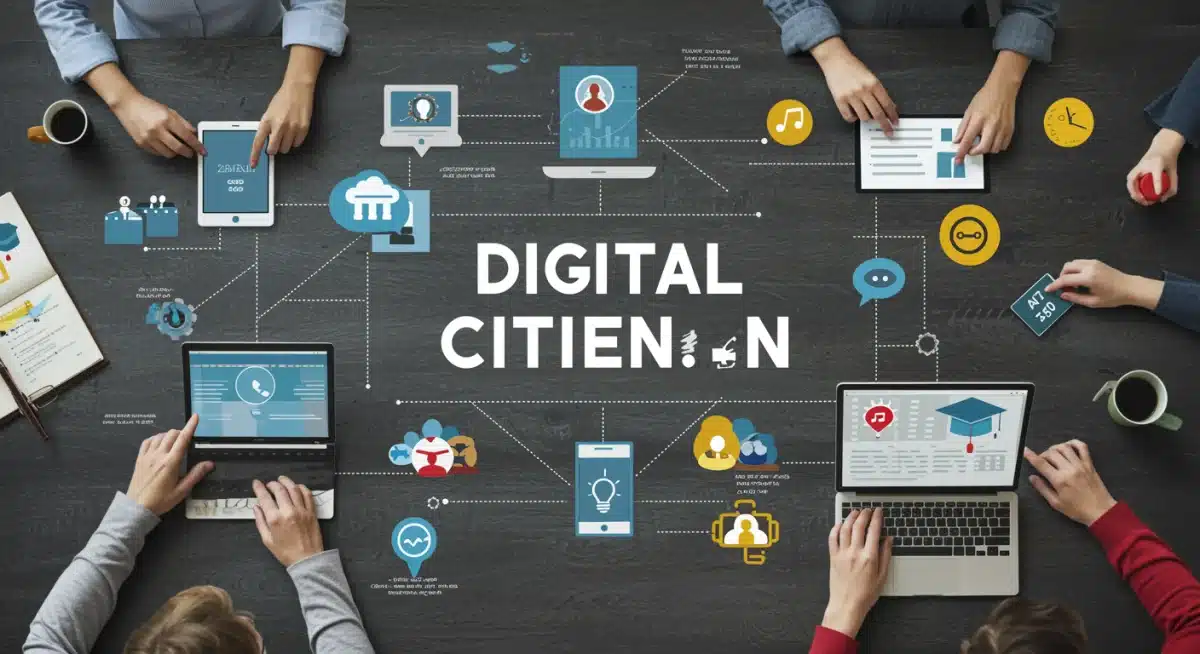
The rise of digital citizenship and community
The internet, once a mere tool for information, has profoundly reshaped how Americans perceive and participate in their communities. Digital platforms have become central to civic engagement, activism, and the formation of social bonds, creating new avenues for value expression and collective action. This shift challenges traditional notions of geographical community.
The concept of digital citizenship extends beyond mere online presence; it encompasses a sense of responsibility, ethical conduct, and active participation within virtual spaces. This evolving form of citizenship often transcends physical borders, allowing individuals to connect with like-minded people across the nation and even globally, fostering a broader perspective on shared values.
Reimagining civic engagement
Traditional forms of civic engagement, such as local town hall meetings or neighborhood associations, are increasingly complemented, if not sometimes overshadowed, by online forums and social media groups. These digital spaces offer unprecedented opportunities for dialogue, debate, and mobilization, often democratizing access to civic discourse.
- Accessibility: Online platforms lower barriers to participation for individuals with mobility issues, demanding schedules, or geographical limitations.
- Speed of Mobilization: Digital tools enable rapid organization and dissemination of information, allowing for swift responses to current events.
- Diverse Voices: The anonymity or semi-anonymity of online interaction can empower marginalized voices to speak out without fear of immediate social repercussions.
However, this digital shift also brings challenges related to misinformation, echo chambers, and the erosion of face-to-face interaction, which some argue is essential for building empathy and understanding across differences. Navigating these complexities is key to harnessing the positive potential of digital citizenship.
The evolution of social connections
Beyond civic engagement, digital platforms have fundamentally altered how Americans form and maintain social connections. Online communities, centered around shared interests, hobbies, or identities, provide spaces for belonging that might not be available in local physical communities. This can be particularly impactful for individuals with niche interests or those living in isolated areas.
These digital bonds, while sometimes criticized for their perceived superficiality, can be incredibly strong and supportive. They often reflect a prioritization of shared values and interests over geographical proximity, indicating a broader trend towards self-selected communities based on alignment of beliefs rather than mere accident of birth or location. Understanding this redefinition of community is crucial for comprehending modern American social structures.
Ultimately, the rise of digital citizenship and community signifies a profound reorientation of American values towards connectivity, participation, and identity formation in the digital realm. This trend demands consideration of both its empowering potential and its inherent challenges as society adapts to an increasingly online existence.
Sustainability and ethical consumption as core values
A growing segment of the American population is placing unprecedented importance on sustainability and ethical consumption. This isn’t merely a trend; it’s a fundamental shift in how individuals view their role in the global ecosystem and their responsibility towards future generations. This value system is driving consumer choices, investment decisions, and even career paths.
The awareness of environmental impacts, social justice issues, and corporate responsibility has moved from niche activism to mainstream consciousness. Consumers are increasingly scrutinizing the origins of products, the labor practices of companies, and the ecological footprint of their purchases. This heightened ethical awareness is reshaping markets and corporate behavior.
The informed consumer
Today’s consumers are more informed than ever, thanks to readily available information and social media. They are not only aware of global issues but also actively seek out brands and products that align with their values. This has led to a demand for transparency and accountability from corporations.
- Product Sourcing: Demand for ethically sourced materials, fair trade practices, and sustainable supply chains.
- Environmental Impact: Preference for products with minimal carbon footprints, recyclable packaging, and energy-efficient production.
- Social Responsibility: Support for companies that exhibit strong social ethics, fair labor, and community engagement.
This trend signifies a move away from purely price-driven consumption towards a more holistic evaluation of product value, incorporating environmental and social costs. Companies that fail to adapt to these evolving consumer values risk losing market share and brand loyalty.
Investing in a better future
The shift towards sustainability and ethical considerations isn’t limited to consumer goods; it’s also influencing financial markets. Impact investing and socially responsible investing (SRI) are gaining significant traction, as individuals and institutions seek to align their financial portfolios with their values.
This means investing in companies that demonstrate strong environmental, social, and governance (ESG) practices, and divesting from those that do not. This financial activism sends a powerful message to corporations: ethical behavior is not just good for the planet; it’s also good for business. The growing influence of this ethical investment community suggests a long-term commitment to these values.
The increasing prominence of sustainability and ethical consumption reflects a deeper societal value shift in America, where individual choices are seen as contributing to broader global well-being. This trend will continue to influence policy, business strategies, and personal lifestyles for years to come.
Redefining success and work-life balance
The traditional American ideal of relentless professional advancement as the sole measure of success is undergoing a significant re-evaluation. A growing number of Americans, particularly younger generations, are prioritizing work-life balance, mental well-being, and personal fulfillment over purely financial or hierarchical achievements. This cultural shift is reshaping workplace expectations and career paths.
The pandemic further accelerated this trend, forcing many to reconsider their relationship with work and what truly constitutes a fulfilling life. The demand for flexible work arrangements, mental health support, and a more humane corporate culture has become louder and more insistent, indicating a fundamental recalibration of what constitutes a desirable career.
Prioritizing well-being
Mental health and overall well-being are no longer considered secondary concerns but are now integral components of a healthy and productive life. This prioritization is influencing career choices, with many opting for jobs that offer better integration of personal and professional lives, even if it means a different salary trajectory.
- Flexible Work: Demand for remote work options, flexible hours, and compressed workweeks to better manage personal responsibilities.
- Mental Health Support: Expectations for employers to provide robust mental health resources, including counseling services and stress management programs.
- Boundaries: A clearer delineation between work and personal time, with less tolerance for constant availability outside of working hours.
This emphasis on well-being reflects a broader understanding that sustained productivity is linked to a healthy and balanced lifestyle, challenging the long-held belief that sacrificing personal life for career is a badge of honor. This shift has significant implications for how companies attract and retain talent.
Purpose-driven careers
Beyond work-life balance, many Americans are seeking careers that offer a sense of purpose and align with their personal values. The desire to make a positive impact, contribute to a cause, or work for an organization with a strong ethical compass is becoming a powerful motivator, sometimes even more so than salary.
This search for purpose often leads individuals to roles in non-profits, social enterprises, or companies with strong corporate social responsibility initiatives. It suggests a movement away from purely transactional employment towards a more meaningful engagement with one’s professional life. Organizations that can articulate a clear mission and demonstrate a commitment to social good will be better positioned to attract and retain this new generation of purpose-driven workers.
The redefinition of success and the growing emphasis on work-life balance represent a significant shift in American values, impacting everything from corporate culture to individual life choices. This trend underscores a desire for a more holistic and fulfilling existence beyond traditional markers of achievement.
The evolving landscape of family structures and relationships
The traditional nuclear family, while still a significant part of American society, is no longer the sole or even dominant model. The United States is witnessing a diversification of family structures, including single-parent households, blended families, same-sex parent families, and chosen families. This evolution reflects changing societal norms, legal recognition, and individual choices, challenging past definitions of kinship.
This shift in family values extends beyond structure to encompass the very nature of relationships. There’s a greater emphasis on equality, mutual respect, and shared responsibilities within partnerships, moving away from more hierarchical or gender-stereotyped roles. The concept of family is becoming more inclusive and adaptable.
Beyond the nuclear ideal
Societal acceptance and legal recognition have paved the way for a broader understanding of what constitutes a family. This includes not just legally recognized unions but also deep, supportive relationships that provide the emotional and practical functions of a traditional family unit. This broader definition reflects a more inclusive American identity.
- Diverse Households: Increase in multi-generational homes, cohabiting couples, and single-person households.
- Chosen Families: Friend groups or communities that function as primary support systems, often for individuals without traditional family ties.
- Parenting Models: Growing acceptance of diverse parenting arrangements, including co-parenting relationships outside of marriage.
This diversification challenges historical norms and requires institutions, from schools to healthcare providers, to adapt their understanding and support structures for a wider array of family configurations. It highlights a growing value placed on individual autonomy in defining one’s own family unit.
Redefining partnership and roles
Within relationships, there’s a strong movement towards more egalitarian partnerships. Traditional gender roles are being questioned and dismantled, with couples increasingly sharing domestic responsibilities, childcare, and financial burdens based on individual skills and preferences rather than prescribed societal expectations.
Communication, emotional intelligence, and mutual support are increasingly valued as foundational elements of a healthy relationship. This shift reflects a deeper commitment to individual flourishing within the context of a partnership, emphasizing collaboration and shared growth. The evolving landscape of family structures and relationships underscores a broader American value of personal freedom and the right to define one’s own path to happiness and belonging.
The evolving landscape of family structures and relationships highlights a deeper American value of personal freedom and the right to define one’s own path to happiness and belonging. This trend signifies a move towards more inclusive and adaptable definitions of kinship and partnership.
The push for authentic self-expression and identity
In contemporary America, there is an increasingly powerful emphasis on authentic self-expression and the affirmation of individual identities. This trend encompasses various facets, from gender and sexual identity to cultural heritage and personal beliefs, fostering a society that, ideally, values diversity and uniqueness. This push challenges monolithic cultural norms and promotes a more pluralistic understanding of what it means to be American.
Social media and digital platforms have played a significant role in amplifying this trend, providing spaces for individuals to explore, articulate, and connect around their identities. This visibility, in turn, has fueled movements for greater representation, acceptance, and understanding across society.
Celebrating diverse identities
The recognition and celebration of diverse identities, including LGBTQ+ identities, racial and ethnic heritage, and neurodiversity, are becoming more central to American values. There’s a growing expectation for institutions and individuals to acknowledge and respect these varied experiences.
- Gender Identity: Increased understanding and acceptance of diverse gender identities beyond the binary.
- Racial and Ethnic Pride: Stronger emphasis on celebrating cultural heritage and addressing historical injustices.
- Neurodiversity: Greater awareness and accommodation for different cognitive styles and abilities.
This movement is not just about tolerance; it’s about active affirmation and the creation of spaces where all individuals feel seen, valued, and respected for who they are. It represents a departure from assimilationist pressures towards a more mosaic-like vision of American society.
The role of social media in identity formation
Social media platforms have become crucial arenas for identity exploration and expression. These platforms allow individuals to curate their online personas, connect with affinity groups, and find validation for their unique experiences. For many, online communities are vital spaces for developing a sense of self and belonging.
While this digital environment offers unparalleled opportunities for self-discovery and connection, it also presents challenges related to performativity, comparison, and the pressure to maintain a certain online image. Nevertheless, the underlying value is a strong desire for authenticity and the freedom to define oneself on one’s own terms.
The push for authentic self-expression and identity signals a profound shift in American values towards greater inclusivity, diversity, and individual freedom. This trend will continue to shape social discourse, cultural norms, and political landscapes as society strives for a more equitable and representative future.
The evolving role of faith and spirituality
While traditional religious affiliation in the United States has seen a decline, the underlying human need for meaning, purpose, and community remains strong. This has led to an evolving landscape of faith and spirituality, where individuals are increasingly seeking personal and individualized approaches to their spiritual journeys, often outside the confines of organized religion. This trend reflects a broader American value of individual autonomy in matters of belief.
The rise of the ‘nones’ – those who identify as religiously unaffiliated – does not necessarily mean a rejection of spirituality. Instead, it often indicates a search for alternative forms of spiritual engagement, including mindfulness practices, nature-based spirituality, or ethical frameworks that provide a sense of moral compass without dogmatic adherence.
Individualized spiritual paths
Many Americans are crafting their own spiritual paths, drawing from various traditions, philosophies, and personal experiences. This ‘spiritual but not religious’ demographic is growing, emphasizing personal connection and meaning over institutional dogma.
- Mindfulness and Meditation: Growing popularity of practices focused on mental clarity and inner peace.
- Nature-Based Spirituality: Finding spiritual connection through experiences in the natural world, often linked to environmentalism.
- Ethical Frameworks: Adopting secular ethical systems or humanistic values as guiding principles for life.
This individualization reflects a desire for authenticity and a skepticism towards institutions that are perceived as rigid or out of touch with modern realities. It underscores a value placed on personal exploration and the right to define one’s own relationship with the sacred.
Community beyond religious institutions
Despite the decline in traditional religious affiliation, the desire for community and shared purpose persists. Many individuals are finding these connections in secular organizations, volunteer groups, or affinity communities that align with their values, rather than their faith.
These communities often coalesce around shared interests, social causes, or philosophical discussions, providing the support networks and sense of belonging traditionally offered by religious institutions. This shift suggests that while the forms of community may be changing, the underlying human need for connection and shared meaning remains a core American value.
The evolving role of faith and spirituality in America points to a shift towards more personalized, flexible, and inclusive approaches to belief and meaning-making. This trend highlights a continued search for purpose and community, even as traditional religious structures adapt to changing societal needs.
Navigating political polarization and the search for common ground
One of the most defining characteristics of the current American landscape is its profound political polarization. This deep division, often rooted in differing values and worldviews, impacts every facet of society, from policy-making to interpersonal relationships. However, amidst this fragmentation, there is a growing, albeit sometimes quiet, search for common ground and a desire to bridge divides.
This trend reflects a tension between the strong affirmation of individual beliefs and a yearning for national unity and functional governance. Understanding how Americans navigate this polarization – whether by retreating into echo chambers or actively seeking dialogue – is crucial for predicting the future trajectory of American values.
The impact of echo chambers
The digital age, while connecting people, has also inadvertently created echo chambers, where individuals are primarily exposed to information and opinions that reinforce their existing beliefs. This can deepen polarization by limiting exposure to alternative perspectives and fostering distrust of those with differing views.
- Social Media Algorithms: Often prioritize content that aligns with a user’s past interactions, creating personalized filter bubbles.
- Partisan Media: The proliferation of news sources catering to specific political ideologies further entrenches existing viewpoints.
- Confirmation Bias: The human tendency to seek out and interpret information in a way that confirms one’s preconceptions.
Overcoming these echo chambers is a significant challenge, requiring conscious effort from individuals and platforms to promote diverse viewpoints and critical thinking. The value of open discourse and intellectual humility is increasingly recognized as essential for a healthy democracy.
The quest for civility and dialogue
Despite the pervasive polarization, there is a palpable yearning among many Americans for greater civility, mutual understanding, and constructive dialogue. Initiatives aimed at bridging divides, fostering intergroup communication, and promoting empathy are gaining traction, suggesting a collective desire to heal societal rifts.
This quest for common ground often manifests in local community efforts, non-partisan organizations, and individual commitments to engaging respectfully with those who hold different beliefs. It reflects a core American value of pragmatic problem-solving and the belief that progress requires collaboration, even amidst profound disagreements. The ability of Americans to navigate this polarization and find pathways to cooperation will largely define the nation’s cultural and political future.
Navigating political polarization and the search for common ground highlights a critical juncture in American values. While deep divisions persist, a growing desire for civility and dialogue offers hope for bridging societal rifts and fostering a more unified future.
| Key Trend | Brief Description |
|---|---|
| Digital Citizenship | Online platforms redefine community and civic engagement, influencing social bonds and participation. |
| Ethical Consumption | Sustainability and corporate responsibility increasingly drive consumer and investment choices. |
| Work-Life Redefined | Prioritization of well-being and purpose over traditional measures of career success. |
| Identity Affirmation | Growing emphasis on authentic self-expression and the celebration of diverse individual identities. |
Frequently Asked Questions About American Values
Digital citizenship is fostering new forms of community and civic engagement, moving beyond geographical limitations. It emphasizes online responsibility and participation, allowing for diverse voices and rapid mobilization, thereby reshaping traditional notions of belonging and activism.
Consumers are increasingly informed and concerned about environmental and social impacts. This leads to a demand for transparency and accountability from companies, influencing purchasing decisions and investments towards more sustainable and ethically produced goods and services.
Americans are prioritizing mental well-being, personal fulfillment, and flexible work arrangements over traditional professional advancement. This redefines success, encouraging purpose-driven careers and demanding more humane corporate cultures that support a balanced lifestyle.
Family structures are diversifying beyond the nuclear model to include single-parent, blended, same-sex parent, and chosen families. This reflects changing societal norms, legal recognition, and a greater emphasis on equality and individual autonomy in defining kinship.
Political polarization deeply divides society, often fueled by echo chambers. While it challenges national unity, there’s a growing search for common ground and civility, reflecting a tension between strong individual beliefs and the desire for constructive dialogue and collaboration.
Conclusion
The American value system is a dynamic tapestry, continually rewoven by societal shifts, technological advancements, and evolving individual priorities. The trends discussed – from the rise of digital citizenship and ethical consumption to the redefinition of work, family, and identity – collectively paint a picture of a nation in constant introspection and adaptation. While challenges like political polarization persist, the underlying current points towards a society that values authenticity, well-being, and a more inclusive approach to community and belonging. Understanding these profound shifts is not just about observing the present; it’s about anticipating and shaping the future of what it means to be American in 2025 and beyond.